
A New Chapter: U.S. Embassy Reopens in Venezuela After Years of Diplomatic Silence
The Return of American Diplomacy to Caracas
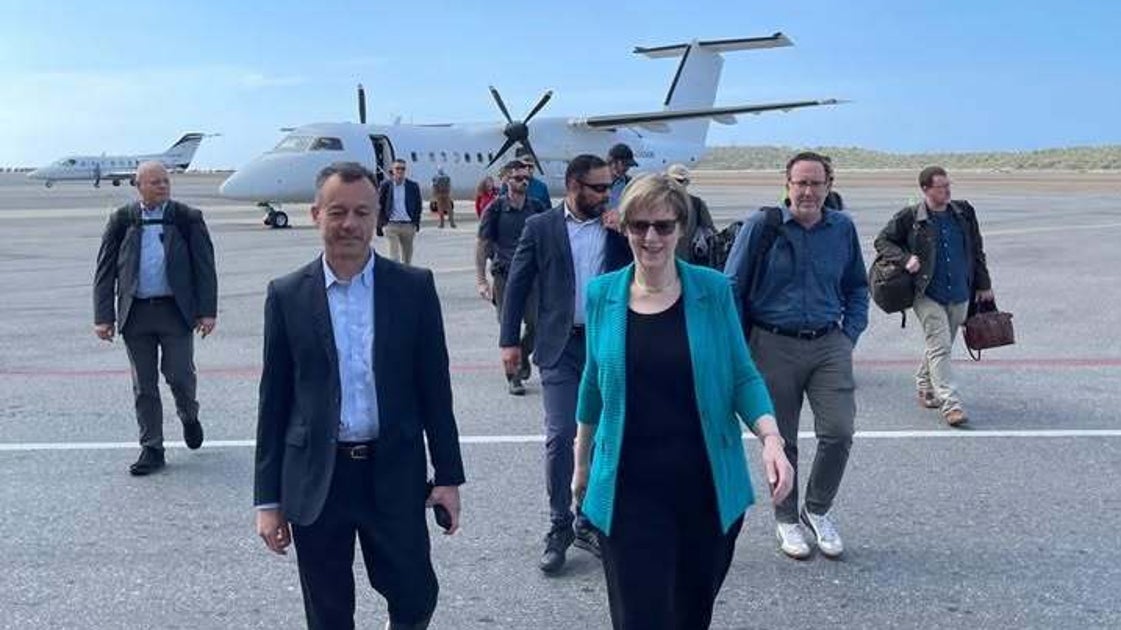
After seven long years of broken ties and shuttered embassies, the United States has taken a significant step toward restoring its relationship with Venezuela. On Saturday, U.S. Ambassador Laura Dogu touched down in Caracas with a clear mission: to reopen the American diplomatic presence in the South American nation. Her arrival marks a dramatic shift in the relationship between the two countries, which had been frozen in mutual hostility since 2019. As Ambassador Dogu stepped off the plane at Maiquetia airport, she shared a simple but powerful message through the U.S. Embassy’s social media account: “My team and I are ready to work.” Those words, accompanied by photographs of her arrival, signaled not just her personal readiness but America’s willingness to re-engage with a country that has been at the center of regional controversy for years. This diplomatic reopening comes at a particularly pivotal moment, occurring just weeks after former Venezuelan leader Nicolás Maduro was removed from power through a military action authorized by U.S. President Donald Trump. The timing suggests that both nations see an opportunity to reset their relationship and address long-standing grievances through dialogue rather than confrontation.
The Long Road of Broken Relations
To understand the significance of this moment, we need to look back at how these two nations arrived at such a complete diplomatic breakdown. In February 2019, Venezuela and the United States severed their diplomatic ties in a decision that reflected the deep political crisis gripping Venezuela at the time. The breaking point came when President Trump publicly threw his support behind Juan Guaidó, a Venezuelan lawmaker who declared himself the country’s interim president in January of that year. From Maduro’s perspective, this was an unacceptable interference in Venezuela’s internal affairs, prompting him to order the closure of the Venezuelan embassy in Washington and demand that American diplomats leave Caracas. The United States responded in kind, and both embassies were shuttered, leaving citizens of both countries without normal consular services and cutting off one of the most important channels for communication between the two governments. For seven years, this diplomatic freeze persisted, with neither side willing to make the first move toward reconciliation. During this time, Venezuela spiraled deeper into economic crisis, millions of Venezuelans fled their homeland seeking better opportunities abroad, and the political standoff between Maduro’s government and the opposition seemed intractable. The absence of formal diplomatic relations didn’t just affect government-to-government communication; it impacted ordinary people on both sides who needed visas, consular assistance, and the protection that embassies normally provide to their citizens abroad.
Powerful Voices and Strategic Interests
The decision to reopen the embassy hasn’t come without complexity and competing interests within Venezuela’s power structure. Diosdado Cabello, one of Venezuela’s most influential politicians and a steadfast loyalist to the now-deposed Maduro, offered an interesting perspective on the embassy reopening earlier in January. Cabello suggested that having the U.S. embassy operational again would actually serve Venezuelan interests by providing the government with a direct channel to monitor the treatment of Maduro, who is currently imprisoned in the United States. This comment reveals the multifaceted nature of diplomatic relations—even former adversaries can find mutual benefit in maintaining lines of communication. Cabello’s statement also highlights the unusual situation Venezuela finds itself in, with its former president now in American custody following the military action that removed him from power. The ability to discuss Maduro’s detention through formal diplomatic channels represents a practical consideration that transcends ideological differences. Meanwhile, Venezuela’s current foreign minister, Yván Gil, struck a more conciliatory and forward-looking tone in his response to Ambassador Dogu’s arrival. In a message posted on Telegram, Gil characterized the reopening as part of a collaborative framework designed to “deal with and resolve existing differences through diplomatic dialogue, in a foundation of mutual respect and (based on) international law.” This language of mutual respect and adherence to international norms suggests that Venezuela’s interim government, led by Delcy Rodríguez, is seeking to position itself as a legitimate and reasonable partner for international engagement, quite different from the often confrontational stance of the Maduro era.
Ambassador Dogu: An Experienced Hand in Challenging Posts
The choice of Laura Dogu as the ambassador to lead this delicate reopening is itself noteworthy. Dogu is no stranger to complex and sometimes contentious diplomatic environments in Latin America. She has previously served as ambassador to both Nicaragua and Honduras, countries that have faced their own political challenges and difficult relationships with the United States at various times. This experience navigating the political landscapes of Central American nations dealing with governance issues, economic difficulties, and social unrest has presumably prepared her for the challenges she’ll face in Venezuela. Ambassadors in such positions need more than just diplomatic credentials; they need patience, cultural sensitivity, the ability to work with diverse political factions, and the skill to represent American interests while building constructive relationships with host governments. Dogu’s appointment suggests that the U.S. State Department recognizes that rebuilding ties with Venezuela will require experienced, steady leadership rather than someone new to the region’s complexities. Her readiness to “work,” as she expressed upon arrival, likely means engaging with Venezuelan officials across the political spectrum, assessing the needs of American citizens in Venezuela, evaluating the security situation, and beginning the slow process of rebuilding trust between two governments that have viewed each other with suspicion for years.
A Gesture of Good Faith: Political Prisoners and Opposition Demands
The timing of Ambassador Dogu’s arrival is particularly significant because it came just one day after Venezuela’s interim president, Delcy Rodríguez, announced an amnesty bill aimed at releasing political prisoners. This announcement addresses one of the most persistent and passionate demands from Venezuela’s opposition movement and the international community. For years, human rights organizations have documented the detention of political opponents, journalists, activists, and ordinary citizens who dared to criticize or protest against Maduro’s government. These detentions became a symbol of authoritarian governance and a major obstacle to any normalization of Venezuela’s international relationships. The decision to offer amnesty and release these prisoners represents a substantial gesture of good faith from Rodríguez’s interim government. It signals a willingness to break with the repressive tactics of the past and to create space for genuine political dialogue within Venezuela. The fact that this announcement came just before the U.S. ambassador’s arrival is unlikely to be coincidental. It suggests coordination or at least awareness between Venezuelan authorities and American officials about the sequencing of these events. By demonstrating concrete action on a key opposition demand before formal diplomatic relations resumed, the interim government has created a more favorable environment for the embassy reopening and future negotiations. For Ambassador Dogu, arriving in the wake of this amnesty announcement provides her with an initial positive development to build upon, rather than having to immediately confront difficult human rights issues as her first order of business.
Looking Forward: The Challenge of Rebuilding Trust and Relations
As the American embassy reopens its doors in Caracas, both countries face the considerable challenge of rebuilding a relationship that has been characterized by mutual hostility, sanctions, accusations, and fundamental disagreements about governance and sovereignty. The road ahead will not be easy or straightforward. There are numerous complex issues that will need to be addressed through the newly restored diplomatic channel. These include the fate of Nicolás Maduro and the legal processes he faces in the United States, the future of American sanctions on Venezuela that have contributed to the country’s economic difficulties, the recognition and support of whatever government emerges from Venezuela’s ongoing political transition, and the practical needs of American citizens and businesses in Venezuela. Beyond these immediate concerns, there are broader questions about Venezuela’s role in the region, its relationships with other countries like Russia and China that have been supportive during its isolation from the West, and the reconstruction of its economy and democratic institutions. Ambassador Dogu and her team will be working in an environment that remains politically fluid and potentially unstable, where different factions within Venezuela continue to compete for power and influence. The Venezuelan people themselves, exhausted by years of economic hardship, political turmoil, and uncertainty, will be watching closely to see whether this diplomatic reopening translates into tangible improvements in their daily lives. The success of this mission will ultimately be measured not just by the resumption of normal embassy operations, but by whether the United States and Venezuela can find ways to cooperate on issues of mutual concern while respecting each other’s sovereignty and interests. After seven years of silence, at least they’re talking again—and in diplomacy, conversation is always the essential first step toward resolution.