


A Family’s Unimaginable Loss: The Tragic Death of Sheridan Gorman
A Night That Changed Everything
On what should have been an exciting evening adventure, 18-year-old Sheridan Gorman set out with her friends around 1:30 in the morning on March 19th, hoping to witness the magical display of the northern lights over Lake Michigan. The Loyola University Chicago freshman and her companions were just a block and a half from campus when their night took a horrifying turn. At the end of a pier, they encountered a masked gunman. In those terrifying moments, Sheridan displayed remarkable courage and selflessness. According to her mother Jessica, who pieced together the events from witness accounts, Sheridan immediately recognized the danger when the armed man moved toward her threateningly. Without hesitation, she turned to warn her friends to run. Her father Thomas recounts that Sheridan managed to run about 40 feet before being shot in the back and neck. She died at the scene. Chicago police have characterized the shooting as apparently random—a senseless act of violence that robbed a young woman of her future and left her family shattered. The one small comfort in this nightmare is that Sheridan’s quick warning likely saved the lives of her friends, a final act of heroism that speaks volumes about the kind of person she was.
Parents Speak Out in Grief and Anger
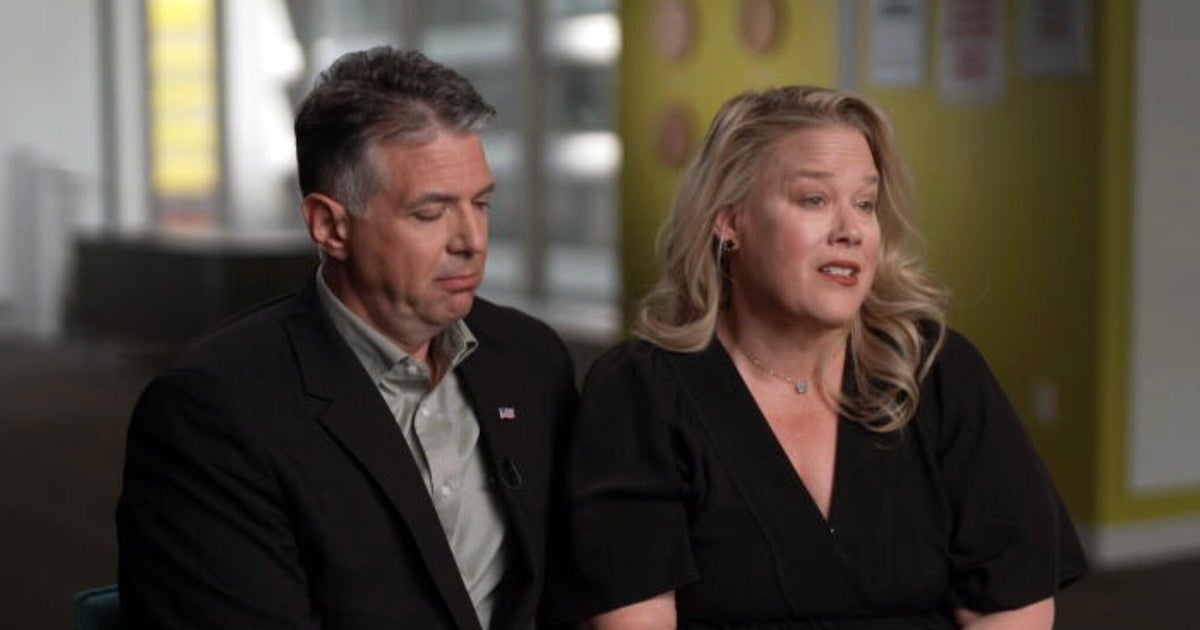
For the first time since their daughter’s death, Jessica and Thomas Gorman are speaking publicly, and their pain is palpable. Jessica describes Sheridan as “a really amazing person” and says she grieves not only for the lives her daughter touched but for all the people she will never have the chance to impact. The trauma of that early morning knock on the door at 6 a.m., the collapse to their knees upon hearing news no parent should ever receive, and the subsequent nightmare of having to identify their daughter’s body at the medical examiner’s office are experiences that will haunt them forever. Thomas describes the surreal horror of filling out paperwork with trembling hands, and the moment when officials ask if you’re ready to identify your child’s body—a moment for which no parent can ever truly be prepared. But beyond their grief, the Gormans are angry. They reject the characterization of their daughter’s death as a “senseless tragedy,” instead calling it what they believe it truly was: “a preventable murder.” This distinction is crucial to them because they believe that failures in the immigration and criminal justice systems allowed their daughter’s killer to be on that pier that night.
The Suspect and His History
Chicago police arrested 26-year-old Jose Medina on charges including first-degree murder and illegal possession of a firearm. He has not yet entered a plea and is scheduled for arraignment next week. According to the Department of Homeland Security, Medina is a Venezuelan national who entered the United States illegally in 2023. His public defender, Julie Koehler, has offered context about her client’s background, stating that in 2018, while in Colombia, Medina was the victim of an armed robbery during which he was shot in the head. He survived this traumatic incident but lost a portion of his brain and skull, which, according to his attorney, left him with “the mental capacity of a child.” This defense strategy appears to be laying groundwork for diminished capacity arguments. However, the Gormans strongly dispute this characterization of Medina’s mental state. Jessica points out that he demonstrated clear planning and intent—he obtained a gun, wore a mask for concealment, and was lying in wait at the end of the pier. As she bluntly states, “The mask was on, and he had a gun pointed at my daughter when she passed him.” Thomas reinforces this point with simple logic: “A child does not do that.” Their argument is that regardless of any past trauma, Medina’s actions demonstrated premeditation and criminal intent.
A Series of System Failures
What makes the Gormans’ grief even more unbearable is their belief that their daughter’s death could have been prevented through different policy decisions and better coordination between law enforcement agencies. According to DHS records, Medina was first apprehended by U.S. Border Patrol in May 2023 and was released into the country under policies implemented during the Biden administration. This was his first encounter with American authorities, but it wouldn’t be his last. Just over a month after his initial release, in June 2023, Medina was arrested in Chicago for shoplifting. Despite being in the country illegally and now having committed a crime on U.S. soil, he was released again rather than being turned over to federal immigration authorities. When he failed to appear for his court hearing on the shoplifting charge, an arrest warrant was issued, but he remained free. For nearly ten months after that missed court date, Medina was a fugitive from justice—both for immigration violations and for failing to appear in court—yet he remained at large until the night he allegedly took Sheridan Gorman’s life. The Gormans are still working to fully understand all the policies and decisions that kept Medina on the streets despite these red flags. Thomas articulates their frustration clearly: “When someone commits a crime and they’ve been here illegally, there needs to be cooperation. He was arrested for, yes, a nonviolent crime, but he also was here illegally. In our mind, he should’ve been handed over to the feds at that point.”
The Political Dimension and the Gormans’ Mission
The Trump administration has seized upon Sheridan Gorman’s death as a rallying point for stricter immigration enforcement policies. While the Gormans understand why their daughter’s case has become politically significant, they insist that their focus isn’t on partisan politics but on accountability and preventing similar tragedies. They want to understand exactly how the system failed and what changes need to be implemented to ensure that dangerous individuals don’t slip through the cracks. Their call for better cooperation between state, local, and federal law enforcement agencies transcends political ideology—it’s a practical matter of public safety. The disconnect between Chicago’s sanctuary city policies and federal immigration enforcement created a situation where someone in the country illegally, with an outstanding warrant, remained free to commit violence. The Gormans believe this represents a fundamental breakdown in the government’s responsibility to protect its citizens. They’re not interested in becoming pawns in political debates about immigration policy writ large, but they are determined to be voices for common-sense reforms that might have saved their daughter’s life and could save others in the future.
A Mother’s Promise: Turning Darkness Into Light
In the face of unimaginable loss, Jessica Gorman is transforming her grief into a fierce determination to create change. Her words carry the weight of a mother’s love and the steel of a warrior’s resolve: “I don’t know what the longevity of this effort takes, but I will never rest. And yes, they’ve awakened a bear. They’ve awakened a big grizzly mama bear. I got to fight for my child. I have to fight for yours. I have to turn this devastating darkness into light somehow.” This isn’t just rhetoric—it’s a vow. Jessica and Thomas are committed to ensuring that their daughter’s death leads to meaningful reforms in how immigration violations and criminal offenses are handled, particularly when they intersect. They want clearer protocols for when local law enforcement should coordinate with federal immigration authorities, especially after someone in the country illegally commits additional crimes. They want accountability from every level of government that played a role in allowing Medina to remain free. Most fundamentally, they want other parents to be spared the horror they’ve experienced—the early morning knock, the identification of a child’s body, the funeral that comes decades too soon. As they navigate their grief and begin their advocacy, the Gormans carry forward the legacy of their daughter’s final act—her warning that saved her friends’ lives. Sheridan’s instinct to protect others in the face of danger now drives her parents’ mission to protect other families from similar preventable tragedies. Their fight has only just begun, but their determination is absolute. In speaking out, they ensure that Sheridan Gorman will be remembered not just as a victim, but as a catalyst for change.