

The Tragic Chain of Events: How a Stolen Gun Led to Louisiana’s Deadliest Mass Shooting
The Stolen Weapon and Initial Deception
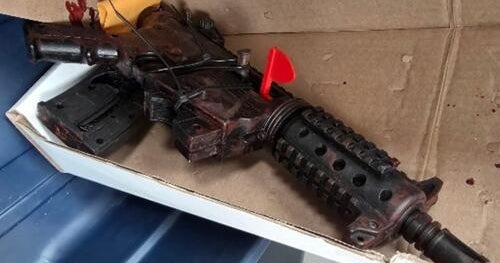
In a heartbreaking case that has shaken Shreveport, Louisiana to its core, new details have emerged about how the weapon used in a devastating mass shooting that claimed eight young lives came into the hands of the perpetrator. Charles Ford, a 56-year-old Shreveport resident, has admitted to federal authorities that he believes Shamar Elkins stole an assault-style rifle from his truck approximately three weeks before the tragedy unfolded. Initially, Ford wasn’t truthful with investigators, denying any knowledge of the weapon when first questioned following the Sunday shooting. However, he later changed his story and revealed crucial information about how the gun went missing and why he suspected Elkins had taken it. According to the criminal complaint filed in Louisiana federal court, Ford told investigators he had suspicions about Elkins because he was among the very few people who had ridden in his vehicle. Ford noticed the weapon was missing around March 9th, and what followed was a confrontation that he would later deeply regret not pursuing further.
A Confrontation That Ended Too Soon
When Ford realized his assault-style rifle had disappeared from his truck, he did what many might consider the responsible thing—he confronted the person he suspected of taking it. That person was Shamar Elkins, who would later use that very weapon to murder seven of his own children and another child. However, the confrontation didn’t go as one might hope. According to the court affidavit filed on Tuesday, when Ford approached Elkins about the missing firearm, Elkins became “offensive” in his response. Rather than pressing the issue, reporting the theft to police, or taking any further action to recover what was clearly a dangerous weapon, Ford simply “let it go.” This decision, while perhaps understandable in the moment when faced with confrontation, would have tragic consequences that no one could have fully anticipated. The casual nature of this interaction stands in stark contrast to the devastating outcome that would follow, raising painful questions about what might have been prevented if different choices had been made in that moment.
Federal Charges and the Gun’s Paper Trail
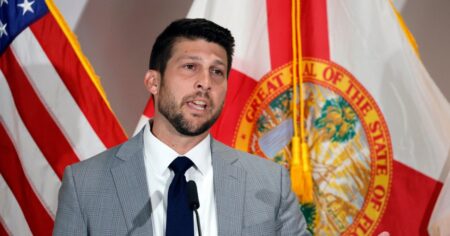
Charles Ford now faces serious federal charges as a result of his involvement in this case. The U.S. Attorney’s Office for the Western District of Louisiana has charged him with being a felon in possession of a firearm and making false statements to federal agents—both charges directly related to the weapon Elkins used to carry out the horrific shooting. Federal investigators have been working diligently to trace the complete history of the firearm, and their investigation has revealed additional details about how Ford came to possess it in the first place. Authorities interviewed the person who originally purchased the gun, and that individual confirmed they had given the weapon to Ford. The Shreveport Police Department, working in coordination with the Bureau of Alcohol, Tobacco and Firearms, has initiated a comprehensive trace on the firearm to document its complete chain of custody and ownership. Ford currently does not have legal representation but is expected to receive a federal public defender according to court records. Attempts to reach Ford’s family members or a previous attorney who had represented him were unsuccessful. U.S. Attorney Zachary A. Keller addressed the charges in a public statement, acknowledging the community’s pain while explaining the prosecution’s purpose.
A Community Denied Justice
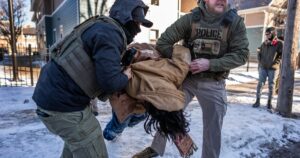
The aftermath of this tragedy has left the Shreveport community grappling not only with unimaginable grief but also with frustration over incomplete justice. Shamar Elkins, the man who murdered eight innocent children—seven of them his own—will never stand trial for his crimes. After carrying out the shooting rampage that unfolded across two houses in the early morning hours before dawn, Elkins fled the scene, leading police on a pursuit that ended with his death. Authorities have stated that it remains unclear whether Elkins was killed by officers who fired during the confrontation or whether he died from a self-inflicted gunshot wound. This ambiguity, while perhaps a minor detail in the larger tragedy, adds to the sense of unresolved questions surrounding the case. U.S. Attorney Zachary A. Keller expressed this sentiment directly: “Elkins’ death means that our community will never see him face justice. Our hope, as we continue to investigate and prosecute this case alongside our law enforcement partners, is that holding the person whose gun Elkins used to perpetrate the crime accountable will give some small bit of solace to our Shreveport community.” The eight children who lost their lives—three boys and five girls—ranged in age from just 3 to 11 years old, their entire lives stolen before they truly began. Elkins’ wife and another woman were also shot and wounded during the rampage, adding to the circle of victims whose lives have been forever altered by this senseless violence.
A Pattern of Illegal Weapons and Failed Safeguards
Perhaps one of the most troubling aspects of this case is that warning signs existed that should have prevented Elkins from possessing any firearm at all. Court documents reveal that Elkins pleaded guilty in 2019 to a felony charge of illegal use of weapons. As part of his sentence, a Caddo Parish district judge ordered Elkins to serve 18 months of supervised probation, and he was required to surrender his handgun to police as a condition of that probation. Under Louisiana state law, individuals convicted of certain violent felonies—including illegal use of weapons—are explicitly banned from possessing firearms for at least 10 years following the completion of their sentence and probation period. This should have been a safeguard, a legal barrier preventing someone with a demonstrated history of weapons offenses from accessing the tools to commit further violence. Yet somehow, Elkins managed to obtain the assault-style rifle he used in the mass shooting, whether through theft from Ford’s truck or by other means. Officials have notably not addressed whether Elkins was legally prohibited from having a weapon at the time of the shooting, leaving another question mark in a case already full of them. This gap between laws on the books and their real-world enforcement highlights a systemic problem that gun safety advocates have long pointed out.
The Broader Context of Gun Violence and Policy Debates
This tragedy in Shreveport stands as one of the nation’s deadliest mass shootings in recent years, and it has reignited familiar debates about gun control and public safety measures. Lindsay Nichols, policy director for the Giffords Law Center—an organization dedicated to reducing gun violence—captured the essence of what makes this case so painful: “Families should be able to feel safe at home, but this tragedy shows how gun violence can shatter lives in an instant.” For years, advocates pushing for stronger gun control measures have specifically targeted Louisiana’s notably loose firearm regulations, attempting to implement safeguards that might prevent tragedies like this one. Democratic lawmakers have routinely proposed red flag laws, which would allow authorities to temporarily remove firearms from individuals deemed to pose a danger to themselves or others. However, in Louisiana’s reliably Republican-controlled legislature, these measures have been consistently blocked, with opponents arguing they infringe on Second Amendment rights. This political stalemate means that despite repeated tragedies, the regulatory landscape remains largely unchanged. The Shreveport shooting raises uncomfortable questions about multiple points of failure: a felon who possessed a gun he shouldn’t have had, another felon whose stolen weapon was used in the crime, a confrontation about that theft that was dropped rather than reported, and laws that existed but weren’t effectively enforced. As the community mourns eight young lives cut impossibly short, these systemic questions demand answers that go beyond any single case or individual prosecution.