


Pope Leo XIV Condemns War in Iran While Trump Administration Defends Military Action
A Pontiff’s Plea for Peace Amid Rising Tensions
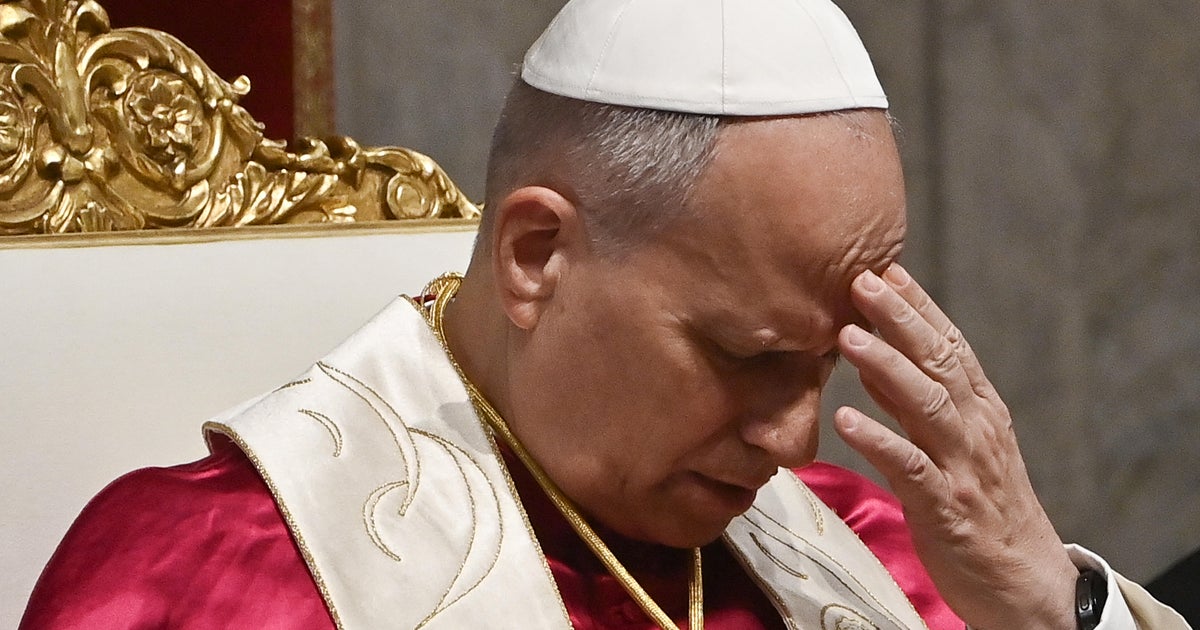
In a powerful and emotionally charged prayer vigil held at St. Peter’s Basilica this past Saturday, Pope Leo XIV delivered what many are calling his most forceful condemnation yet of the ongoing military conflict in Iran. While the pontiff carefully avoided naming President Trump directly, his message was unmistakable to those listening. Speaking in Italian before the gathered faithful, Pope Leo appeared to take aim at recent statements and actions by the American president, particularly criticizing military leaders who boast about their destructive capabilities. The pope’s words carried the weight of moral authority as he declared, “Enough with the idolatry of self and money! Enough with the display of force! Enough with war! True strength is manifested in serving life.” This wasn’t just a general statement about conflict—it was a pointed response to what the pope clearly sees as a dangerous escalation of violence in the Middle East, one that threatens not just regional stability but the very fabric of human civilization itself.
Children’s Letters and the Horror of War
Perhaps the most poignant moment of the pope’s address came when he referenced letters he has received from children living in conflict zones. These innocent voices, untainted by political calculation or strategic considerations, have revealed to him the true horror of what is happening on the ground. “I receive many letters from children from conflict zones: reading them, one perceives, with the truth of innocence, all the horror and inhumanity of actions that some adults proudly boast about,” Pope Leo shared with the congregation. His plea was simple yet profound: “Let us listen to the voices of children!” This appeal to the innocence and honesty of youth stands in stark contrast to the rhetoric coming from political leaders who frame military destruction in terms of victory and strength. The pope’s reference to adults who “proudly boast” about their actions seemed particularly relevant given President Trump’s social media activity on the very same day, where he posted on Truth Social about the “complete destruction” of Iran’s military capabilities, including their entire Navy and Air Force, adding that “Their Leadership is DEAD!” with characteristic emphatic capitalization.
The President’s Perspective and Contrasting Worldviews
The stark contrast between the pope’s spiritual call for peace and President Trump’s triumphant declarations of military dominance could hardly be more pronounced. While Pope Leo was calling for an end to the “idolatry of self and money” and the “display of force,” the president was actively celebrating what he described as the total decimation of Iran’s military infrastructure. This fundamental difference in worldview—one rooted in the Christian principles of mercy, forgiveness, and the sanctity of life, the other in projections of strength, deterrence, and national security—represents a broader tension in how we think about resolving international conflicts. The pope’s earlier statement that it was “truly unacceptable” for Mr. Trump to declare that “a whole civilization will die” if the Strait of Hormuz remained closed shows his deep concern about rhetoric that normalizes mass destruction and civilizational collapse. For Pope Leo, no military objective can justify the language or reality of genocide, and no strategic interest can supersede the fundamental human right to life and dignity.
Calls for Diplomacy During a Fragile Ceasefire
As Pope Leo issued his moral rebuke, diplomatic efforts were actually underway, highlighting the complex reality of modern conflict resolution. The pope specifically appealed for leaders to engage in meaningful negotiations to end what he characterized as the U.S.-Israel war with Iran, taking place amid a tense two-week ceasefire. His timing was significant, as Vice President JD Vance, senior envoy Steve Witkoff, and Jared Kushner, the president’s son-in-law, were simultaneously meeting with Iranian leaders in Pakistan for direct, face-to-face talks. This diplomatic engagement offered a glimmer of hope, though it was tempered by President Trump’s simultaneous warning to Iran to comply with ceasefire terms or face large-scale U.S. attacks—a threat that seemed to undermine the spirit of genuine negotiation. Pope Leo’s words cut through this complexity with moral clarity: “Certainly, the leaders of nations have compelling responsibilities. We cry out to them: stop! This is the time for peace! Sit at the tables of dialogue and mediation, not at the tables where rearmament is planned and death is deliberated!” His vision of diplomacy isn’t one conducted under threat of annihilation but rather one pursued with genuine commitment to finding peaceful solutions that honor the dignity and rights of all parties involved.
The Pope’s Theological Stance on Conflict
Pope Leo XIV further elaborated on his position through social media on Friday, offering a theological framework for understanding his opposition to the war. “God does not bless any conflict,” he wrote. “Anyone who is a disciple of Christ, the Prince of Peace, is never on the side of those who once wielded the sword and today drop bombs.” This statement cuts to the heart of Christian teaching about violence and peacemaking. For the pope, being a follower of Christ—the Prince of Peace—is fundamentally incompatible with celebrating military destruction, regardless of the strategic or political justifications offered. This isn’t pacifism in the abstract but rather a concrete application of Gospel values to contemporary geopolitical realities. The reference to both ancient sword-wielding and modern bomb-dropping creates a historical continuity that suggests violence has always been contrary to Christian principles, regardless of the technological means employed. This theological position places Pope Leo firmly in a prophetic tradition of religious leaders who speak truth to power, even when that power claims to act in defense of Christian civilization or values.
The Political Reality and White House Response
The tension between papal moral teaching and political reality becomes even more apparent when considering the demographics of American Catholic voters and the White House’s response to the pope’s criticisms. According to Pew Research Center data, fifty-five percent of Catholics voted for President Trump in the 2024 election, with White Catholics favoring him over Kamala Harris by an even wider margin of 62% to 37%. This presents a fascinating paradox: a majority of American Catholics chose a leader whose approach to international conflict stands in direct opposition to the clear teachings of their spiritual leader. White House spokesperson Anna Kelly addressed this tension directly, telling CBS News that “All of President Trump’s foreign policy actions have made the world safer, more stable, and more prosperous.” She noted that “Catholic Americans resoundingly supported President Trump in 2024, and the President’s administration has a positive relationship with the Vatican, which was strengthened when Vice President Vance attended Pope Leo XIV’s inaugural mass last year.” The spokesperson went further, claiming that “The President has done more than any of his predecessors to save lives and resolve global conflicts, and following the completion of his military objectives in Iran, he is hopeful that the agreement under discussion can lead to a lasting peace in the Middle East.” This response essentially reframes the entire conflict, suggesting that military destruction can be a path to peace and that the president’s actions, however violent they may appear, are ultimately life-saving rather than life-destroying. It represents a fundamentally different moral calculus than the one the pope is proposing—one based on practical results and strategic outcomes rather than adherence to principles of non-violence and the inherent dignity of all human life. The disconnect between the pope’s vision and the political choices of Catholic voters raises profound questions about how religious teaching translates into political action and whether faith communities can maintain moral witness in an age of nationalist politics and military power projection.