


A Mother’s Life Cut Short: The Tragic Story of Ajike Owens
Dreams Shattered by a Devastating Phone Call
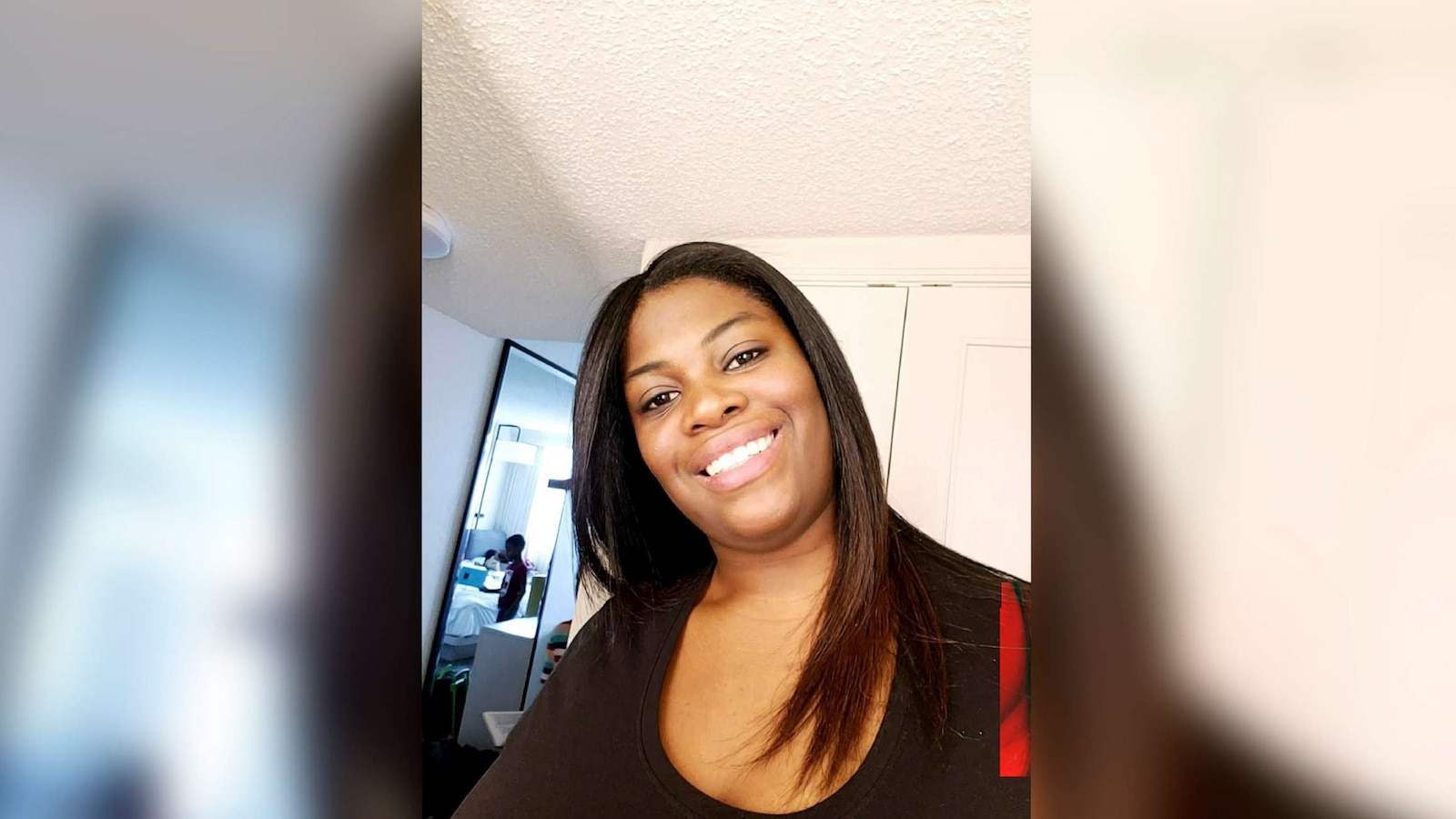
Life was looking bright for Pamela Dias just a few summers ago. The Atlanta grandmother had recently accepted an exciting new position as a flight attendant, filled with anticipation about the adventures and destinations that awaited her. She was ready to embark on this new journey, to see the world from above and experience the freedom that comes with starting fresh. But on June 2, 2023, everything changed in an instant. A single phone call shattered her dreams and redirected the entire course of her life in the most heartbreaking way imaginable. “I’m told over the phone that my daughter has been killed,” Dias recalled through tears, describing how she cried and screamed upon receiving the news. Her daughter, 35-year-old Ajike Owens, a single mother raising four children in Ocala, Florida, had been fatally shot by her neighbor. The tragedy not only devastated a family but sparked a national conversation about neighborhood disputes, racial tensions, and the tragic consequences of conflicts that spiral out of control. This story, featured in a “20/20” episode titled “The Neighbor from Hell,” reveals the painful details of how a community conflict ended in unspeakable tragedy.
A Growing Neighborhood Tension
The roots of this tragedy stretched back more than a year before that fateful June evening. Ajike Owens had been living in what should have been a peaceful family neighborhood in Ocala, raising her four children as a single mother. But beginning in February 2022, tensions began brewing with her neighbor, Susan Lorincz. The source of the conflict seemed almost trivial at first—children playing in a field near Lorincz’s home. In a neighborhood where families knew each other from gathering at the school bus stop each morning, where kids played together freely as they do in suburban communities across America, Lorincz stood out as the singular voice of complaint. “It’s a family neighborhood,” explained Kimberly Robinson-Jones, one of Owens’ closest friends, describing the community where mothers knew each other and children played together. But Lorincz repeatedly called police to complain about the noise and disruption caused by the neighborhood children, including Owens’ kids. “All of us live out here. Nobody else is complaining. Nobody else. She’s the only one,” neighbor Phyllis Wills told investigators, a sentiment echoed throughout the community. Detective Ryan Stith of the Marion County Sheriff’s Office confirmed what became increasingly clear through witness statements: “The picture was painted that Susan was a problem in the neighborhood.” Lorincz claimed she worked from home and found the children’s play too loud and disruptive, but to other residents, this seemed like an extreme overreaction to the normal sounds of childhood in a family community.
The Fatal Confrontation
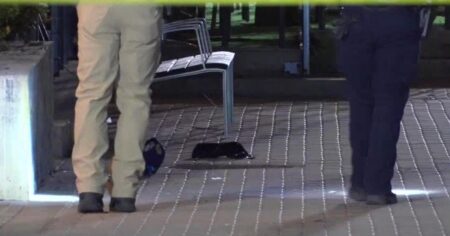
On that devastating June evening, what should have been a conversation between neighbors turned deadly in seconds. Earlier that day, Owens’ son came home upset, telling his mother that Lorincz had yelled at him and thrown roller skates at him while he was playing. Like any protective mother would, Owens went to Lorincz’s home to address the situation directly. She knocked on the door, seeking to confront her neighbor about the treatment of her child, but Lorincz refused to open it. What happened next would leave a family shattered and a community in shock. At approximately 9 p.m., as Owens stood at Lorincz’s closed, locked front door with her nine-year-old son Israel—affectionately called “Izzy” by his mother—nearby, Lorincz fired a gun through the door, fatally striking Owens. The horror of that moment is almost impossible to comprehend. “I cannot imagine for Izzy to be standing there next to his mom and a gunshot pierces the door and hits his mom. I cannot imagine what that had to be like for him,” “20/20” co-anchor Deborah Roberts reflected. Young Izzy heard his mother’s final desperate words: “Call the police, call 911. I’ve been shot,” Dias recounted her grandson telling her. The scene that unfolded was one of chaos and heartbreak. Isaac, Owens’ oldest son, ran through the neighborhood screaming, “They shot my mom. They shot my mom.” Neighbor Lauren Smith, who performed CPR on Owens while emergency services were called, recalled Isaac taking her by the hand and leading her to where his mother’s body lay in the field. Despite desperate efforts to save her, Ajike Owens died that night, leaving four young children without their mother.
A Community Demands Justice
The aftermath of the shooting revealed disturbing details that transformed this from a local tragedy into a national story about race, justice, and neighborhood conflicts gone horrifically wrong. The Marion County Sheriff’s Office released extensive body camera footage, dashcam video, and 911 audio recordings that documented Lorincz’s lengthy history of complaints about neighborhood children, including footage of Owens herself discussing the ongoing dispute before her death. What emerged from these recordings was particularly troubling. Multiple children told sheriff’s deputies that Lorincz had called them racial slurs and other derogatory names. According to police reports, Lorincz admitted to using racial slurs and other offensive terms when referring to children in the neighborhood. Nevaeh, the daughter of neighbor Phyllis Wills, was sixteen years old when she spoke to investigators about her experiences. “She used to call us the N-word with a hard R, um, just names, saying we’re gonna get raped if we be in her yard,” the teenager recalled. When this body camera footage was released to the public, it ignited widespread outrage and brought national attention to the case. “It told me that people understood the atrocity of this,” Dias said. “It showed that people still care. People want justice.” Owens’ family, joined by neighbors and community advocates, rallied for days demanding Lorincz’s arrest. Many called for hate crimes charges to be filed, believing the racial component of Lorincz’s behavior toward the children constituted evidence of bias. However, Florida State Attorney William “Bill” Gladson determined there was insufficient evidence to prove hate crimes charges in court. Lorincz was arrested on June 6, 2023, four days after the shooting, and ultimately charged with manslaughter with a firearm, facing up to 30 years in prison.
A Family Forever Changed
While the legal system worked through the case, Ajike Owens’ four children—Izzy, Isaac, Afrika, and Titus—faced the unimaginable task of learning to live without their mother. At the time of the shooting, they were just 9, 12, 6, and 2 years old. Their grandmother Pamela Dias made the life-altering decision to abandon her dreams of traveling as a flight attendant and relocated to Ocala to care for her grandchildren. She vowed never to leave their side, stepping into the role their mother could no longer fill. “Time has passed, but the grief and the hurt has not passed,” Dias reflected on how the family continues to cope with their loss. The children are growing up with a void that can never be filled, carrying memories of a mother who loved them and tried to protect them. For young Izzy, who witnessed the shooting, the trauma is particularly profound. At just nine years old, he heard the gunshot that took his mother’s life, heard her desperate final words, and watched helplessly as she died. The psychological impact of such an experience on a child is immeasurable. Meanwhile, Lorincz maintained her innocence, pleading not guilty and claiming she feared for her life before the shooting. This claim of self-defense became the cornerstone of her legal defense during the trial. The question before the court would be whether a woman standing on the other side of a locked door, armed with a gun, could reasonably claim she feared for her life from an unarmed mother who came to her door to talk about the treatment of her children.
Justice Delayed, Healing Ongoing
More than a year after that tragic June evening, the case finally went to trial in 2024. After a week of testimony, evidence, and arguments, a jury convicted Susan Lorincz of first-degree felony manslaughter with a firearm on August 16, 2024. Three months later, on November 25, 2024, she was sentenced to 25 years in prison. She is currently appealing her conviction, maintaining her claim of self-defense. For Pamela Dias, the guilty verdict brought an unexpected mix of emotions. “I thought that a guilty verdict was going to make me feel better,” she admitted. “It almost had the opposite effect. It didn’t make me feel good. It validated what I already knew, that my daughter’s life should never have been taken.” The verdict confirmed what she already knew in her heart—her daughter had been wrongfully killed, her life cut short unnecessarily, her children left motherless over a neighborhood dispute that should never have escalated to violence. Even the law enforcement officers who worked the case continue to carry the weight of this tragedy. Marion County Sheriff’s Office Deputy Ashton Welfenberg told “20/20” that she and others who investigated the case still think of the Owens family regularly. “We still think of them. I do. I think of them a lot,” she said, reflecting the lasting impact this case has had on everyone it touched. Now twelve years old, Izzy is finding his own path toward healing. He shared with interviewers a special memory of his mother—a song she taught him called “I Am What God Says I Am.” Sitting on the bed together at home, his mother had taught him the words: “I am what God says I am and I can be what God says I’ll be. I am and I can be all that God says I can be.” In those simple lyrics lives the spirit of a mother who wanted her son to know his worth, to understand his potential, and to believe in himself even when the world seemed uncertain. As Izzy grows up without his mother, he carries these words with him—a final gift from a woman who loved her children fiercely and died trying to protect them from mistreatment. The tragedy of Ajike Owens reminds us of the devastating consequences when neighborhood disputes escalate, when conflicts are not resolved through communication and community, and when the decision to use lethal force is made too quickly. It raises uncomfortable questions about race, about who feels threatened and why, about whose children are seen as threatening simply for playing in their own neighborhood. Most importantly, it tells the story of four children growing up without their mother, a grandmother who gave up her dreams to raise them, and a community forever changed by a single moment of violence that never should have happened.