

The Revolutionary Rise of Tokenized Commodities: How Blockchain is Transforming Traditional Assets
The Explosive Growth of a Digital Market
The financial world is witnessing a remarkable transformation as tokenized commodities emerge as a powerful force in the investment landscape. In an astonishingly short period, this innovative market has exploded to a staggering $7 billion valuation, representing an almost 600% increase since the beginning of 2025. This meteoric rise isn’t simply a matter of speculative investment or temporary market enthusiasm. According to Jesse Knutson, Head of Operations at Bitfinex Securities, what we’re observing represents something far more fundamental—a complete reimagining of how commodities function in the modern financial ecosystem. The transformation goes beyond merely creating digital versions of physical assets; it’s fundamentally changing the nature of these commodities themselves, converting traditionally static holdings into dynamic, mobile, and flexible instruments that can respond to our increasingly unpredictable global landscape. In a world marked by geopolitical tensions, economic uncertainty, and rapid market fluctuations, this agility provides investors with tools for what Knutson describes as “responsive risk management”—the ability to quickly adjust positions and protect wealth in real-time as conditions change around the globe.
Gold Leads the Digital Commodity Revolution
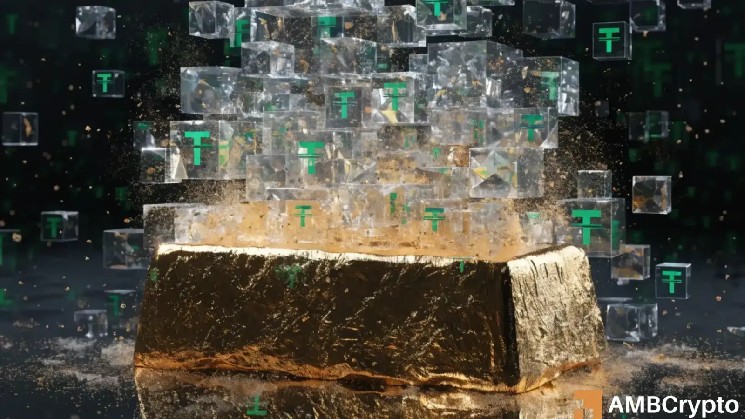
Among the various tokenized commodities that have entered the market, gold has emerged as the undisputed leader, and for compelling reasons that reveal important truths about investor psychology and market evolution. Tether Gold, represented by the ticker symbol XAU₮, has captured nearly 40% of the entire tokenized gold market, demonstrating both the viability of the concept and investors’ growing comfort with blockchain-based representations of physical assets. This dominance of gold in the tokenized commodity space isn’t accidental—it reflects the deep-rooted trust that investors have cultivated over millennia with this precious metal. Gold’s advantages in the tokenization process are numerous and significant. Unlike newer or more speculative commodities, gold already enjoys a firmly established position within traditional financial systems, with well-understood valuation mechanisms, storage protocols, and trading conventions. When tokenization is applied to this already-trusted asset, it doesn’t require investors to fundamentally rethink their understanding of what they’re buying; instead, it simply enhances gold’s traditional benefits with modern technological capabilities. The blockchain transformation makes gold instantly transferable across borders without the need for armored transport, universally auditable through transparent ledger technology, and accessible without the typical settlement delays or the physical friction associated with moving actual metal bars from vault to vault. This combination of ancient reliability and cutting-edge efficiency has proven irresistible to a growing segment of the investment community.
Beyond Gold: The Expanding Universe of Tokenized Commodities
While gold currently dominates the tokenized commodity landscape, the revolution has already begun spreading to a diverse array of other materials that form the backbone of global commerce and industry. Tokenization technology is now being applied to agricultural commodities—the grains, livestock, and produce that feed the world’s population—as well as to energy resources like oil and natural gas that power modern civilization. Industrial metals such as copper, which are essential for everything from construction to electronics manufacturing, are also entering the tokenized space. This expansion represents more than just technological capability; it demonstrates growing recognition of the practical benefits that tokenization brings to commodity markets across the board. One particularly significant advantage highlighted in the Bitfinex report is the transparency that accompanies tokenization and how this transparency enhances supply chain integrity. In traditional commodity markets, tracking the provenance and movement of goods through complex global supply chains can be challenging, creating opportunities for fraud, inefficiency, and disputes. When commodities are tokenized on blockchain systems, every transaction, every transfer of ownership, and every movement from point A to point B becomes permanently recorded on an immutable ledger that all parties can verify. This creates an unprecedented level of accountability and trust throughout the supply chain, potentially reducing costs, preventing fraud, and giving end purchasers greater confidence in what they’re buying.
Tether Gold: A Case Study in Successful Tokenization
The success story of Tether Gold provides a fascinating window into what makes tokenized commodities work at scale. With a total market value exceeding $3.3 billion, XAU₮ has become the gold standard (pun intended) for how to properly implement commodity tokenization in a way that satisfies both technological enthusiasts and traditional institutional investors. Currently, there are 707,747.09 XAU₮ tokens in circulation, with each token representing exactly one fine troy ounce—approximately 31.103 grams—of actual physical gold. This strict 1:1 backing isn’t just a technical specification; it’s the foundation of trust that makes the entire system work. The impressive growth trajectory speaks volumes: during the first quarter alone, Tether Gold reported a remarkable 36% increase in underlying gold reserves compared to the previous quarter. What makes this growth particularly significant, according to market analysts, is that the scale and speed of these inflows suggests something more profound than typical market movements. This wasn’t simply wealthy investors hedging against uncertainty, though geopolitical and monetary instability certainly played a role in driving overall gold demand, which increased 2% year-over-year in Q1 when including over-the-counter transactions. When combined with significant price appreciation, the total value of quarterly gold demand jumped an astounding 74% to reach a record-breaking $193 billion. However, the concentrated flow into tokenized gold specifically indicates what experts describe as a “structural shift”—a fundamental change in how investors think about holding and managing commodity exposure rather than just a temporary defensive move.
The Infrastructure of Trust and Transparency
Paolo Ardoino, CEO of Tether, articulated the significance of this moment in the evolution of digital assets when he observed that Tether Gold is demonstrating that tokenized commodities can operate with the same level of seriousness, scale, and reserve discipline that the financial world expects from major institutional holdings. This isn’t a small achievement—it represents the bridging of two worlds that have often viewed each other with suspicion: the traditional financial establishment with its emphasis on regulation, auditing, and proven stability, and the cryptocurrency space with its emphasis on innovation, decentralization, and technological disruption. Tether Gold succeeds by honoring the legitimate concerns of both worlds. It provides individual investors and institutions with direct exposure to physical gold—real metal sitting in real vaults—while simultaneously delivering the transparency, portability, and accessibility advantages that blockchain-based assets uniquely offer. The system’s credibility rests on several foundational pillars: the absolute 1:1 backing that ensures every digital token corresponds to actual physical gold; regulated issuance processes that comply with financial oversight requirements; and Swiss-vaulted reserves that provide the security and legal protections associated with Switzerland’s renowned banking system. This combination has given Tether Gold the transparency and investor trust necessary to position it at the forefront of the broader tokenized real-world asset market. Perhaps most significantly, this transformation has changed gold’s functional role in investment portfolios. Historically, gold has served primarily as a passive store of value—something you bought and held, hoping it would preserve wealth over time but not expecting it to actively generate returns or serve multiple financial functions. Through tokenization, gold is evolving into something more dynamic: a collateralized financial instrument that can be transferred instantly, used in decentralized finance applications, and managed with a level of flexibility previously impossible with physical metal.
The Future Landscape: Structural Changes and New Possibilities
As we look at the current state of the tokenized commodities market, several key conclusions emerge that point toward the future direction of this space. The most important takeaway is that what we’re witnessing isn’t simply a temporary market trend or a speculative bubble driven by enthusiasm for blockchain technology. Instead, the evidence suggests we’re in the early stages of a fundamental structural shift in how commodities are held, transferred, and integrated into financial strategies. The 36% surge in Tether Gold’s reserves during the first quarter alone, combined with the broader 600% growth in the overall tokenized commodities market, represents capital flows that are both too large and too sustained to dismiss as mere hedging behavior. While geopolitical uncertainty and monetary policy concerns have certainly contributed to gold’s appeal—factors that have driven precious metals demand for centuries—the specific movement toward tokenized versions of these commodities indicates that investors are recognizing distinct advantages in this new format beyond the traditional rationale for holding gold. The speed and efficiency of transactions, the transparency of blockchain-based custody, the ability to fractionally own and transfer commodities, and the potential integration with emerging decentralized finance ecosystems all represent genuinely new capabilities that didn’t exist in traditional commodity markets. As tokenization technology matures and expands to cover more commodity types, we can expect this market to continue growing, potentially reshaping not just how individuals invest but how global commodity trading, supply chain management, and resource allocation function at the most fundamental levels. The $7 billion market we see today may well be remembered as just the beginning of a much larger transformation in how humanity manages and trades the physical resources that underpin our economy.