

Trump’s Revenge Tour: How Presidential Power Reshaped Indiana Politics
A High-Stakes Political Showdown in the Heartland
In what has become one of the most dramatic displays of presidential influence over state-level politics in recent memory, President Trump orchestrated a sweeping campaign to unseat Indiana Republicans who dared to oppose his redistricting agenda. The results that rolled in on Tuesday night painted a clear picture: defying the president comes with serious political consequences. Five Indiana state senators who voted against redrawing the state’s House maps found themselves on the losing end of their Republican primaries, defeated by Trump-endorsed challengers. The Associated Press confirmed these projections as the evening progressed, marking a significant victory for Trump’s political operation. Additionally, a Trump-backed candidate secured victory in an open seat previously held by a redistricting opponent who chose not to seek reelection. While one senator managed to survive a Trump-backed challenge, and another race remained too close to call late into the night, the overall message was unmistakable: the president’s endorsement carries enormous weight, even in races that typically fly under the national radar.
This unprecedented intervention by a sitting president into state legislative primaries represents something virtually unheard of in American politics. State senate races typically attract minimal attention beyond their immediate districts, operating in relative obscurity compared to congressional or statewide contests. Yet Trump treated these contests as personal battlegrounds, investing his political capital and mobilizing his extensive network of supporters and donors to reshape the Indiana legislature according to his vision. The campaign served as both a demonstration of Trump’s continuing dominance over the Republican Party and a warning shot to elected officials nationwide: crossing the president on issues he cares deeply about can end political careers, regardless of how safe a seat might seem or how long an incumbent has served their constituents.
The Redistricting Battle That Started It All
The roots of this political upheaval trace back to the nationwide scramble over redistricting that followed the 2020 census, a process that determines congressional district boundaries for the next decade and can significantly influence which party controls the House of Representatives. Trump took particular interest in this normally technical process, recognizing its potential to cement Republican advantages across the country. In Texas, he successfully pushed through a redistricting plan designed to favor Republicans in more congressional seats, setting off an intense battle between Democrats and Republicans in state governments nationwide. Indiana became a key battleground in this fight, particularly significant given that Trump had won the state by a commanding 19-point margin in 2024, demonstrating his political strength in Hoosier country.
The White House mounted an aggressive lobbying campaign directed at Indiana Republicans, and found a willing ally in GOP Governor Mike Braun, who endorsed a redistricting map designed to give Republicans an advantage in all nine of the state’s congressional districts. This would have effectively eliminated the two Democratic-held seats, creating a Republican sweep across Indiana’s congressional delegation. The proposed map successfully passed the state House of Representatives, where support for the plan proved strong enough to overcome opposition. However, the legislation hit an unexpected roadblock in the state Senate, where the political calculus proved more complicated than Trump’s team had anticipated.
Despite Republicans holding an overwhelming 40-10 supermajority in the Indiana Senate—the kind of advantage that typically ensures any party-backed legislation sails through—state Senate President Rodric Bray determined that the redistricting plan lacked sufficient support to pass. When the legislation came to a floor vote, his assessment proved accurate: 21 Republicans, including Bray himself, joined with Democrats to vote against the redistricting plan, delivering a stunning defeat to the White House and marking a rare moment of intraparty defiance during Trump’s presidency. The rebellious senators offered various justifications for their opposition, ranging from moral concerns about setting a dangerous precedent to practical worries that attempting to win all nine House seats might backfire during a challenging electoral year. Bray characterized the GOP caucus as “fairly evenly split” on the issue, ultimately concluding that the aggressive redistricting approach “wasn’t the right way for Indiana to move forward.”
Understanding the Opposition: Indiana Values vs. National Politics
The resistance these Indiana senators mounted against Trump’s redistricting push reflected something deeper than mere political calculation—it tapped into a distinct political culture that values fairness and traditional norms. Ball State University professor Chad Kinsella, speaking to CBS News before the primary elections, offered insight into why the redistricting plan failed despite seemingly having all the political advantages: “I think it’s Hoosiers don’t like gerrymandering.” This simple observation captured an important truth about Indiana’s political character. While the state reliably votes Republican in presidential elections and maintains solid GOP majorities in the legislature, that conservatism comes with a traditional sensibility that views extreme gerrymandering as unseemly and potentially counterproductive.
Kinsella elaborated on this cultural dynamic, noting that “gerrymandering just doesn’t play well in Indiana” and suggesting that senators who opposed the plan were “concerned that they couldn’t go back home and that their constituents would be OK with that.” This concern about facing constituents highlights an interesting tension in modern Republican politics: while national figures like Trump may demand absolute loyalty on every issue, local elected officials still need to maintain relationships within their communities and preserve their reputations as people of principle. For some of these senators, particularly those with long tenures and established records, the political calculation suggested that opposing obvious gerrymandering might actually be the safer choice, protecting them from accusations of corruption or partisan excess that could prove damaging in future elections. Of course, this calculation failed to account for the overwhelming force that Trump could bring to bear when he decided to make these races personal vendettas.
Trump’s Unprecedented Retaliation Campaign
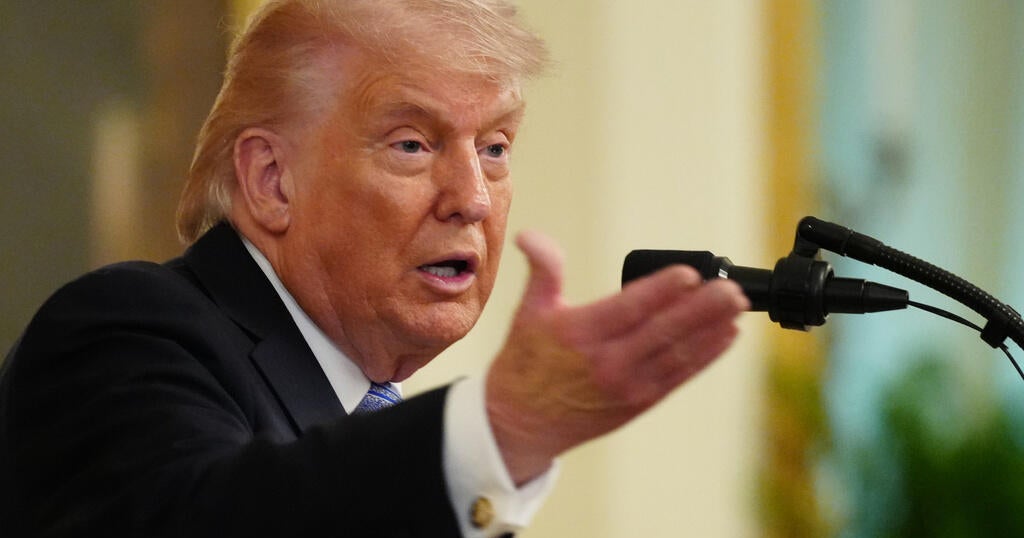
President Trump’s response to the redistricting defeat went far beyond typical political disappointment—it evolved into a comprehensive revenge operation designed to purge the Indiana legislature of those who defied him. Trump backed candidates in eight contested races, unleashing a barrage of attacks against the incumbent senators through his Truth Social platform. His posts characterized the redistricting opponents with harsh language, calling them “pathetic,” “incompetent,” and employing the derogatory term “RINOs” (Republicans In Name Only) to question their party loyalty. The president strategically avoided endorsing in one race where the incumbent had supported redistricting, while backing eleven incumbents who voted for the new map, making clear that this campaign was specifically targeted at those who opposed his wishes rather than a general attempt to reshape the legislature.
The financial resources that flowed into these typically low-budget races proved staggering and unprecedented. Senate President Bray estimated that approximately $9 million poured into the state from outside sources supporting Trump’s preferred candidates—an astronomical sum for state legislative races that normally attract minimal outside investment. In response, the Indiana Senate Republican Caucus mounted its own financial counteroffensive, ultimately exceeding all the money spent defending incumbents in 2022. According to tracking firm AdImpact, total advertising spending in the Indiana State Senate primaries this cycle reached approximately $13.5 million, compared to just under $300,000 spent two years earlier—a more than forty-fold increase that transformed these obscure races into some of the most expensive state legislative contests in the country.
The pressure campaign extended beyond political advertising into more disturbing territory. Even before the redistricting vote took place, some senators who were expected to oppose the plan reported being doxxed—having their personal information published online—and subjected to harassment. Trump himself issued direct threats, declaring in January: “We’re after you Bray, like no one has ever come after you before!” While Bray isn’t up for reelection until 2028 due to Indiana’s staggered election schedule, his leadership position in the senate now faces jeopardy as the senators he led in opposition have been systematically removed from office. When asked about Trump’s threats on Tuesday, Bray responded with characteristic Midwestern understatement: “It is what it is.” Despite the political carnage around him and the uncertain future of his leadership role, Bray maintained that he had “no regrets” about the redistricting vote and insisted that “Indiana’s going to do things the way Indiana needs to do them.”
The Fallout: Winners, Losers, and Lessons Learned
Trump’s allies in Indiana celebrated Tuesday’s results as a vindication of the president’s political power and a warning to other potential dissenters. Governor Braun declared it a “historic night for Indiana,” while Republican Senator Jim Banks posted on social media platform X that he was “proud to have helped elect more conservative Republicans to the Indiana State Senate.” The characterization of the Trump-endorsed challengers as “more conservative” reflects the now-common practice of defining conservative credentials primarily through loyalty to Trump rather than through traditional ideological metrics. By this standard, long-serving Republican legislators with consistently conservative voting records became insufficiently conservative simply by voting against a single Trump priority.
Among the casualties was state Senator Travis Holdman, a longtime incumbent serving in GOP leadership as majority caucus chair—a position that traditionally offers significant protection against primary challenges. His defeat illustrated that no amount of seniority or leadership responsibility could shield lawmakers from Trump’s wrath when they crossed him on a priority issue. In brief remarks following his loss, Trump-endorsed challenger Blake Fiechter thanked Holdman for his 18 years of service and promised to “turn the page” while representing everybody in the district, which covers eastern Indiana including Bluffton and part of Fort Wayne. Holdman, in an interview with the Indianapolis Star, stood by his redistricting vote and said he wasn’t bitter about the outcome, though he did offer a pointed observation that carried moral weight: “Revenge and retribution is not a Christian value.” This quiet rebuke, grounded in religious principle, encapsulated the discomfort many traditional conservatives feel about the combative, retaliatory approach that has come to define Trump-era Republican politics.
Implications for American Democracy and Political Culture
The Indiana primary results carry implications that extend far beyond one state’s legislature or even the immediate question of congressional redistricting. Trump’s successful purge of Republican legislators who prioritized institutional norms and constituent concerns over presidential demands represents a significant shift in how American politics operates. Historically, state legislators enjoyed considerable independence from national political figures, able to vote their conscience or their constituents’ interests without fear that a president would personally target them for defeat. The federal structure of American government was designed in part to maintain this separation, preventing the centralization of political power in a single individual or office. Trump’s Indiana campaign demonstrates that these traditional boundaries have eroded significantly, replaced by a system where party loyalty increasingly means personal loyalty to Trump, enforced through primary challenges backed by overwhelming financial resources and the president’s still-formidable base of support.
This development poses challenging questions about the future of representative democracy. If state legislators cannot vote against presidential wishes without facing career-ending consequences, does that enhance democratic accountability or undermine it? Trump and his supporters would argue that the ousted senators ignored the will of their constituents, who overwhelmingly supported Trump and expected their representatives to advance his agenda without reservation. From this perspective, the primary results represent democracy working as intended, with voters replacing representatives who failed to reflect their preferences. However, critics might counter that representative democracy requires elected officials to exercise independent judgment rather than simply following orders from above, and that the founding fathers specifically designed a system of separated powers to prevent exactly this kind of top-down control. The traditional understanding held that legislators should consider multiple factors when voting—constituent opinion certainly, but also their own expertise, moral principles, and judgment about long-term consequences—rather than simply checking whether a position aligns with presidential preferences. The Indiana results suggest this more nuanced model of representation is giving way to something simpler and more hierarchical, with significant implications for how American government functions. Whether this transformation ultimately proves beneficial or harmful to American democracy remains an open question that will likely define political debates for years to come.