


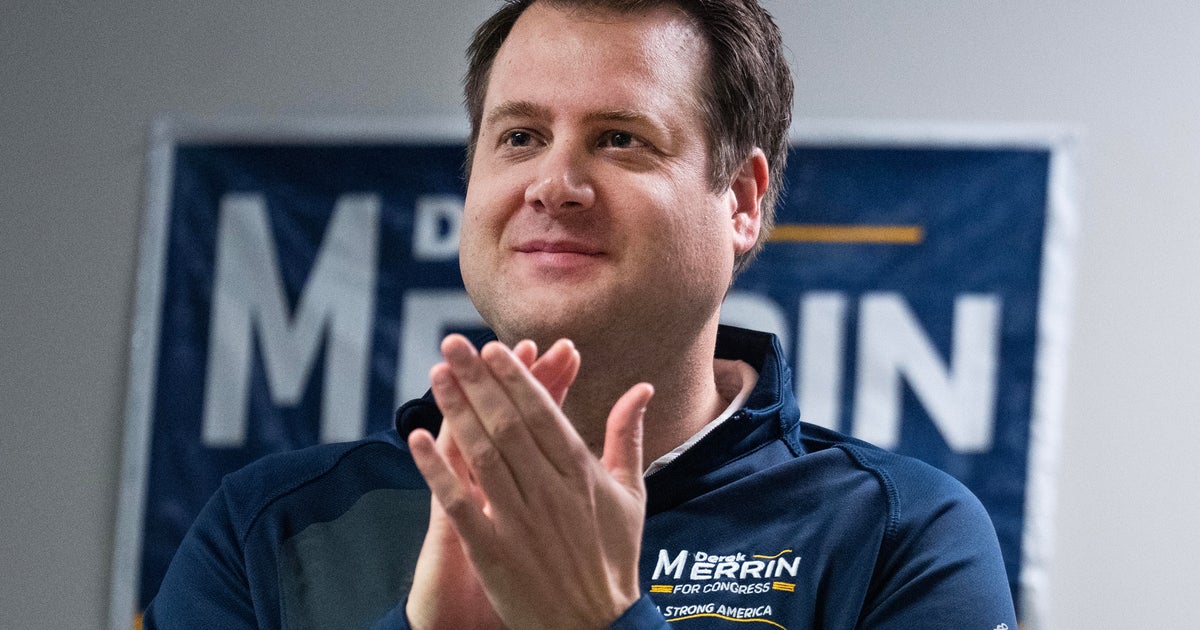

Derek Merrin Secures Republican Nomination for Crucial Ohio Congressional Race
A Hard-Fought Primary Victory Sets the Stage for November
Derek Merrin has emerged victorious in Ohio’s 9th Congressional District Republican primary, according to projections from CBS News. This win positions him for what political experts anticipate will be one of the most fiercely contested House races in the 2026 midterm elections. Merrin’s victory wasn’t just about winning a primary—it represents the Republican Party’s continued determination to flip this historically Democratic seat and maintain their grip on the House of Representatives. The former state representative fought through a crowded field of five Republican candidates, each bringing their own credentials and vision to the table, but ultimately, voters chose Merrin to carry the GOP banner into the general election battle ahead.
The Rematch Everyone’s Been Watching
This upcoming race is particularly significant because it’s a rematch between Merrin and Democratic Representative Marcy Kaptur, a political veteran who has represented the district since 1983. Their previous encounter in 2024 was nothing short of dramatic—Kaptur narrowly defeated Merrin by approximately 2,400 votes, a margin so slim it came tantalizingly close to triggering an automatic recount. The race was so close that it took two full weeks after election day before anyone could officially call a winner. That nail-biting finish left both parties understanding just how competitive this district had become. For Merrin, the narrow loss wasn’t a defeat but rather a launching pad, proving he could mount a serious challenge against one of Congress’s most established figures. For Republicans nationwide, it signaled an opportunity—a seat that had been solidly Democratic for decades was suddenly winnable.
How Redistricting Changed Everything
The political landscape of Ohio’s 9th Congressional District underwent a significant transformation in October 2025 when the district was redrawn, fundamentally altering the electoral dynamics. This redistricting created a more Republican-leaning constituency, potentially shifting the balance of power in what was already a competitive race. Political analysts and strategists on both sides recognize that these new district lines represent Kaptur’s most formidable challenge in her four-decade congressional career. The timing couldn’t be more critical, as Republicans are fighting tooth and nail to maintain their House majority, making every potentially flippable seat a top priority. The Cook Political Report, one of the most respected political forecasting organizations, has rated the district as a toss-up, indicating that either party has a legitimate shot at victory. This rating places Ohio’s 9th among the handful of races nationwide that could ultimately determine which party controls the House of Representatives after the 2026 midterms.
The Republican Strategy and Campaign Rhetoric
The National Republican Campaign Committee has made no secret of its intentions regarding this race, targeting it as a must-win for their party’s House aspirations. In a January statement dripping with confidence and political bravado, the committee declared that “Republicans are poised to flip OH-09 red and retire out of touch, career politician Marcy Kaptur.” They even went so far as to suggest that “Kaptur should go ahead and start cleaning out her office now.” This aggressive rhetoric reflects both the party’s confidence in Merrin’s chances and their strategy of painting Kaptur as a Washington insider who has lost touch with the district’s evolving needs and values. The northwestern Ohio district has indeed been changing, and Republicans believe the combination of redistricting, changing demographics, and voter sentiment gives them their best opportunity in decades to turn this seat red. For the national Republican establishment, defeating Kaptur—the longest-serving woman in congressional history—would be both a symbolic and strategic victory.
The Primary Field and Merrin’s Path to Victory
Merrin’s path to the Republican nomination required navigating a competitive primary field that included four other candidates, each with distinct backgrounds and appeals to conservative voters. State Representative Josh Williams, at 41 years old, made Kaptur’s long tenure a central theme of his campaign, telling CBS Toledo affiliate WTOL that “she has been in Congress longer than I’ve been alive.” His youth-versus-experience argument resonated with some voters seeking generational change. Madison Sheahan brought a unique and controversial profile to the race as a former Immigration and Customs Enforcement official who jumped into the contest relatively late. She campaigned heavily on her ICE credentials and managed to secure high-profile endorsements from former Ohio State University football coach Urban Meyer and rock musician and conservative activist Ted Nugent. Despite these celebrity endorsements, Sheahan struggled to gain meaningful traction in the crowded field. The race also included Anthony Campbell, who brought his expertise as a health care data scientist, and Alea Nadeem, an Air Force veteran. Both Merrin and Williams emphasized their conservative credentials and deep roots in the district’s political landscape throughout the campaign, but ultimately, Merrin’s name recognition from his close 2024 race against Kaptur, combined with his experience as a former state representative, gave him the edge he needed to consolidate Republican support.
What This Means for the Battle Ahead
As the general election campaign kicks into high gear, both parties understand that Ohio’s 9th Congressional District represents far more than just one House seat—it’s a bellwether for the direction of American politics and a critical piece of the puzzle in determining House control. Kaptur, despite being characterized by Republicans as an out-of-touch career politician, brings four decades of constituent service, deep institutional knowledge, and a proven track record of delivering for her district. Her longevity in office is simultaneously her greatest strength and her biggest vulnerability, depending on how voters view experience versus the need for fresh perspectives. Merrin, armed with the lessons learned from his narrow 2024 defeat and buoyed by more favorable district lines, enters this rematch as a battle-tested candidate who knows exactly what it takes to nearly defeat an incumbent of Kaptur’s stature. The coming months will see both campaigns pouring resources into the district, with national party organizations, political action committees, and outside spending groups flooding the airwaves with advertisements. Voters in northwestern Ohio will be courted intensely by both sides, and their decision in November will reverberate far beyond their district boundaries, potentially tipping the balance of power in Washington and shaping the legislative agenda for years to come. This race perfectly encapsulates the current state of American electoral politics—highly competitive, intensely partisan, and ultimately decided by razor-thin margins that make every vote genuinely matter.