


Congressman Questions America’s Strategic Direction in Iran Conflict
Calls for Strategic Clarity Over Tactical Discussions
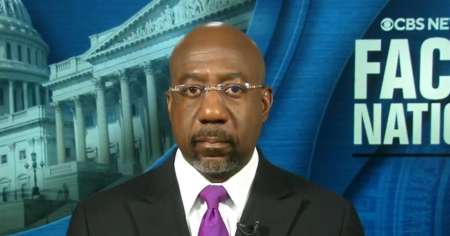
Democratic Representative Jason Crow from Colorado has voiced significant concerns about America’s approach to the ongoing conflict with Iran, arguing that the United States needs to fundamentally reconsider its long-term strategy in the Middle East rather than focusing solely on immediate tactical decisions. Speaking on CBS’s “Face the Nation with Margaret Brennan” this past Sunday, Crow drew parallels between the current situation and previous prolonged American military engagements in the region, suggesting that the nation has a troubling pattern of entering conflicts without clear exit strategies. His comments come at a critical moment as the war approaches its 60-day milestone and President Trump claims that hostilities have “terminated,” despite ongoing military actions that suggest otherwise. Crow’s central argument is straightforward yet profound: America must stop confusing tactical maneuvers with strategic vision, and lawmakers need to demand clarity about what the country is actually trying to achieve in Iran before committing additional resources to what could become another decades-long entanglement.
The Contradiction Between Presidential Statements and Military Reality
The situation on the ground tells a more complicated story than President Trump’s declaration that hostilities with Iran have ended. While the president made this announcement to congressional leaders late last week, the reality is that the United States continues to enforce a naval blockade on Iranian ports—an action that is traditionally considered an act of war under international law. Furthermore, despite a ceasefire that was brokered in early April, American military forces maintain threatening postures and have suggested that strikes could resume at any moment. This disconnect between the official narrative of ended hostilities and the ongoing military pressure campaign highlights the confusion surrounding American objectives in the region. President Trump has also indicated that he is reviewing a new peace proposal from Iran, though he has simultaneously suggested he is unlikely to accept it because, in his words, Iran has “not yet paid a big enough price.” The president has made clear that the U.S. blockade of the strategically vital Strait of Hormuz will remain in place until a comprehensive deal can be reached to end the war, creating a standoff situation where both sides are waiting for the other to blink first.
Learning from Past Failures in Iraq and Afghanistan
Representative Crow didn’t mince words when reflecting on America’s track record in the Middle East, pointing to what he sees as catastrophic failures in both Iraq and Afghanistan as cautionary tales that should inform current policy decisions regarding Iran. His assessment of these previous conflicts was blunt and sobering: the United States spent trillions of dollars in Afghanistan only to “replace the Taliban with the Taliban,” and in Iraq, the removal of Saddam Hussein’s regime ultimately created the conditions for ISIS to emerge and terrorize the region. These weren’t merely expensive mistakes—they were fundamental failures of strategic thinking that cost countless lives, destabilized entire regions, and ultimately left America with little to show for its massive investment of blood and treasure. Crow characterized the current Iran situation as “just yet another example” of America’s inability to develop clear objectives and, perhaps more importantly, to identify realistic exit strategies before committing to military action. His critique suggests that American foreign policy in the Middle East has been reactive rather than proactive, tactical rather than strategic, and far too often guided by short-term political considerations rather than long-term national interests.
The Deeper Question: Does America Want Perpetual Conflict?
Beyond the immediate tactical questions about blockades, drone warfare, and military strikes, Crow argued that Americans need to confront a more fundamental question: does the country really want to continue engaging in conflicts throughout the Middle East for another five, ten, or even twenty years? This question cuts to the heart of America’s role in the world and challenges the assumption that military intervention is the default response to regional instability or threats to American interests. Crow observed that when Iran blocks the Strait of Hormuz and the U.S. responds by blockading their blockade, the situation becomes an escalatory spiral where tactical responses to immediate provocations replace thoughtful consideration of long-term goals. The congressman’s frustration was evident as he emphasized that national conversations about Iran focus almost entirely on tactical questions—whether to blockade, how to counter specific weapons systems, what targets to strike—rather than on the strategic question of what America is actually trying to accomplish and whether military force is the right tool for achieving those objectives. This critique implies that without a clear strategy, tactical successes become meaningless, and the conflict simply continues indefinitely without bringing the country any closer to a desirable outcome.
Refusing to Fund Endless Conflicts Without Clear Objectives
Representative Crow’s concerns aren’t merely rhetorical—he’s putting them into action by opposing the Pentagon’s massive $1.5 trillion budget request that Defense Secretary Pete Hegseth presented to congressional committees last week. Crow stated unequivocally that he believes “we don’t need that money,” arguing that munition stockpiles have already been adequately funded and that approving additional funding would simply perpetuate the same destructive pattern that characterized American involvement in Iraq and Afghanistan. His position represents a significant departure from the typical congressional approach of deferring to military leadership on budgetary matters, and it signals a growing willingness among some lawmakers to use the power of the purse to force strategic clarity. Crow emphasized that he refuses to continue “throwing good money after bad” and constantly funding conflicts that never reach satisfactory conclusions for American interests. His stance is that somebody needs to be willing to say “enough is enough” and break the cycle of open-ended military commitments that drain national resources without producing meaningful results. This position places Crow in opposition not just to the Pentagon’s budget request, but to a broader foreign policy establishment that has historically supported sustained military engagement in the Middle East regardless of outcomes.
Demanding Presidential Accountability and Congressional Authorization
Perhaps most significantly, Representative Crow is demanding that President Trump provide clear answers about his strategy before Congress approves additional funding for military operations. Crow pointed out that the president has not articulated a coherent strategy to Congress, has not sought proper congressional authorization for the conflict (as required by the Constitution’s war powers provisions), and has not even explained to the American people what he is trying to accomplish in Iran. This lack of transparency and accountability represents a constitutional problem as much as a strategic one, as it sidelines Congress’s role in decisions about war and peace. Crow made clear that he will not write “blank checks” to support military operations when the commander-in-chief cannot or will not explain what success looks like, how it will be achieved, or when American forces might be able to disengage. His position reflects a growing sentiment among some members of Congress that the legislative branch has abdicated too much authority to the executive branch on matters of war, allowing presidents to conduct extended military operations without proper oversight or clear objectives. By tying funding to demands for strategic clarity and proper authorization, Crow is attempting to reassert congressional authority and force a more deliberate decision-making process that might prevent the Iran conflict from becoming another multi-decade quagmire that consumes American resources without advancing American interests.