


Supreme Court Ruling Deals “Devastating Blow” to Voting Rights, Says Senator Warnock
A Landmark Decision That Reshapes American Democracy
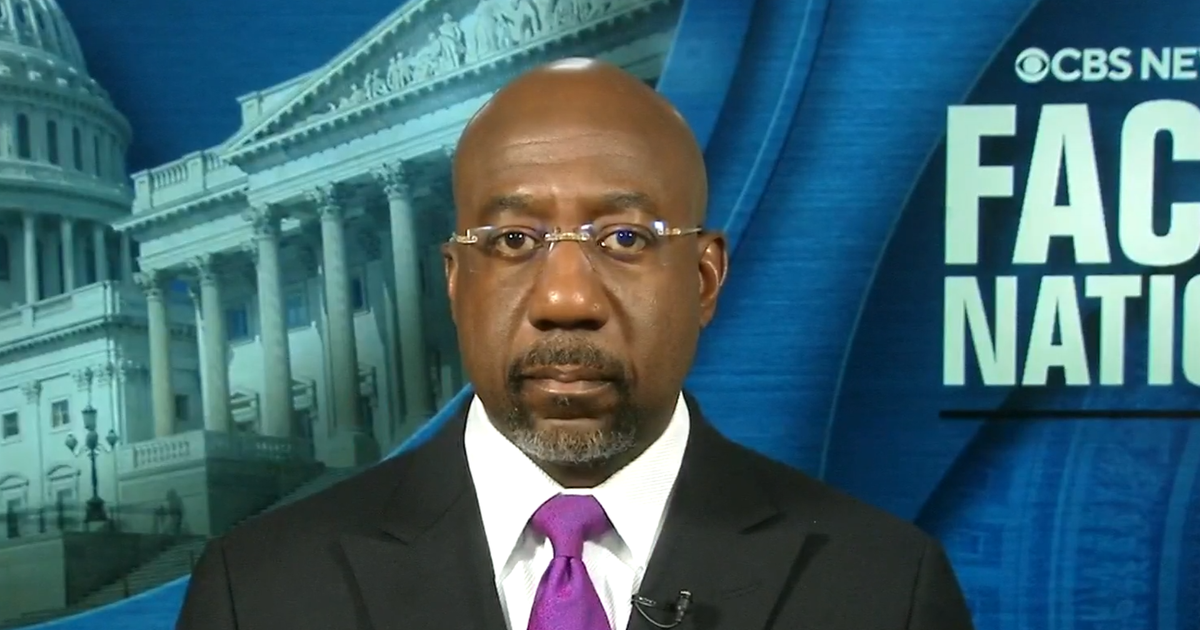
In a passionate appearance on CBS’s “Face the Nation,” Democratic Senator Raphael Warnock of Georgia didn’t mince words about the Supreme Court’s recent decision regarding Louisiana’s congressional map. The ruling, which struck down a redistricting plan that included two majority-Black districts, represents what Warnock called “a massive and devastating blow” not just to American democracy, but particularly to communities of color throughout the South. This decision has sent shockwaves through the political landscape, effectively narrowing the protections offered by the historic Voting Rights Act and setting the stage for what many fear will be a new era of partisan redistricting battles. The Court’s conservative majority determined that compliance with Section 2 of the Voting Rights Act could not justify Louisiana’s use of race as a factor in redrawing congressional district lines, a decision that legal experts predict will make it significantly harder for minority voters and voting rights advocates to successfully challenge potentially discriminatory voting maps in the future.
The Redistricting Arms Race Intensifies
Senator Warnock, who has served Georgia in the Senate since 2021 and previously worked as a pastor, placed the Supreme Court’s decision within the broader context of an escalating redistricting battle that has engulfed American politics. According to Warnock, the current situation began when President Trump’s political team pressured Texas Republican leaders to redraw the state’s congressional map in a way that would benefit the GOP. This move sparked immediate countermeasures from Democrats in California and triggered similar redistricting efforts by both parties across numerous states. “The court, sadly, poured fuel on this redistricting arms race,” Warnock explained, expressing his concern that the Supreme Court’s decision would only accelerate this troubling trend. He acknowledged that while he personally opposes gerrymandering in principle, Democrats felt they had no choice but to engage in similar tactics. “I don’t like gerrymandering, but we could not unilaterally disarm,” he stated, referencing Trump’s direct intervention in Texas where the former president reportedly demanded “six more seats” from state GOP leaders, forcing Democratic-controlled states like California and Virginia to respond in kind.
The Real Solution: Banning Partisan Gerrymandering
Despite acknowledging the political necessity of Democrats engaging in redistricting battles, Senator Warnock was clear about what he believes is the ultimate solution to this escalating problem: a complete ban on partisan gerrymandering. He eloquently described how the current system fundamentally distorts the democratic process, explaining that gerrymandering “turns our elections on its head, so that rather than the people picking their politicians or their public servants, the politicians are picking their voters.” This observation cuts to the heart of why redistricting has become such a contentious and consequential issue in American politics. When political parties can draw district boundaries to maximize their electoral advantage, they effectively undermine the foundational principle that elected officials should be accountable to voters, not the other way around. The Supreme Court’s recent decision, in Warnock’s view, has only made this problem worse by limiting the legal tools available to challenge maps that potentially discriminate against minority voters, thereby giving politicians even more freedom to manipulate district boundaries for partisan advantage.
Immediate Political Fallout and State Responses
The immediate aftermath of the Supreme Court’s decision has already begun to reshape the political landscape across America. Republican governors in several states, including Louisiana and Tennessee, have wasted no time in calling for special legislative sessions specifically to redraw congressional maps in light of the new legal framework established by the Court’s ruling. This rapid response underscores just how significant the decision is likely to be for the balance of political power in Congress and state legislatures across the country. Warnock warned that the impact would be particularly severe for communities of color in the South, where the Voting Rights Act has historically played a crucial role in ensuring fair political representation. “What happened this week is nothing less than a massive and devastating blow, not only to our democracy, but particularly to people of color in the South,” he emphasized. The Senator called for renewed vigilance and activism in defense of democratic principles, stating, “We will see a devastating impact as a result of this, and now, more than ever, we’ve got to stand up and fight for our democracy.”
The Erosion of the Voting Rights Act
Senator Warnock placed the recent Supreme Court decision within the context of a longer-term erosion of the Voting Rights Act, one of the most significant pieces of civil rights legislation in American history. He specifically referenced the Court’s 2013 decision in Shelby County v. Holder, which struck down the formula used to determine which states required federal preclearance before making changes to their voting procedures under Section 5 of the Act. That decision effectively gutted one of the law’s most powerful enforcement mechanisms, and in Warnock’s view, states previously constrained by these protections have since developed new methods of voter suppression. “Since they removed the protections of Section Five, states that used to play old games, they’re playing new games,” he observed. Warnock characterized these tactics as “21st Century Jim Crow tactics in new clothes,” including strategic moves like relocating polling places and closing voting locations in predominantly Black and brown communities. The latest Supreme Court decision, he argued, adds another layer to these challenges by making it harder to challenge redistricting maps even when voters overcome other barriers to participation, essentially muting their voices even when they manage to cast their ballots.
Why Representation Matters: A Personal Perspective
In one of the most compelling portions of his interview, Senator Warnock addressed the argument that the racial composition of districts doesn’t really matter for representation, calling this view historically ignorant and factually incorrect. Drawing on his own experience, he explained how every senator brings their unique background and perspective to their work: “When I go to the Senate, every week, I bring my story and my experience as a Black kid who grew up in public housing in Savannah, and so does that White kid who grew up in Appalachia.” This diversity of perspectives, he argued, is essential for crafting policies that truly serve all Americans. Warnock warned that the Supreme Court’s decision would lead to “an increasing monolith” in political representation, ultimately harming democracy itself and making it more difficult to develop policies that embrace all children and give every child a fair chance at success. His response to critics of voting rights protections was equally pointed: “I know that there are those who are tired of the remedy — I’m tired of racism. I think it’s a strange position to be more concerned about the medicine than you are about the malady.” This powerful statement encapsulates the fundamental disagreement at the heart of current debates over voting rights and representation in America.