
Federal Reserve Grapples with Middle East Crisis and Inflation Uncertainty
Interest Rate Policy in Flux Amid Global Tensions
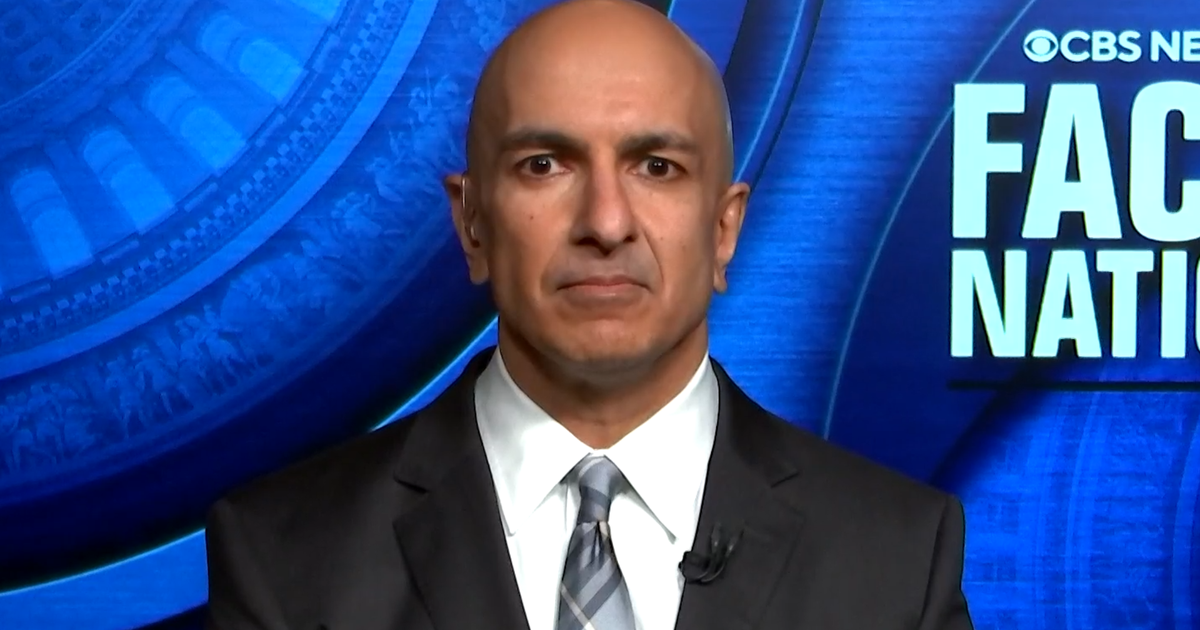
In a candid interview on “Face the Nation,” Minneapolis Federal Reserve Bank President Neel Kashkari revealed the considerable uncertainty facing America’s central bank as it navigates unprecedented economic challenges. Speaking to host Margaret Brennan, Kashkari explained his controversial decision to dissent from the Fed’s recent interest rate decision, signaling that rate cuts—which financial markets had been anticipating—may no longer be on the horizon. Instead, he warned that rate hikes could even become necessary depending on how events unfold in the Middle East. This marks a significant shift in Fed thinking and reflects the profound impact that geopolitical tensions are having on domestic economic policy. Kashkari emphasized that policymakers need to maintain an “open mind” about where interest rates are headed because so much depends on factors beyond their control, particularly the ongoing conflict involving Iran and the closure of the Strait of Hormuz, a critical waterway for global oil shipments.
The Fed’s traditional role of managing inflation and employment through interest rate adjustments has become exponentially more complex as external shocks reverberate through the American economy. Kashkari’s message was clear: the White House, financial markets, and American consumers should no longer assume that borrowing costs will come down anytime soon. The central bank is being forced to respond to circumstances that are largely outside its traditional toolkit, watching anxiously as energy and fertilizer prices climb and supply chains buckle under pressure. For ordinary Americans, this means mortgage rates, car loans, and credit card interest rates are likely to remain elevated, adding to the financial strain many households are already experiencing. The Fed’s uncertainty reflects a broader truth about the current moment—that domestic economic policy cannot be separated from international events, and that what happens in distant regions can have immediate and tangible effects on American family budgets.
The Energy Shock Rippling Through the Economy
Ten weeks into heightened tensions in the Middle East, the economic consequences are already being felt across America in ways that rival or exceed the shock from Russia’s invasion of Ukraine. Kashkari painted a sobering picture of the energy crisis unfolding, explaining that the price effects are showing up clearly in inflation data, particularly in the Personal Consumption Expenditures (PCE) measure that the Fed watches closely. The closure of the Strait of Hormuz—through which roughly a fifth of the world’s oil supply normally passes—has disrupted not just energy markets but also the flow of fertilizers and other petroleum-based products essential to agriculture and manufacturing. This isn’t just about paying more at the gas pump; it’s about cascading effects throughout the entire economy that touch everything from food prices to the cost of manufactured goods.
Perhaps most concerning is what Kashkari learned from his conversations with business leaders on the ground. A CEO of a major global company headquartered in Minnesota told him that even in the best-case scenario—if the Strait of Hormuz reopened immediately—it would take approximately six months for supply chains to return to something resembling normal operations. This timeline is critical because it means the inflationary pressures aren’t temporary or easily reversible; they’re likely to persist well into the future regardless of how quickly the geopolitical situation stabilizes. The Fed must now grapple with the reality that inflation may remain elevated not for weeks but for many months, forcing difficult decisions about whether to prioritize fighting inflation through higher interest rates or supporting economic growth and employment through lower rates. For American families already struggling with high prices, this means relief is unlikely to come quickly, and the economic pain may intensify before it improves.
Labor Market Stability Hangs in the Balance
While discussing the labor market, Kashkari described what he called a “low hire, low fire environment” that has characterized employment trends for some time. Recent data shows signs of stabilization, with unemployment claims remaining low and the unemployment rate hovering around 4.3% for the past six months. On the surface, this suggests resilience in the job market despite broader economic headwinds. However, Kashkari warned that this stability could prove fragile if the Middle East crisis deepens or continues for an extended period. The mechanism is straightforward but painful: as Americans are forced to spend more on essentials like gasoline and heating fuel, they inevitably cut back on other purchases. This reduction in consumer spending—which drives roughly 70% of the U.S. economy—can trigger a slowdown in business activity, leading companies to reduce hiring or even begin layoffs.
The unevenness of these economic effects is particularly troubling from a fairness perspective. Lower-income Americans, who spend a larger proportion of their income on necessities like fuel and food, are hit hardest by energy price spikes. They have less cushion in their budgets to absorb shocks and fewer resources to fall back on if they lose employment. Meanwhile, corporate layoffs that have already begun in some sectors could accelerate if consumer spending contracts significantly. Kashkari’s concern is that what looks like a stable labor market today could deteriorate rapidly under continued pressure from high inflation and squeezed household budgets. The Fed faces a delicate balancing act: raise rates too aggressively to fight inflation, and you risk pushing the economy into recession and triggering job losses; keep rates too low, and you allow inflation to become entrenched, eroding purchasing power and creating different but equally serious hardships for working families. There are no easy answers, only trade-offs that will affect millions of lives.
Leadership Transition and Institutional Change at the Fed
The interview took an intriguing turn when Brennan asked about internal changes at the Federal Reserve itself. Kevin Warsh, whose nomination as the new Fed Chair has advanced through the Senate Banking Committee with confirmation expected in mid-May, has been publicly critical of how the institution has handled inflation in recent years. Warsh has called for what he terms a “serious shaking up” of the Fed, including a “good family fight” over how the central bank conducts its business. These are strong words that signal potential significant changes in how America’s most powerful economic institution operates. Kashkari’s response was diplomatically positive, suggesting that fresh perspectives and robust debate could be beneficial rather than threatening.
Specifically, Kashkari indicated openness to reexamining several technical aspects of Fed operations that might seem arcane to outsiders but have real consequences for how monetary policy affects the economy. The “dot plot,” which shows individual Fed officials’ projections for future interest rates, has long been controversial for potentially creating confusion or unintended market reactions. Questions about the Fed’s balance sheet—the trillions of dollars in securities it holds and how it uses these holdings as a policy tool—also merit fresh examination. Even fundamental issues like how inflation should be measured are apparently on the table for discussion. Kashkari’s willingness to consider different inflation metrics suggested that the incoming leadership may bring meaningful methodological changes, not just rhetorical shifts. For the public, these technical debates matter because they ultimately determine whether the Fed succeeds in its dual mandate of stable prices and maximum employment. A more effective Fed means a more stable economy with better outcomes for ordinary Americans, while institutional dysfunction or outdated approaches can amplify economic pain unnecessarily.
The Looming Debt Crisis No One Wants to Address
Toward the end of the interview, Brennan raised a question that rarely gets sustained attention but poses perhaps the gravest long-term threat to American prosperity: the national debt, which now exceeds 100% of GDP and continues growing toward record territory. Kashkari’s response was notably candid about the limits of the Fed’s role while acknowledging the seriousness of the problem. He admitted that no one really knows at what point unsustainable debt levels trigger an actual crisis—there’s no clear line that, once crossed, definitely leads to disaster. However, Congressional Budget Office projections make clear that current fiscal trends are simply unsustainable over the long term. At some point, the accumulation of debt creates vulnerabilities that can manifest as a loss of confidence in U.S. government bonds, rising borrowing costs that crowd out other spending, or even a full-blown fiscal crisis.
What makes this issue particularly frustrating is that addressing it falls squarely within the responsibility of Congress and the executive branch, not the Federal Reserve. The Fed can manage monetary policy—interest rates and money supply—but it cannot control how much the government spends or how much it collects in taxes. These are fundamentally political decisions that require difficult choices and compromises that elected officials have consistently avoided making. Kashkari noted that he doesn’t see an immediate crisis brewing, which unfortunately may be part of the problem: without an acute sense of urgency, the political system lacks motivation to make painful decisions about spending cuts or tax increases. Meanwhile, the debt continues growing, and each year of inaction makes the eventual reckoning more severe. For younger Americans especially, this represents a mounting burden that will constrain economic opportunities and policy options for decades to come. The failure to address fiscal sustainability now is essentially a decision to impose greater hardships on future generations—a profoundly unfair but politically convenient approach that has characterized fiscal policy for far too long.
Conclusion: Navigating Uncharted Economic Waters
The picture that emerges from Kashkari’s interview is one of profound uncertainty and complex trade-offs facing America’s economic policymakers. The Federal Reserve, which typically focuses on domestic economic indicators to guide its decisions, now finds itself hostage to geopolitical events it cannot control or even accurately predict. The Middle East crisis has already produced inflation shocks comparable to major historical disruptions, yet its duration and ultimate severity remain unknown. Supply chain disruptions that will take months to resolve even in optimistic scenarios mean that inflationary pressures will persist regardless of how quickly tensions ease. The labor market, while currently stable, sits on precarious foundations that could crumble if consumer spending contracts under the weight of high energy prices. Meanwhile, leadership changes at the Fed itself promise fresh approaches but also introduce additional uncertainty about the institution’s direction and priorities. And hovering over everything is the long-term fiscal unsustainability that poses existential risks to American prosperity but generates little political will for corrective action. For American families trying to plan their financial futures, the message is sobering: expect continued economic volatility, prepare for interest rates to remain higher than anticipated, and understand that relief from current inflationary pressures may be considerably further away than hoped. The Fed is doing what it can within its limited sphere of influence, but larger forces—geopolitical, fiscal, and structural—will ultimately determine whether America navigates these challenges successfully or faces more severe economic disruption in the months and years ahead.