


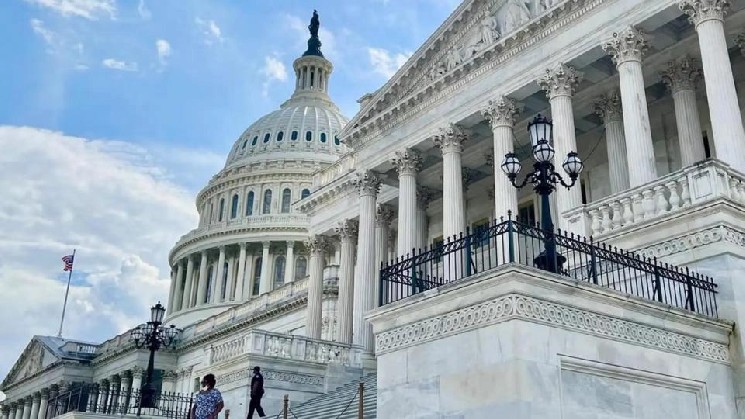

The Future of Crypto Legislation: Understanding the Market Structure Bill’s Uncertain Path
Time Is Running Out for Critical Cryptocurrency Legislation
The cryptocurrency industry finds itself at a critical juncture as the much-anticipated crypto market structure bill faces an increasingly uncertain future. Despite significant interest from industry stakeholders and ongoing discussions in Washington, the legislation has experienced a noticeable lull in public progress over the past month. While it’s challenging to predict exactly what will happen with this bill, one thing has become abundantly clear: the window of opportunity for passage is rapidly closing. The crypto community, which has invested considerable resources and energy into advocating for this legislation, is watching nervously as the calendar pages turn and the prospect of comprehensive regulatory clarity becomes more uncertain with each passing day.
The situation represents more than just another piece of delayed legislation in Washington’s notoriously slow-moving machinery. This bill, often referred to as the Clarity Act, represents years of work, negotiation, and compromise aimed at establishing a clear regulatory framework for the cryptocurrency industry in the United States. The lack of visible progress doesn’t necessarily mean discussions have stopped entirely, but it does suggest that significant hurdles remain. For an industry that has long operated in regulatory gray areas, dealing with patchwork guidance and sometimes contradictory directives from various government agencies, this legislation was supposed to be the breakthrough moment that would provide the certainty needed for sustainable growth and innovation.
Why This Legislation Matters More Than You Think
Understanding the importance of this market structure bill requires looking beyond the immediate headlines and considering what’s actually at stake for the cryptocurrency industry and its participants. Currently, much of the regulatory guidance that crypto companies operate under comes from sources that aren’t necessarily permanent or binding in the long term. For instance, staff statements from the Securities and Exchange Commission, while influential, don’t carry the same weight as formal rules or legislation. The SEC does have the authority to develop more comprehensive rules through a formal process that includes public notice and comment periods, but creating these rules takes considerable time and resources. More importantly, rules created by regulatory agencies can be modified or reversed by future administrations with different priorities or perspectives on cryptocurrency.
This is where the proposed market structure legislation becomes critically important. By establishing crypto regulations through an act of Congress, the rules would be enshrined in law, making them significantly more difficult for any future administration to simply undo or ignore. This permanence is exactly what the crypto industry has been seeking – a stable regulatory foundation upon which companies can build long-term business strategies, make significant investments, and innovate with confidence. Without the passage of legislation like the Clarity Act, there’s a very real possibility that the crypto industry will find itself having the same conversations about regulatory uncertainty just a few years down the road, potentially under a different administration with different views on how digital assets should be regulated. The absence of this legislation doesn’t just maintain the status quo; it perpetuates a cycle of uncertainty that has plagued the industry for years.
The Ticking Clock and Looming Deadlines
The timeline for potential passage of the crypto market structure bill is governed by the practical realities of how Congress operates, particularly in election years. Since at least last December, people following this legislation have circled Memorial Day – falling on May 25 this year, approximately one month away – as what insiders call a “drop-dead” date. This doesn’t mean the bill literally dies on that date, but rather that it represents the practical deadline by which legislation needs to show substantial progress if it’s going to have any realistic chance of passing before the November elections. The reasoning behind this deadline is straightforward: as summer arrives and the election season intensifies, members of Congress increasingly focus on their campaigns rather than legislative business. They’ll spend more time in their home districts and states meeting with constituents and fundraising, leaving little time or political capital for complex legislation like a comprehensive crypto regulatory framework.
Before Congress members scatter to their respective campaign trails, they’re facing several other significant legislative priorities that will consume their attention and time. The House of Representatives needs to tackle a bill to fund the Department of Homeland Security, which is always a politically charged issue given the agency’s role in border security and immigration enforcement. Meanwhile, the Senate is dealing with the confirmation process for Kevin Warsh, who has been nominated to become the next Chair of the Federal Reserve – one of the most important economic policy positions in the government. These competing priorities mean that even if there’s genuine interest in passing crypto legislation, there’s only so much bandwidth available in Congress’s legislative calendar. The crypto bill needs to compete for attention and floor time with these and other pressing matters, making the path forward increasingly narrow as time goes by.
Where Things Stand and What Needs to Happen
To understand why the crypto market structure bill faces such challenges, it helps to know what steps still need to occur before it could become law. The process requires navigating multiple committees, securing votes in both chambers of Congress, reconciling any differences between House and Senate versions, and ultimately landing on President Donald Trump’s desk for signature. Currently, the Senate Banking Committee hasn’t even scheduled a markup hearing – essentially a working session where committee members debate, amend, and vote on the legislation. This markup represents the crucial first step in the Senate’s process, and without it, nothing else can move forward. The crypto industry clearly understands the urgency of this moment. More than 100 companies recently signed an open letter pushing for this markup hearing to be scheduled, demonstrating the unified front that the industry is trying to present to lawmakers.
However, despite this pressure and the obvious industry interest, it remains unclear how close the Senate Banking Committee actually is to moving forward with the bill. One of the persistent sticking points in negotiations has been the issue of stablecoin yield – whether and how companies can offer interest or returns on stablecoins, which are cryptocurrencies designed to maintain a stable value relative to traditional currencies like the U.S. dollar. This issue has dominated discussions, but it’s far from the only unresolved question. Other technical and policy issues remain under negotiation, though many of these discussions are happening behind closed doors, away from public view. Even once the Senate Banking Committee resolves these issues and advances the bill, the process doesn’t end there. The House of Representatives would need to vote again on whatever version emerges from the Senate, adding yet another layer of complexity and potential for delay to an already complicated process.
The House Believes It’s Done Its Part
Congressman French Hill, who chairs the House Financial Services Committee and has been a key figure in crafting the House’s version of crypto legislation, has expressed confidence that many of the challenging issues have already been addressed in the work his chamber has completed. In recent comments, he pointed to the House’s work on previous bills like FIT21 (the Financial Innovation and Technology for the 21st Century Act) from the last Congress, as well as the current CLARITY Act, as providing a solid foundation that the Senate can build upon. According to Hill, critical questions around sales practices for stablecoins and regulations for decentralized finance – one of the most technically complex and philosophically important aspects of the crypto ecosystem – have already been thoughtfully worked through in the House’s version of the legislation.
Hill’s perspective is that the Senate has relied substantially on the groundwork laid by the House in developing its own approach to crypto regulation. He points to the Senate Agriculture Committee’s markup as evidence that senators are indeed building on the foundation established by their House colleagues. His view suggests that finding common ground between the two chambers should be achievable because they’re not starting from fundamentally different positions – the Senate is largely working from frameworks that the House has already vetted and refined. However, this optimistic assessment doesn’t fully account for the political dynamics and specific concerns that individual senators may have, nor does it address the time constraints that continue to make passage before the election increasingly difficult.
What Happens Next and Why You Should Pay Attention
As the legislative process continues to unfold – or not unfold, as the case may be – the crypto industry and interested observers will have opportunities to engage with these issues and understand where things stand. Industry conferences and gatherings, such as the upcoming Consensus event in Miami, will provide forums for discussing the latest developments, hearing from policymakers and industry leaders, and understanding what the path forward might look like. These conversations matter because the outcome of this legislative effort will shape the cryptocurrency industry for years to come, affecting everything from how new projects launch to how existing companies structure their operations to how consumers interact with digital assets.
For now, the crypto community finds itself in a familiar but frustrating position: waiting and watching as the legislative process moves at its own pace, hoping that lawmakers will prioritize this issue despite competing demands on their time and attention. The next few weeks will be telling. If the Senate Banking Committee schedules and holds a markup hearing soon, there might still be a narrow path to passage before the election season completely takes over. If that doesn’t happen, the industry may need to prepare for an extended period of continued regulatory uncertainty, operating under the patchwork of guidance and rules that currently exists while hoping for another opportunity to achieve comprehensive legislation in the future. The stakes are high, the timeline is compressed, and the outcome remains genuinely uncertain – a situation that, unfortunately, has become all too familiar for the cryptocurrency industry in its relationship with Washington.