
Security Breach Raises Critical Questions About Public Safety in America
A Nation Confronts Its Most Complex Threat Environment
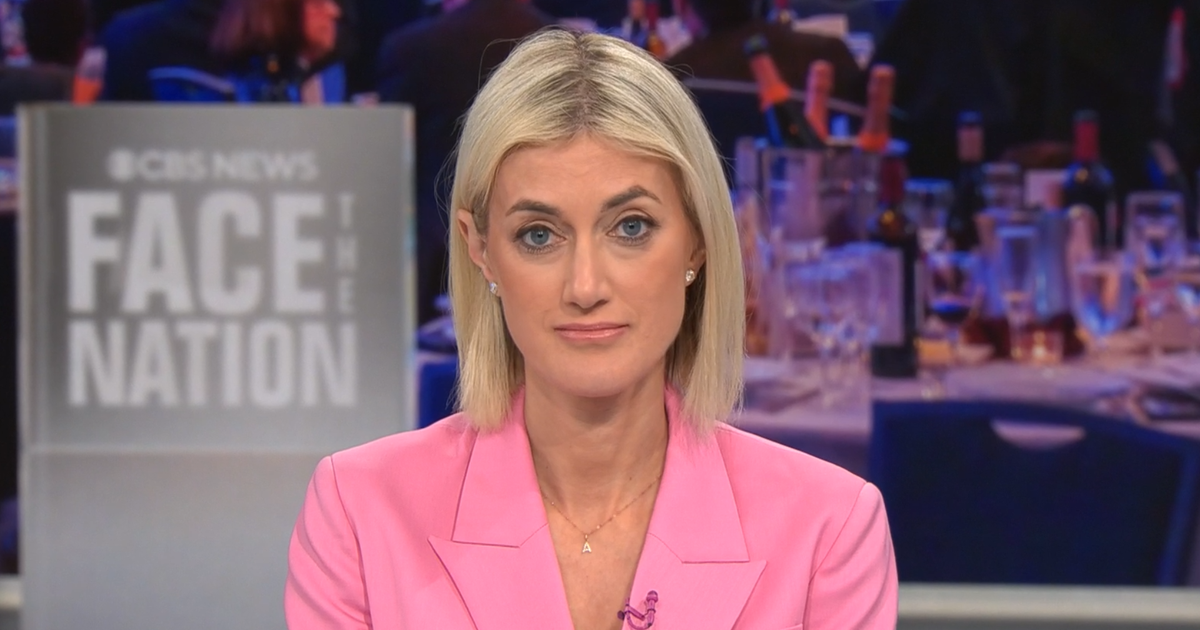
In a sobering discussion on CBS News’ “Face the Nation,” national security experts examined a frightening security incident that has left Americans questioning whether anywhere is truly safe anymore. Samantha Vinograd, a former top homeland security official in the Biden administration, and AT Smith, former deputy director of the Secret Service, provided their professional assessments of what went wrong during a high-profile event that saw an armed individual breach multiple security layers. The conversation revealed the uncomfortable truth that even with extensive planning, National Guard presence, Secret Service protection, and private security forces creating a wide perimeter around the venue, a determined attacker managed to get dangerously close to the President and Vice President. According to Vinograd, who was actually sheltering with colleagues near the security perimeter during the incident, America now faces “the most complex threat environment in our nation’s history,” particularly from lone actors who become radicalized to violence, often through online channels. The incident has forced security professionals and ordinary citizens alike to wake up and ask a fundamental question: if something like this can happen in a room with the most heavily guarded man in the world, what does that mean for the rest of us?
The System Worked—But Was It Enough?
When Margaret Brennan pressed AT Smith on whether “the system worked,” his answer was nuanced and troubling. Yes, the Secret Service performed exactly as trained when it came to covering and evacuating the President and Vice President, who were removed through different exits as planned. The security perimeter around the hotel was described as “exhaustive,” with weeks of intelligence gathering, physical barriers, and officers positioned throughout the area. Yet Smith, drawing on his extensive experience, acknowledged that no one is more self-critical than the Secret Service itself, and this incident demands serious examination. The fact that an individual managed to pass through a magnetometer with two firearms and get as close as he did is simply “not acceptable,” in Smith’s words. The investigation will need to determine how the suspect transported weapons to the venue—possibly by avoiding air travel and using trains where screening is less rigorous—and how he managed to bring them into the hotel itself. The incident reveals a fundamental tension in American security: we’ve developed sophisticated protocols for protecting high-value targets, but those protocols were designed for a different era and may no longer be sufficient for the threats we face today.
A Dangerous New Normal in American Public Life
Perhaps the most chilling aspect of the discussion was the acknowledgment that what happened represents a “new normal” rather than an aberration. Vinograd pointed out that multiple protest groups surrounded the building that night—not just political protesters opposing the administration, but groups with grievances ranging from connections to Jeffrey Epstein to concerns about corporate ownership of media networks to opposition to potential military action in Iran. This cacophony of anger and the dehumanization that happens online and in public discourse has created an environment where lawmakers and journalists—many of whom were in that room—face constant attacks and threats. The President himself reportedly used the word “united” to describe how people felt in that moment, bound together by their shared fear of what might happen next. This atmosphere of pervasive threat and animosity has seeped deeply into American politics and everyday conversation. As parents and human beings, both the host and guests struggled with how society addresses this fundamental breakdown in civil discourse and the translation of online rage into real-world violence.
Rethinking Security Protocols on American Soil
The conversation raised uncomfortable questions about whether American security practices need to fundamentally change. Smith noted that when the President or Vice President travels overseas, the Secret Service typically takes over an entire hotel and locks it down completely. That didn’t happen in this case, even though both the President and Vice President were present, because it occurred on U.S. soil where such extensive measures aren’t standard practice. The event wasn’t designated as a “national special security event,” though the planning and preparation were comparable to that level. Now security professionals are questioning whether the United States needs to adopt what Brennan called “more of an Israeli model”—assuming everywhere is a potential target and treating public venues accordingly. This would mean screening all hotel guests at events like this, not just those attending the specific function, and potentially closing entire facilities to the public when high-level officials are present. For a country that has traditionally valued openness and accessibility, this represents a significant philosophical shift. It acknowledges that the American approach to security, which has generally been less restrictive than in countries facing constant threats, may no longer be viable given the current threat landscape.
The Limits of Protection and the Role of Citizens
Vinograd made a crucial point that resonated throughout the discussion: “You can’t protect against everything.” No matter how extensive the planning, how sophisticated the technology, or how numerous the security personnel, determined individuals can still find ways to threaten public safety. This reality places responsibility not just on law enforcement and security professionals, but on every American citizen. Vinograd, speaking both as a mother and as someone with extensive security experience, emphasized that every incident like this should serve as a wake-up call on multiple levels. While security professionals must continually reassess whether additional protocols are needed, ordinary citizens must also understand they have a role to play in homeland security. This means taking seriously the concept of “see something, say something”—not as a tired slogan, but as a genuine responsibility. When someone in your workplace, family, or social circle shows signs of moving down a pathway toward violence, there’s an obligation to seek help from law enforcement or other trained professionals. The integration between state, local, and federal officials needs to be stronger than ever, creating networks that can identify and intervene with potential threats before they materialize into violence.
A Turning Point or Just Another Incident?
As the interview concluded, Vinograd admitted that “every time an incident like this happens, the optimist in me thinks, perhaps this will be a turning point.” Perhaps this will be the moment when every person in the country thinks carefully about what they say and how they act, recognizing that words have real consequences. Perhaps this will motivate the systemic changes needed in how we approach security at public gatherings. Perhaps this will inspire the individual vigilance and community responsibility that could prevent future attacks. But the weariness in her voice suggested the darker possibility—that this incident will simply become another data point in America’s ongoing struggle with political violence and domestic threats, remembered briefly before the news cycle moves on and the underlying problems remain unaddressed. The choice facing Americans isn’t really about security technology or protocols, though those matter. It’s about whether as a society we’re willing to make the difficult changes in how we treat each other, how we conduct political discourse, and how we balance openness with safety. The experts interviewed made clear that law enforcement and security services are doing their jobs, often heroically. But they can’t solve this problem alone. It requires a national reckoning with the anger, division, and dehumanization that have become commonplace in American life. Until that happens, the question “is anywhere safe?” will continue to haunt us.