


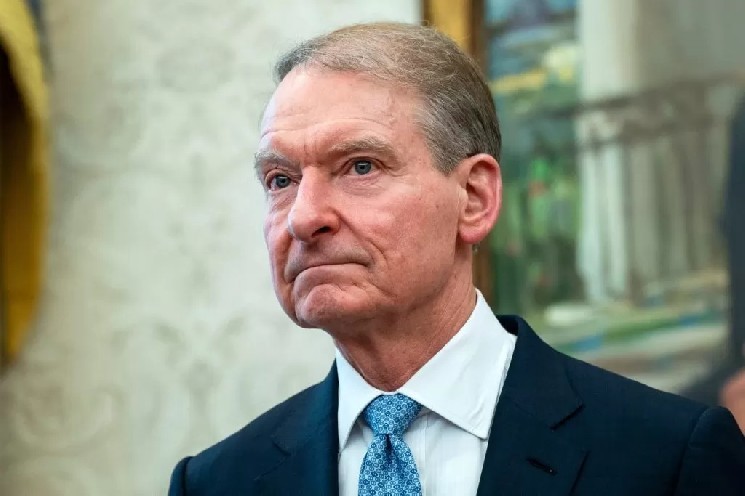

SEC Chairman Paul Atkins Faces Scrutiny Over Cryptocurrency Cases and Regulatory Future
Political Tensions Rise Over Dropped Crypto Cases
The cryptocurrency regulatory landscape in the United States took center stage yesterday when Paul Atkins, the newly appointed Chairman of the U.S. Securities and Exchange Commission (SEC), appeared before the U.S. House of Representatives Financial Services Committee. What was supposed to be a routine hearing quickly transformed into a heated examination of the SEC’s recent handling of cryptocurrency enforcement cases, particularly those involving high-profile figures in the digital asset space. The testimony highlighted the growing political divide over how America should approach cryptocurrency regulation, with Democratic committee members expressing serious concerns about what they perceive as a significant shift in the agency’s enforcement priorities since the change in administration.
The hearing became particularly contentious when Democratic members of the committee, led by senior member Maxine Waters, demanded detailed explanations for why the SEC has suspended or dropped numerous cryptocurrency-related cases that were actively being pursued under the previous administration. According to reports from Coindesk, Waters pointed out that nearly all ongoing cryptocurrency enforcement actions have been abandoned or significantly scaled back since President Donald Trump returned to office and appointed Atkins to lead the SEC. This dramatic shift in enforcement strategy has raised eyebrows among lawmakers who question whether the agency is fulfilling its mandate to protect investors and maintain fair markets, or whether political considerations are now influencing prosecutorial decisions that should be based solely on legal merits and investor protection concerns.
The Justin Sun Case Takes Center Stage
Among the various cases discussed during the hearing, the SEC’s decision to suspend proceedings against Justin Sun, the controversial founder of Tron and its associated cryptocurrency TRX, became the focal point of Democratic criticism. The case against Sun was far from trivial – the SEC had been investigating him and his companies for a wide range of serious allegations that went to the heart of market manipulation concerns. These allegations included accusations that Sun and his associates had improperly inflated the price of TRX tokens through coordinated trading activities, potentially deceiving retail investors about the genuine market demand for the cryptocurrency. The investigation also examined whether Sun’s companies had violated securities laws in how they marketed and sold digital assets to American investors.
Representative Maxine Waters used the Sun case as a prime example of what she characterized as the SEC’s troubling new approach to cryptocurrency enforcement. Waters didn’t mince words, suggesting that there might be improper connections influencing the agency’s decision-making process. She specifically highlighted what she described as Justin Sun’s efforts to cultivate relationships with individuals close to President Trump, stating pointedly to Chairman Atkins: “While you were looking for a possible solution, Mr. Sun was busy currying favor with Trump’s inner circle.” This reference was particularly aimed at Sun’s known involvement with World Liberty Financial, a cryptocurrency and decentralized finance project that has financial ties to the Trump family. The implication was clear – Waters and her Democratic colleagues are concerned that political connections, rather than legal considerations, may be influencing which cryptocurrency cases the SEC chooses to pursue or abandon.
Concerns About Conflicts of Interest and Agency Credibility
The Democratic members of the committee expanded their criticism beyond just the Sun case, raising broader concerns about what they see as a pattern of the SEC turning a blind eye to cryptocurrency-related issues that might touch on President Trump’s business interests or those of his family and close associates. These lawmakers argued that this selective approach to enforcement is doing serious damage to the SEC’s reputation as an independent regulatory agency that acts without political bias. The credibility of the SEC has historically rested on the public’s belief that it enforces securities laws fairly and consistently, regardless of the political connections or influence of those being investigated. When that perception is undermined, Democrats argued, it weakens the entire regulatory framework that protects American investors.
Waters and her colleagues pressed Atkins on whether the agency has established clear ethical guidelines and conflict-of-interest protocols to ensure that enforcement decisions are made on legal grounds rather than political considerations. They questioned whether the SEC is conducting adequate reviews of cases involving individuals or companies with ties to the current administration before deciding to drop or suspend them. The concern isn’t merely theoretical – with cryptocurrency increasingly becoming a mainstream investment vehicle held by millions of Americans, the stakes for effective and impartial regulation have never been higher. If investors lose faith that the SEC will protect them equally regardless of a bad actor’s political connections, it could undermine confidence in the entire cryptocurrency market and potentially expose countless retail investors to fraud and manipulation.
Atkins Responds With Restraint and Promises Transparency
Faced with these pointed questions and criticisms, Chairman Atkins found himself in a delicate position. On one hand, he needed to address the legitimate oversight concerns raised by members of Congress; on the other hand, he’s bound by regulations and prosecutorial ethics that limit what he can say publicly about ongoing or recently closed investigations. Atkins navigated this challenge by declining to comment on specific cases, including the Justin Sun matter, citing the need to protect the integrity of the SEC’s investigative and enforcement processes. However, he didn’t simply dismiss the committee’s concerns. Instead, Atkins offered to provide detailed information about these cases in a confidential briefing format, where he could discuss sensitive enforcement matters with appropriate lawmakers without compromising investigations or violating privacy regulations.
This response, while procedurally appropriate, did little to satisfy Democratic committee members who wanted public accountability and transparency about what they see as a major policy shift at the SEC. The tension in the hearing room reflected a broader debate about how much transparency the public deserves regarding the reasoning behind prosecutorial decisions, especially when those decisions involve dropping cases against wealthy and politically connected individuals. Atkins’ measured approach suggests he’s trying to balance the legitimate need for some confidentiality in enforcement matters with the equally legitimate congressional oversight role, but whether this middle ground will satisfy critics remains to be seen.
Looking Ahead: Atkins Outlines 2026 Cryptocurrency Priorities
Despite the contentious atmosphere surrounding the discussion of dropped cases, Chairman Atkins also used his testimony to outline a forward-looking vision for how the SEC will approach cryptocurrency regulation in 2026 and beyond. In what he characterized as one of his top priorities, Atkins emphasized that providing regulatory clarity for cryptocurrencies will be a central focus of his tenure at the agency. This commitment to clarity represents a potential shift from what many in the cryptocurrency industry have criticized as the previous SEC’s “regulation by enforcement” approach, where companies often didn’t know whether their activities violated securities laws until they were sued by the agency.
Atkins shared his broader regulatory agenda through a statement on X (formerly Twitter), outlining three main priorities for the SEC in 2026. First, the agency will work on providing clear regulatory frameworks for cryptocurrencies, potentially through new rulemaking or updated guidance that gives companies better understanding of how existing securities laws apply to digital assets. Second, the SEC will maintain strong enforcement capabilities, but with a focus specifically on eliminating fraud rather than pursuing companies for technical violations of unclear regulations. This distinction suggests a more targeted enforcement approach that prioritizes cases involving actual harm to investors over regulatory technicalities. Third, Atkins committed to reforming the disclosure regime, potentially making it easier for cryptocurrency companies to register with the SEC and provide investors with meaningful information without being buried in compliance costs designed for traditional financial companies.
Importantly, Atkins also mentioned that the SEC will coordinate closely with the Commodity Futures Trading Commission (CFTC) through an initiative called Project Crypto. This inter-agency collaboration is significant because one of the long-standing challenges in U.S. cryptocurrency regulation has been the unclear division of authority between the SEC (which regulates securities) and the CFTC (which regulates commodities). Many cryptocurrencies exist in a gray area between these categories, creating regulatory uncertainty. By working together through Project Crypto, these agencies could potentially provide the kind of unified regulatory framework that both industry participants and investor advocates have been requesting for years. Whether this ambitious agenda can be achieved while addressing the political concerns raised by Democratic lawmakers remains one of the key questions that will define Atkins’ tenure as SEC Chairman.