


Dramatic Rescue Beneath Washington’s High Steel Bridge: A Warning About Dangerous Terrain
The Harrowing Rescue Operation
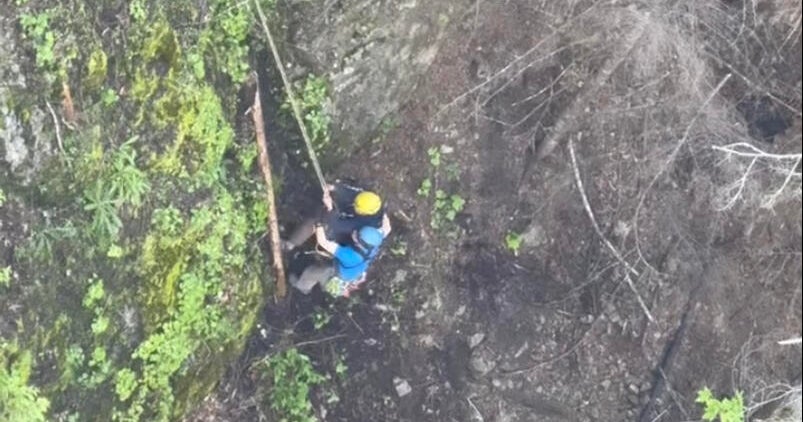
In a heart-stopping incident that unfolded in the rugged wilderness of northwestern Washington, emergency responders executed a dramatic rescue operation to save a man who had become stranded beneath the High Steel Bridge in Mason County. The breathtaking footage captured during the rescue shows the treacherous nature of the terrain and the skill required to bring the man back to safety. A trained rescuer can be seen descending hundreds of feet down a steep embankment using specialized rope equipment, carefully navigating the slippery, unstable surface to reach the stranded individual. Once contact was made, both the rescuer and the rescued man were methodically hoisted back up the mountainous terrain to the safety of the bridge above. Remarkably, despite the dangerous circumstances and the significant distance he had fallen, the man escaped the ordeal without any injuries. The successful rescue was the result of coordinated efforts by multiple emergency response teams, including Mason County Search and Rescue and Olympic Mountain Rescue, both of which later shared details of the incident on social media to warn others about the dangers lurking beneath this scenic but deadly location.
The Deceptive Danger of the High Steel Bridge Canyon
The High Steel Bridge, which spans an impressive gorge carved by the Skokomish River in the Olympic National Forest, presents a deceptive danger to visitors who may underestimate the treacherous terrain below. Mason County Search and Rescue issued a stark warning alongside their rescue footage, emphasizing that appearances can be fatally misleading in this area. “The terrain looks hikeable. It is not,” the organization stated bluntly, adding that the canyon is “steep, slippery, and unforgiving — and it has taken lives.” This sobering reminder underscores the reality that what may appear from above to be navigable wilderness is actually an extremely hazardous environment where even experienced outdoor enthusiasts can find themselves in life-threatening situations. The rock surfaces throughout the area are notoriously slick and unstable, creating conditions where a single misstep can lead to a catastrophic fall. The combination of steep inclines, loose rock, wet surfaces, and the significant depth of the gorge creates a perfect storm of danger for anyone who ventures below the bridge, regardless of their hiking experience or physical fitness level.
Federal Closure and Safety Measures
Recognizing the serious and ongoing dangers posed by the terrain beneath and surrounding the High Steel Bridge, the U.S. Forest Service has implemented a federal closure order that prohibits people from entering the area directly below the bridge. This order, which has been in place since November 2024, is scheduled to remain effective until November of this year, though it could potentially be extended depending on conditions and incident rates. The decision to close the area was not made lightly but was deemed necessary after a troubling pattern of accidents, injuries, and fatalities that have required numerous rescue operations and, tragically, recovery missions. According to the official order, the primary goal is to reduce “the number of rescue and recoveries required by county resources,” which have been stretched thin responding to preventable emergencies in this location. The order specifically notes that “the rock surface is extremely slick and unstable leading to many injuries and fatalities,” providing clear justification for restricting access. Despite this federal prohibition, the recent rescue demonstrates that some individuals continue to venture into the closed area, either unaware of the restrictions or choosing to ignore them, putting themselves at risk and requiring emergency responders to risk their own safety in rescue operations.
What Happened: The Drone That Led to Disaster
The circumstances surrounding this particular rescue highlight how quickly a seemingly minor incident can escalate into a life-threatening emergency in this unforgiving environment. According to Olympic Mountain Rescue, the man who required rescue had been operating a drone near the High Steel Bridge when the device apparently flew out of his control or crashed somewhere below. In an attempt to retrieve his drone, the man ventured into the restricted area beneath the bridge, where he lost his footing on the treacherous terrain. What likely began as a careful descent quickly turned dangerous when he accidentally slid down the steep embankment, unable to stop himself on the slick rock surface. Once at the bottom of the gorge, hundreds of feet below the bridge, he found himself completely unable to climb back up on his own. The steep angles, unstable footing, and slippery surfaces that had contributed to his fall made any attempt at self-rescue impossible and potentially even more dangerous. Mason County Search and Rescue confirmed that the man had “slipped beneath” the bridge but provided few additional details about the specific circumstances, likely to protect the individual’s privacy while still using the incident as a teaching moment about the area’s dangers.
The Technical Rescue Operation
The rescue operation required to bring the stranded man back to safety was a complex, multi-faceted technical endeavor that showcased the training, skill, and dedication of the emergency response teams involved. Olympic Mountain Rescue deployed ten of their trained team members to execute what they described as “a technical rope” operation, a specialized form of rescue that requires extensive training and precise execution. These operations involve sophisticated rope systems, anchoring techniques, and coordination among team members to safely lower rescuers to a victim’s location and then raise both parties back to safety. The rescuers had to contend with the same treacherous conditions that had trapped the man in the first place—slippery rock surfaces, steep inclines, and the constant risk of additional rockfall or slips. The footage of the rescue provides a glimpse into the challenges faced by the team, showing the rescuer carefully controlling their descent on a rope system before securing the stranded man and preparing both of them for the ascent. The entire operation required careful planning, constant communication among team members, and the physical endurance to manage heavy rescue equipment while working in a vertical environment. Olympic Mountain Rescue expressed gratitude for all the teams involved, stating it was “an incredible job by all teams involved for what turned out to be a multi-faceted technical rescue.”
A Plea for Responsible Enjoyment
In the aftermath of this rescue, both Mason County Search and Rescue and Olympic Mountain Rescue have used the incident as an opportunity to educate the public about how to safely enjoy the High Steel Bridge area without putting themselves or emergency responders at risk. The message from both organizations is clear and consistent: the bridge itself offers spectacular views of the surrounding Olympic National Forest landscape and the deep gorge below, and visitors are welcome to experience these natural wonders—but only from the safety of the bridge itself. “Enjoy this place. Just please enjoy it from the bridge,” Olympic Mountain Rescue emphasized in their social media post. This guidance reflects a broader principle of responsible outdoor recreation: enjoying nature doesn’t require taking unnecessary risks or violating safety closures designed to protect visitors. The High Steel Bridge provides an ideal vantage point for photography, sightseeing, and appreciating the raw beauty of the Pacific Northwest wilderness without the need to venture into dangerous terrain. Emergency responders want people to understand that the federal closure order is not meant to diminish anyone’s outdoor experience but rather to preserve life and prevent the heartbreak of preventable tragedies. As the rescued man discovered, no photograph, no adventure thrill, and certainly no drone is worth the risk of injury, death, or requiring brave rescuers to risk their own safety. The stunning landscape of Washington’s Olympic National Forest offers countless opportunities for safe exploration and appreciation—wisdom lies in recognizing the difference between acceptable adventure and reckless endangerment.