


Senate’s Crypto Bill Shows Signs of Progress After Months of Stalemate
Behind-the-Scenes Negotiations Signal Movement on Digital Asset Regulation
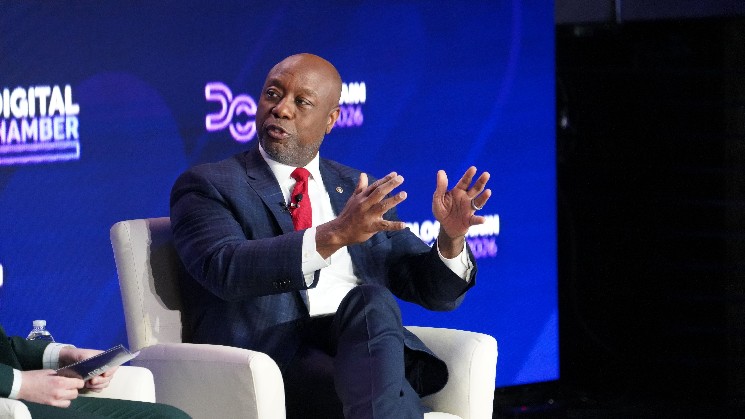
After months of apparent gridlock, there’s finally some encouraging news coming from Capitol Hill regarding comprehensive cryptocurrency regulation. Senator Tim Scott, the influential chairman of the Senate Banking Committee, recently provided an update that has given the crypto community renewed hope. Speaking at the Digital Chamber’s DC Blockchain Summit in Washington, D.C., Scott revealed that the long-stalled crypto market structure bill is actually making significant headway through behind-the-scenes negotiations, even though the public might not have been aware of the ongoing progress.
The senator’s comments suggest that the legislative process, while frustratingly slow for many in the digital asset space, is actually moving forward in meaningful ways. According to Scott, lawmakers could see a new draft of critical stablecoin language as early as this week, marking a significant milestone in what has been a contentious and complex legislative journey. This development is particularly noteworthy because stablecoins—digital currencies designed to maintain a stable value by being pegged to traditional assets like the U.S. dollar—have become a central focus of the broader conversation about how to properly regulate the rapidly evolving cryptocurrency market.
The Stablecoin Yield Debate Takes Center Stage
One of the most publicly debated and contentious issues surrounding the market structure bill has been the question of stablecoin yield—essentially, whether and how users should be able to earn interest on their stablecoin holdings. This seemingly technical question has sparked intense discussion because it touches on fundamental issues about whether stablecoins should be treated more like bank deposits (which are heavily regulated and insured) or like other types of digital assets with different regulatory frameworks.
Despite the public nature of this debate and the strong opinions on various sides, Senator Scott emphasized that lawmakers have remained actively engaged in finding workable solutions. “I believe that this week we will have the first proposal in my hands to take a look at,” Scott said during his remarks at the summit. He continued with cautious optimism: “If that actually happened before the end of this week, and I think that it will, we’ll at least know that the sketch looks like the person. If that’s the case, I think we’re gonna be in much better shape.” This colorful metaphor suggests that lawmakers are close to seeing whether their theoretical framework for stablecoin regulation actually matches the practical realities of how these digital assets function in the real world.
Scott made a point of acknowledging the collaborative effort that has gone into addressing the stablecoin yield question, specifically crediting Democratic Senator Angela Alsobrooks, Republican Senator Thom Tillis, and Patrick Witt from the White House for their dedicated work on this thorny issue. This bipartisan and cross-branch cooperation is particularly noteworthy in today’s often polarized political environment, suggesting that lawmakers on both sides of the aisle recognize the importance of getting crypto regulation right.
Multiple Challenges Being Addressed Simultaneously
Beyond the stablecoin yield question, Senator Scott revealed that negotiators have been working diligently on several other outstanding issues, with particularly intensive discussions taking place over the past month. These additional concerns reflect the complexity of creating comprehensive crypto regulation in a rapidly evolving technological landscape, where regulatory frameworks need to balance innovation with consumer protection, financial stability, and national security considerations.
One significant concern that lawmakers have been grappling with involves the ethical implications of President Donald Trump and his family’s involvement in various cryptocurrency projects. This issue has raised questions about potential conflicts of interest and whether appropriate safeguards are in place to prevent improper influence over the regulatory framework being created. According to Scott, progress is being made on addressing these ethics concerns: “I think we’re very close to landing the plane on the ethics issue, on quorum,” he stated, suggesting that solutions are within reach.
Another major sticking point has been the lack of bipartisan commissioners at the major regulatory agencies that oversee cryptocurrency markets, such as the Securities and Exchange Commission (SEC) and the Commodity Futures Trading Commission (CFTC). Democrats have expressed concern about having insufficient representation on these important bodies, which could lead to one-sided regulatory approaches. Scott acknowledged this as “a big issue for our friends on the other side of the aisle” and indicated that lawmakers are actively working to fix this imbalance. He added with satisfaction that “we were able to get some out of the other side,” referring to progress on nominations that would create more balanced representation.
DeFi and Anti-Money Laundering Provisions Under Discussion
The negotiations have also tackled the thorny issue of decentralized finance, commonly known as DeFi—a category of financial applications built on blockchain technology that operate without traditional intermediaries like banks or brokers. Senator Mark Warner has been particularly focused on this area, according to Scott, with anti-money laundering (AML) regulations being a critical component of the discussion. The challenge with DeFi is that its decentralized nature makes traditional regulatory approaches difficult to apply, since there may be no central entity to hold responsible for compliance with AML and know-your-customer (KYC) regulations.
Know-your-customer regulations, which require financial institutions to verify the identities of their clients, have been another area of focus in the negotiations. These regulations are designed to prevent money laundering, terrorist financing, and other illicit activities, but applying them to decentralized cryptocurrency systems presents unique challenges. Lawmakers are trying to find the right balance between maintaining effective guardrails against financial crime while not stifling the innovation that has made the crypto space so dynamic and promising.
Scott’s comments suggest that while these issues are complex and have required extensive negotiation, lawmakers are making real progress toward finding workable solutions. “I think we’re working on that issue,” Scott said regarding DeFi and AML concerns, indicating that while not yet resolved, these matters are actively being addressed with the seriousness they deserve.
What This Progress Means for the Crypto Industry
For the cryptocurrency industry and the millions of Americans who have invested in digital assets, the progress Senator Scott described represents potentially significant news. The lack of clear, comprehensive federal regulation has been cited as one of the major obstacles to broader crypto adoption in the United States, creating uncertainty for businesses, investors, and consumers alike. Different regulatory agencies have sometimes taken conflicting approaches to cryptocurrency oversight, and the absence of clear rules has led some crypto businesses to relocate overseas or curtail their U.S. operations.
A comprehensive market structure bill could provide the regulatory clarity that the industry has been seeking for years. Such legislation could define which digital assets fall under different regulatory frameworks, establish clear rules for how crypto businesses must operate, create consumer protections for digital asset investors, and provide guidance on how emerging technologies like DeFi should be supervised. For businesses in the space, this clarity could unlock new opportunities for growth and investment, while for consumers, it could provide greater confidence that their investments are protected by appropriate safeguards.
However, the crypto community has also expressed concerns about potential overregulation that could stifle innovation or put American companies at a competitive disadvantage compared to firms in countries with more permissive regulatory environments. This is why the details of any legislation matter enormously—the difference between well-crafted regulation that protects consumers while fostering innovation and poorly designed rules that drive businesses overseas could have enormous implications for America’s position in the global digital economy. Senator Scott’s emphasis on bipartisan cooperation and careful negotiation of the details suggests that lawmakers are aware of these concerns and trying to strike the right balance.
The coming weeks will be crucial for determining whether the progress Scott described translates into actual legislative text that can win support from both parties and eventually become law. If the stablecoin language arrives as expected this week and proves workable, and if the other outstanding issues continue to move toward resolution, the crypto industry may finally get the comprehensive federal regulatory framework it has long sought—one that could shape the future of digital assets in America for years to come.