


Shakira’s Epic Copacabana Concert: A Night of Music, Culture, and Latin Pride
A Monumental Beach Party Under the Stars
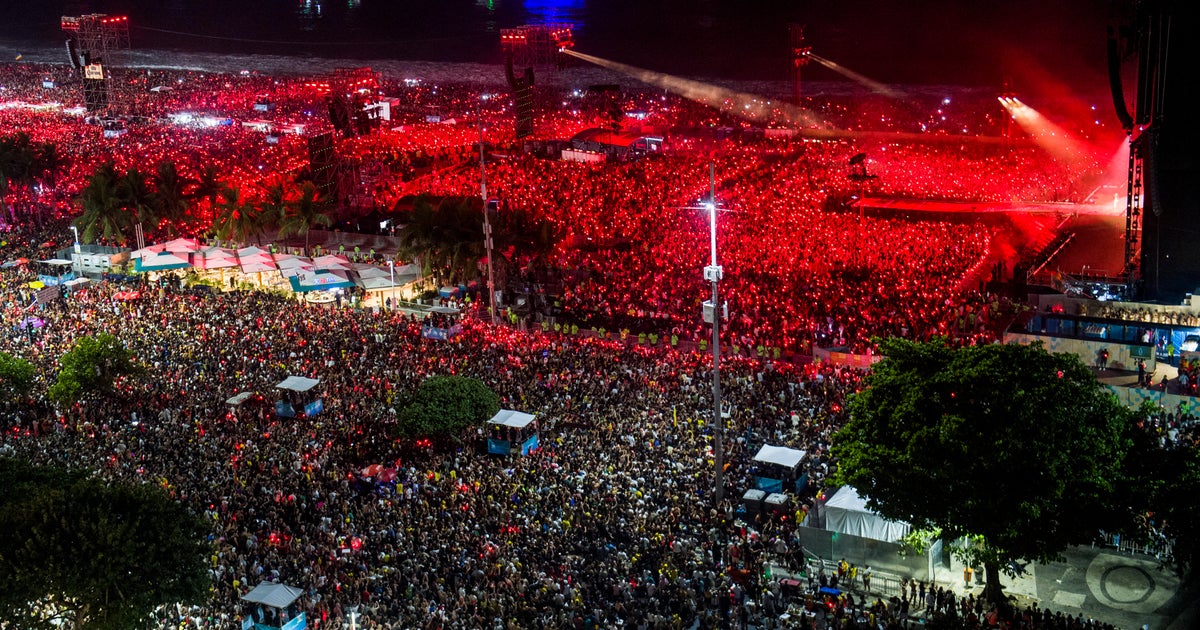
When Shakira took the stage at Rio de Janeiro’s legendary Copacabana Beach on Saturday night, she wasn’t just performing another concert—she was creating a historic moment that united millions under the stars. According to Rio’s mayor, Eduardo Cavaliere, an astounding 2 million people flooded the iconic waterfront to witness the Colombian superstar’s free performance. The show, which began around 11 p.m. (fashionably late by more than an hour), kicked off with an explosive reception as fans erupted in screams and applause while drones painted the night sky with a message in Portuguese: “I love you Brazil.” This wasn’t Shakira’s first rodeo in Brazil—far from it. The beloved singer reflected emotionally on her first visit to the country three decades earlier, when she was just 18 years old with stars in her eyes and dreams of performing for Brazilian audiences. “I arrived here when I was 18 years old, dreaming about singing for you,” she told the sea of faces before her. “And now look at this. Life is magical.” That magical evening was part of her “Las Mujeres Ya No Lloran” (Women No Longer Cry) world tour, named after her 2024 album—a title that carries deep personal significance following her high-profile separation from Spanish soccer player Gerard Piqué.
More Than Music: A Celebration of Women’s Strength
Throughout the evening, Shakira delivered what fans came for: a greatest-hits parade featuring beloved tracks like “Hips Don’t Lie,” “La Tortura,” and “La Bicicleta.” But the concert was about more than just nostalgia and dance moves. The pop icon used her platform to celebrate women’s resilience and strength, weaving messages of empowerment between songs. “Us women, every time we fall we get up a little wiser,” she declared to thunderous applause. The show’s finale, “BZRP Music Sessions #53/66,” held particular significance as it directly addressed her separation from Piqué—a powerful statement of moving forward and rising above heartbreak. This theme of female empowerment resonated deeply with attendees like 38-year-old accountant Erica Monteiro, who has been a Shakira fan since childhood. “For me she represents the strength of our Latino community,” Monteiro shared before the concert. “We’re treated as if we were inferior but in fact we have much more strength.” These sentiments echoed throughout the massive crowd, transforming what could have been simply an entertainment event into something more profound—a collective affirmation of Latin American identity and women’s resilience in the face of adversity.
Building Bridges Across Latin America
Shakira’s Copacabana performance joins an impressive lineage of superstar beach concerts that have become a Rio tradition. Madonna drew massive crowds in 2024, and Lady Gaga packed the beach the year before that. But there’s something particularly special about Shakira’s relationship with Brazil that goes beyond typical celebrity appearances. According to Felipe Maia, an ethnomusicologist working toward his doctorate in popular music and digital technologies at Paris Nanterre University, Shakira established an extraordinary connection with Brazilian audiences from her very first performances in the country back in the 1990s. “That success in Brazil has a lot to do with the fact that she comes from Colombia, a country whose culture has many similarities with Brazil,” Maia explained, noting that Saturday’s concert “crowns the relationship she has had with Brazil for a very long time.” Concert-goer Hellem Souza da Silva took this observation even further, suggesting that performances by artists like Shakira and Bad Bunny (who recently performed in São Paulo in February) are helping to strengthen Brazil’s Latin American identity. “These artists are making it clear that Brazil, Puerto Rico, Colombia and other countries are part of Latin America. And that America is not the United States,” she said. It’s a powerful statement about cultural unity and pushing back against the tendency to center North American perspectives when discussing “America” as a whole.
The Human Side of a Massive Event
Behind the spectacle of 2 million people and elaborate stage productions were countless individual stories of dedication, fandom, and hustle. Crowds began staking out prime beach real estate early Saturday morning, with some truly devoted fans arriving even earlier. Street vendors recognized the opportunity and came prepared, selling everything from traditional Brazilian snacks like sweet corn to the country’s famous caipirinha cocktails, and even practical items like toilet paper, deodorant, and bags of sand for shorter concertgoers to stand on for a better view. Among these entrepreneurs was Simone Paula da Cunha, who arrived on Friday evening—a full day before the show—hoping to sell all her beer and water and earn about $100. Despite her exhaustion from camping out on the beach, da Cunha was thrilled at the prospect of actually seeing Shakira perform live. “I remember her from when she still had black hair,” she said with obvious affection. “I’m a huge fan of hers.” Then there’s 30-year-old architect Wanderson Andrade, who embodies fan dedication at another level entirely. Andrade flew in from Goiana in central Brazil specifically for the concert and planned to fly back the very next day. “I tried to get tickets to see her in Brazil last year but I didn’t succeed,” he explained. His commitment to Shakira runs so deep that his very first tattoo was a wolf—a tribute to her 2009 hit “She Wolf.” For Andrade, being in that crowd wasn’t just entertainment; it was “a dream come true.”
A Strategic Investment in Rio’s Economy
While the concert appeared to be a generous gift to music fans, there was serious economic strategy behind the city’s decision to host it. These free mega-concerts are part of Rio’s City Hall initiative to stimulate economic activity during what would otherwise be a slower period—after the frenzy of Carnival and New Year’s Eve celebrations winds down but before the monthlong Saint John’s Day festivities begin in June. Mayor Cavaliere made the economic reasoning explicit when presenting the city’s operational plan for the event: “For us, parties are serious business. Because parties generate jobs, income, development, and identity for the city. Our investment in this show will give us a financial return 40 times greater.” That’s not just optimistic political talk. According to a study conducted by City Hall and Riotur (the municipality’s tourism company), Shakira’s performance was projected to generate approximately 777 million reais—roughly $155 million—through the influx of tourists and spending at restaurants, hotels, and shops. The data supports this strategy: tourist numbers to Rio in May have increased significantly in years featuring these beach concerts compared to 2023, when no such event was held. In 2024, there was a 34.2% increase in tourism on May 1 (just before the concerts) compared to the previous year. In 2025, that increase jumped to an impressive 90.5% compared to 2023. Even international accommodation platform Airbnb weighed in with an April 22 statement noting increased bookings from travelers not just across Brazil and Latin America, but from European capitals like Paris and London as well.
Security Concerns and Moving Forward
It’s worth noting that these massive public gatherings don’t come without risks. During Lady Gaga’s 2024 concert, Rio de Janeiro’s state police arrested two people for an alleged bomb plot. Authorities said the arrested individuals were part of a group spreading hate speech against the LGBTQ community and attempting to radicalize and recruit teenagers to carry out attacks using Molotov cocktails and improvised explosives. This incident serves as a sobering reminder that while these concerts celebrate unity, joy, and cultural pride, they also require serious security planning and vigilance. Fortunately, Shakira’s performance proceeded without such incidents, allowing the focus to remain where it belonged—on the music, the connection between artist and audience, and the celebration of Latin American culture and women’s empowerment. Mayor Cavaliere’s post-concert social media proclamation captured the significance perfectly: “The She-Wolf made history in Rio,” he wrote, referencing one of Shakira’s iconic songs. For the 2 million people who packed Copacabana Beach that night—from the street vendors working to make a living, to the fans with wolf tattoos who flew in just for a few hours of magic, to the locals celebrating their city’s vibrant culture—it was indeed historic. It was a night that proved music’s power to bring people together, to help them claim their identity with pride, and to remind everyone that sometimes the best things in life really are free—especially when they come with fireworks, skywriting drones, and one of the world’s biggest pop stars reminding us all that when we fall, we get back up a little bit wiser.