


Stowaway Arrested with Nearly 800 Pounds of Cocaine Found Floating in Puerto Rican Waters
Discovery in San Juan Harbor Leads to Major Drug Bust
In the early morning hours of January 28, what started as a routine tugboat operation at San Juan’s Old Army Terminal port quickly turned into a significant drug interdiction operation. A crewmember aboard a tugboat that was guiding a barge into the harbor made an unexpected discovery that would set off a chain of events involving multiple law enforcement agencies. The crew member spotted a suspicious individual after boarding the barge, a sighting that would ultimately lead to the seizure of millions of dollars worth of illegal narcotics. The tugboat crew immediately understood the gravity of the situation and took appropriate action by alerting authorities and maintaining their position while awaiting official response from law enforcement. This alert action by civilian maritime workers demonstrates the crucial role that everyday citizens play in combating drug trafficking operations that plague Caribbean waters.
Multi-Agency Response Mobilizes Quickly
Following the initial report from the tugboat crew, a coordinated response involving several government agencies swung into action with remarkable efficiency. The U.S. Customs and Border Protection’s Caribbean Air and Marine Branch and Office of Field Operations were notified, along with the Puerto Rican police and the U.S. Coast Guard boarding team stationed in San Juan harbor. This multi-agency approach reflects the sophisticated network of law enforcement collaboration that has been developed to combat drug smuggling in the Caribbean region. The U.S. Coast Guard’s San Juan team received orders to launch a boat into the harbor to investigate the situation. Shortly after their vessel entered the water, the situation escalated when reports came in of a person in distress in the harbor waters. This development added urgency to what was already a high-priority law enforcement operation, requiring the Coast Guard to shift from investigation mode to rescue mode while maintaining their focus on the potential drug interdiction.
Dramatic Water Recovery Yields Massive Cocaine Haul
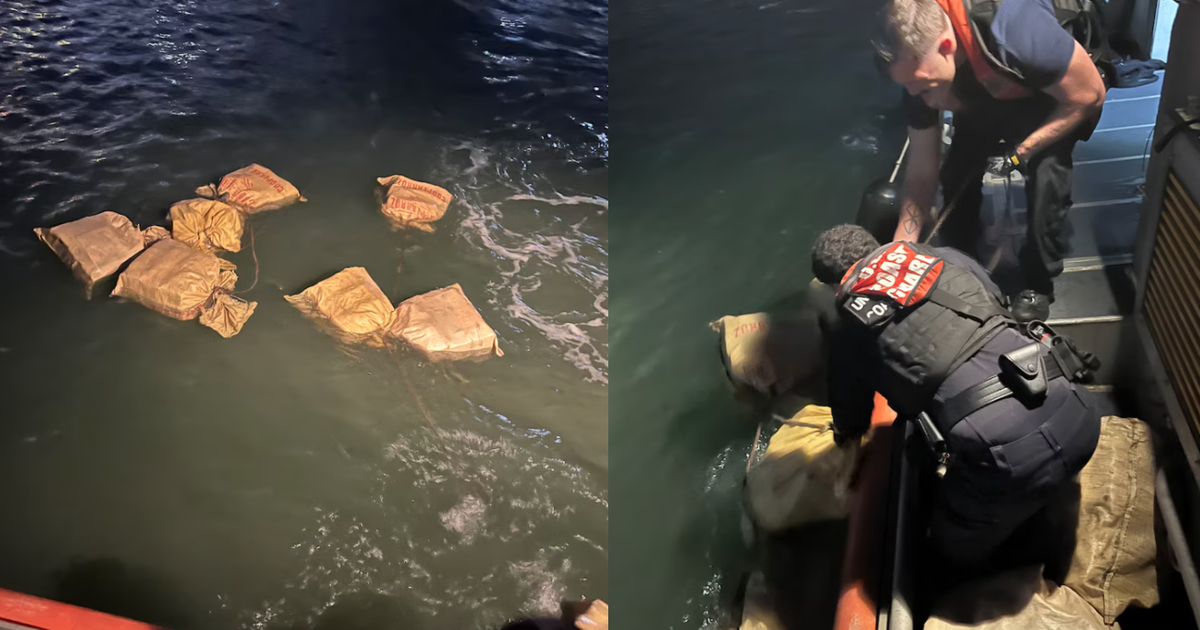
The Coast Guard boat crew quickly responded to the distress call and successfully recovered the individual from the water. However, they found much more than just a person struggling in San Juan’s harbor waters. Floating alongside the suspect were ten bales of suspected contraband, all wrapped in distinctive brown bags—a packaging method commonly used by drug traffickers to protect their illegal cargo during maritime transport. According to the U.S. Coast Guard’s official statement, the contraband was subsequently identified and weighed, totaling an impressive 789.25 pounds of cocaine. To put this seizure in perspective, authorities estimated the street value of the confiscated drugs at more than $5 million, representing a significant blow to whatever criminal organization was attempting to smuggle these narcotics into or through Puerto Rico. The discovery of such a large quantity of cocaine floating in the harbor raises questions about what went wrong with the smuggling operation and whether the suspect ended up in the water intentionally or as part of a failed smuggling attempt.
Suspect Faces Federal Charges as Investigation Continues
Following the recovery operation, both the unidentified suspect and the seized contraband were transferred to Homeland Security partners for processing and further investigation. The suspect now faces serious federal drug trafficking charges, which carry potentially severe penalties under U.S. law. Federal drug trafficking charges involving nearly 800 pounds of cocaine could result in decades of imprisonment if the suspect is convicted. The Coast Guard conducted a thorough search of the barge where the suspect was initially spotted, looking for any additional contraband or other smugglers who might have been part of the operation. According to the agency’s statement, this comprehensive search yielded no additional drugs or accomplices, though investigators will likely continue examining all aspects of this case to determine the full scope of the smuggling attempt. The fact that the suspect has not been publicly identified suggests that the investigation may be ongoing, with authorities possibly pursuing additional leads or suspects connected to this drug trafficking operation.
Law Enforcement Cooperation Proves Essential
Coast Guard Commander Matthew Romano, who serves as the Sector San Juan chief of response, took the opportunity to commend the actions of the tugboat crew whose vigilance initiated this successful interdiction. Romano’s statement emphasized that this incident “highlights a great response and interoperability” between the multiple organizations that collaborated on the operation. This interagency cooperation is not accidental but rather the result of years of developing protocols, communication systems, and working relationships between different law enforcement entities operating in Caribbean waters. The Caribbean region, including Puerto Rico and the U.S. Virgin Islands, serves as a crucial transit point for drug traffickers attempting to move cocaine from South American production areas to markets in the United States and elsewhere. The complex geography of the region, with its numerous islands, channels, and busy maritime traffic, creates both opportunities for smugglers and challenges for law enforcement.
Ongoing Battle Against Caribbean Drug Trafficking
Commander Romano’s statement reflected the ongoing commitment of law enforcement agencies to combat illicit trafficking in the region: “We are proud to stand the watch alongside our Department of Homeland Security, Department of Justice and our local law enforcement partners as we continue to combat illicit trafficking throughout the waters of Puerto Rico and the U.S. Virgin Islands.” This declaration underscores the persistent nature of the drug trafficking problem in Caribbean waters and the sustained effort required to combat it effectively. Drug smuggling organizations continue to seek new methods and routes to transport their contraband, requiring law enforcement to maintain constant vigilance and adapt to evolving tactics. The nearly 800 pounds of cocaine seized in this operation represents just one interdiction in an ongoing campaign against drug trafficking networks that operate throughout the region. While this seizure certainly represents a significant success for law enforcement and a costly setback for traffickers, it also serves as a reminder that the battle against drug smuggling requires sustained commitment, resources, and cooperation between multiple agencies and jurisdictions. The success of this particular operation, from the initial alert by civilian maritime workers through the coordinated response of multiple agencies to the ultimate seizure of drugs and arrest of a suspect, provides a template for effective law enforcement action while highlighting the continued challenges facing authorities working to keep illegal narcotics out of U.S. communities.