

Supreme Court to Review Trump Administration’s Attempt to End Deportation Protections for Syrian and Haitian Immigrants
Court Agrees to Hear Case But Maintains Current Protections
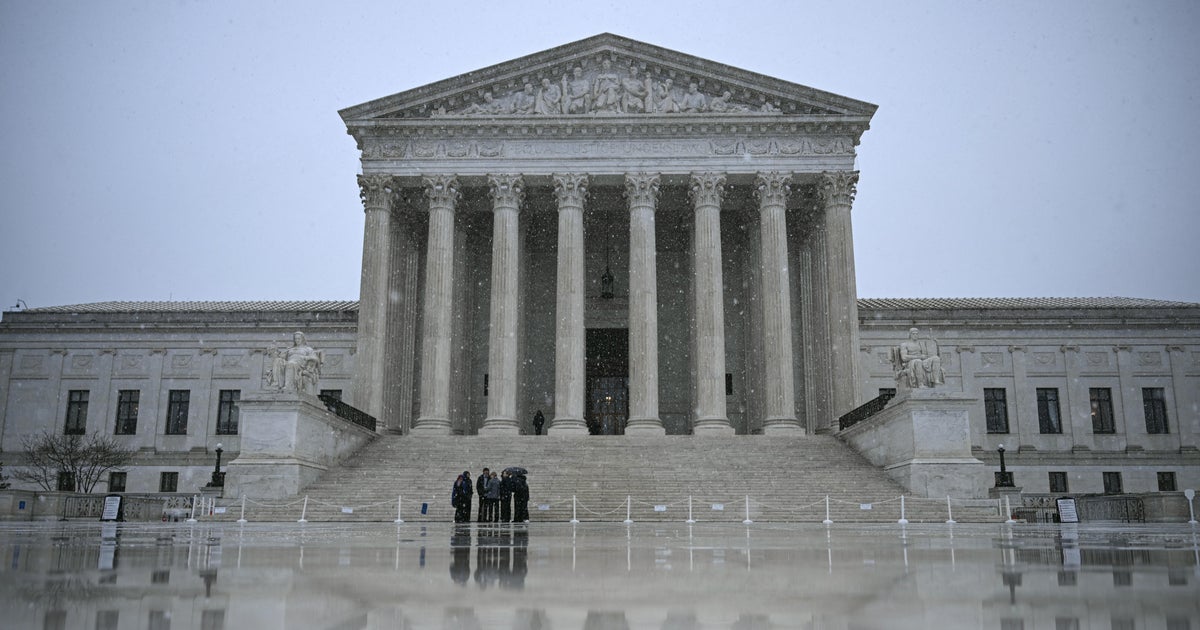
The Supreme Court announced on Monday that it will examine the Trump administration’s controversial efforts to eliminate Temporary Protected Status (TPS) for hundreds of thousands of immigrants from Syria and Haiti. This decision marks another significant chapter in the ongoing legal battles surrounding President Trump’s immigration policies. However, in what may come as a relief to affected immigrants, the Court declined to grant the administration’s request for emergency intervention that would have immediately ended these protections. Instead, the justices issued a brief order stating they would postpone consideration of the emergency requests, allowing lower court rulings that block the termination of TPS to remain in effect for now. The Court has scheduled oral arguments for late April, with final decisions expected by the end of June or early July. This case affects the lives of more than 350,000 Haitian immigrants and over 6,000 Syrian nationals currently living and working legally in the United States under TPS protections.
The Supreme Court’s decision to take up these cases comes as part of a broader examination of Trump’s immigration agenda during this term. The justices are already scheduled to hear arguments on April 1st regarding another contentious policy: the president’s plan to end birthright citizenship, a right guaranteed under the Constitution for over a century. These cases represent just some of the immigration-related disputes that have reached the nation’s highest court since Trump returned to office. Earlier, the Supreme Court allowed the administration to lift deportation protections for more than 300,000 Venezuelan immigrants while legal proceedings continued in that case. The Department of Homeland Security has also moved to terminate TPS designations for at least a dozen other countries, including Afghanistan, Nicaragua, Somalia, and Yemen. The Trump administration’s core legal argument is that courts should have no authority to review the Homeland Security Secretary’s decisions regarding TPS determinations, essentially claiming these decisions are beyond judicial oversight.
Understanding Temporary Protected Status and Its Purpose
To understand what’s at stake in these cases, it’s important to know what Temporary Protected Status actually is and why Congress created it. In 1990, lawmakers established TPS as a humanitarian program designed to provide temporary immigration protections for people from countries experiencing armed conflicts, natural disasters, or other “extraordinary and temporary” conditions that would make it unsafe for deportees to return home. When a country receives TPS designation, migrants from that nation who are already in the United States generally cannot be removed and are authorized to work legally for the length of the designation, which typically lasts 18 months but can be extended repeatedly based on ongoing conditions. The program was never intended as a pathway to permanent residency or citizenship, but rather as a temporary safe haven for people who would face danger if forced to return to their home countries during times of crisis. Over the years, various administrations from both political parties have designated countries for TPS and extended those designations as circumstances warranted, making it a longstanding and bipartisan approach to addressing humanitarian concerns within immigration policy.
The Situation in Haiti and the Fight Over Its TPS Designation
Haiti’s journey with TPS began in 2010 following the catastrophic earthquake that devastated the Caribbean nation, killing more than 300,000 people and leaving the country’s infrastructure in ruins. The program has been extended multiple times over the years by different administrations as Haiti continued to face ongoing challenges. During the Biden administration, TPS was extended for Haitian immigrants in 2021 after the assassination of President Jovenel Moïse, and again in 2024 due to persistent economic, political, security, and health crises plaguing the country. However, after President Trump returned to the White House, Homeland Security Secretary Kristi Noem took steps to rescind TPS for Haiti, with an effective termination date of February 3rd. Secretary Noem’s justification for ending the protections stated that the decision “reflects a necessary and strategic vote of confidence in the new chapter Haiti is turning” and aligned with “the foreign policy vision of a secure, sovereign and self-reliant Haiti.” While acknowledging that certain conditions in Haiti remained “concerning,” Noem claimed that parts of the country were “suitable” for people to return to.
This optimistic assessment of Haiti’s conditions stands in stark contrast to the State Department’s own travel warnings, which advise U.S. citizens not to travel to Haiti due to “kidnapping, crime, terrorist activity, civil unrest and limited health care.” This contradiction became a central point in the legal challenge brought by five Haitian nationals in December, who sought to block the termination of their protections. U.S. District Judge Ana Reyes granted their request and issued a scathing opinion suggesting that Noem’s decision was likely motivated by racial animus rather than an objective assessment of conditions in Haiti. Judge Reyes wrote pointedly: “Kristi Noem has a First Amendment right to call immigrants killers, leeches, entitlement junkies, and any other inapt name she wants. Secretary Noem, however, is constrained by both our Constitution and the [Administrative Procedure Act] to apply faithfully the facts to the law in implementing the TPS program. The record to-date shows she has yet to do that.” The judge also referenced derogatory statements President Trump has made about Haitians, including calling Haiti a “s***hole” country and promoting the debunked conspiracy theory during his 2024 campaign that Haitian immigrants in Springfield, Ohio, were eating people’s pets—claims that city officials confirmed had no basis in reality.
Syria’s TPS History and the Controversy Over Its Termination
Syria received its TPS designation in 2012 during the Obama administration as the country descended into civil war and former President Bashar al-Assad’s regime brutally cracked down on opposition. These protections were extended several times over the years, including during President Trump’s first term in office, recognizing the ongoing danger faced by Syrians who might be forced to return. According to Trump administration estimates, more than 6,000 Syrian nationals are currently covered by the program. However, last September, Secretary Noem moved to end the program for Syrians, citing the collapse of the Assad regime at the end of 2024 and the lifting of some sanctions against Syria. Noem determined that Syria no longer met the criteria for a country experiencing armed conflict that would endanger returning nationals, characterizing the remaining violence as merely “sporadic, isolated episodes of violence.” The deportation protections for Syrian nationals were set to end on November 21st.
Once again, the administration’s characterization of conditions in Syria contradicted the State Department’s own assessment. The State Department continues to warn Americans not to travel to Syria, citing ongoing concerns about “terrorism, civil unrest, kidnapping, hostage taking, and armed conflict.” After seven Syrians filed a lawsuit last October challenging Noem’s decision, U.S. District Judge Katherine Polk Failla delayed the termination of their protections. Judge Failla found that Noem’s decision to rescind protections for Syria appeared to be based on a political decision to end TPS altogether rather than an objective assessment of country conditions. The judge referenced comments by both President Trump and Secretary Noem, noting that “the president made sweeping and erroneous statements concerning his belief in the legality of the TPS program and its inutility to what can only be fairly described as an anti-immigrant agenda.” Regarding Noem specifically, Judge Failla stated that the secretary “endeavored to terminate TPS status whenever presented with an opportunity to do so, resulting in termination decisions that are grounded not in law and not in fact, but in political considerations simply not relevant under the TPS statute.”
What Happens Next and the Broader Implications
The legal path forward involves multiple stages and carries significant implications for immigration policy beyond just these two countries. When the Trump administration appealed both district court decisions, different federal appeals courts declined to freeze the lower courts’ orders blocking the TPS terminations. In the Haiti case, a divided three-judge panel on the U.S. Court of Appeals for the D.C. Circuit refused to stay Judge Reyes’s decision. In the Syria case, the U.S. Court of Appeals for the 2nd Circuit also declined to halt the district court’s ruling, noting that while the Supreme Court had twice allowed the administration to end temporary protections for Venezuelans, those cases involved different circumstances and couldn’t simply be applied to Syria’s situation. The Trump administration then sought emergency relief from the Supreme Court, arguing that the district courts’ orders interfered with the government’s foreign policy determinations and its fundamental interest in enforcing immigration laws. The Supreme Court’s decision to hear the cases but not grant immediate relief means that for now, the approximately 356,000 immigrants from Haiti and Syria covered by these TPS designations can continue living and working legally in the United States without fear of deportation.
The outcome of these cases will have far-reaching consequences that extend well beyond the immediate fate of Haitian and Syrian TPS holders. At the heart of these disputes is a fundamental question about the separation of powers and the role of courts in reviewing executive branch immigration decisions. The Trump administration contends that TPS determinations are essentially unreviewable by courts, representing a policy area where the executive branch has nearly absolute discretion. If the Supreme Court accepts this argument, it could significantly limit judicial oversight of immigration decisions and potentially embolden future administrations to make determinations with less regard for objective country conditions or established legal procedures. Conversely, if the Court upholds the lower courts’ findings that TPS termination decisions must be based on factual assessments rather than political considerations or discriminatory motives, it would affirm that even in immigration matters, executive actions remain subject to constitutional and administrative law constraints. The cases also raise important questions about how courts should weigh evidence of potential discriminatory intent when reviewing immigration policies, particularly when public statements by officials appear to contradict their formal justifications. As these cases move forward to oral arguments in late April, immigrant communities, advocacy organizations, and legal experts will be watching closely, knowing that the Supreme Court’s decisions—expected by summer—could reshape the landscape of immigration law and humanitarian protections for years to come.