
White House Correspondents’ Dinner Shooting: Suspect Agrees to Remain in Custody
Suspect Waives Right to Contest Detention
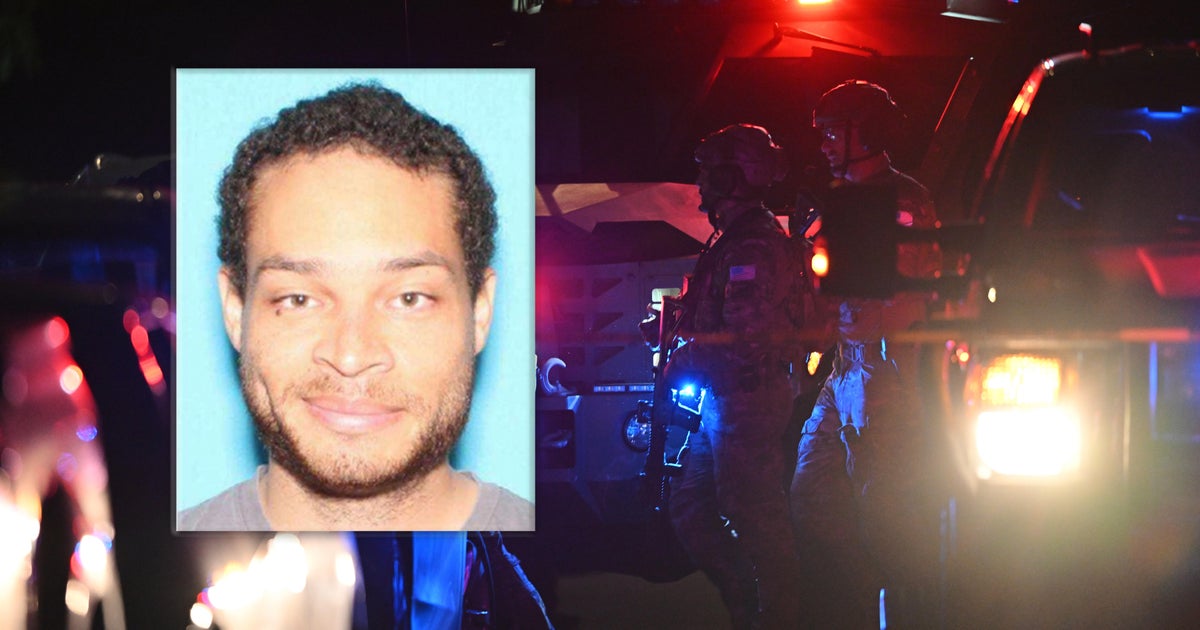
The 31-year-old man accused of attempting to assassinate President Trump during the White House Correspondents’ Dinner over the weekend has agreed to remain in federal custody as he awaits trial. Cole Allen appeared before U.S. Magistrate Judge Moxila Upadhyaya on Monday, where his attorney announced he would not challenge the government’s request to keep him detained. Allen faces serious charges, including attempting to assassinate the President and two firearms-related offenses stemming from Saturday’s terrifying incident outside the prestigious annual press gala. During his initial court appearance, Allen, dressed in an orange jumpsuit and escorted by three U.S. Marshals, did not enter a plea to any of the charges. The 31-year-old suspect, who has a goatee beard and short, curly hair, remained silent throughout the proceedings and did not acknowledge those present in the courtroom. His preliminary hearing has been scheduled for May 11, where more details about the case are expected to emerge.
Allen’s attorney, Tezira Abe, informed the court that her client is currently being held under stringent conditions, confined to a “safe cell” under 24-hour lockdown. She requested that the judge order the jail to ease these restrictions, arguing they were unnecessarily harsh. However, Judge Upadhyaya explained that while she would consider written briefs on the matter, she lacked the authority to override the detention facility’s security decisions. This exchange highlighted the serious nature of the charges against Allen and the extraordinary security measures being taken to ensure his safe custody while protecting the integrity of the judicial process.
Prosecutors Present Evidence of Extensive Planning
Federal prosecutors have painted a damning picture of Allen’s actions, describing them as among “the most serious” crimes in the United States code and claiming that “the evidence of his guilt is overwhelming.” In court filings submitted Wednesday, prosecutors detailed what they characterized as Allen’s “extensive planning” for the attack, providing a comprehensive timeline of his movements and preparations leading up to the dinner. Perhaps most striking among the evidence presented was a photograph that Allen allegedly took of himself in his hotel room mirror. The image shows him dressed in what appears to be formal attire—a black dress shirt, black pants, and what looks like a red tie—but also reveals a more sinister preparation. According to prosecutors, Allen appears to be armed with a sheathed knife, pliers, wire cutters, and a small leather bag resembling one filled with ammunition that was later recovered from the scene.
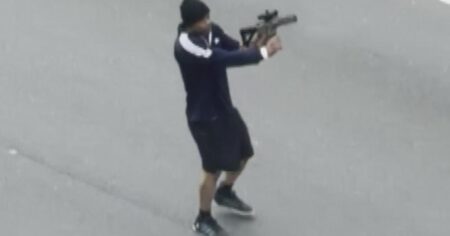
The government’s account of the actual attack is chilling. Law enforcement officials stated that Allen, armed with a shotgun, rushed toward a security checkpoint on the terrace level outside the dinner venue on Saturday evening. The event was attended by President Trump, Vice President JD Vance, numerous Cabinet officials, scores of journalists, media executives, and members of Congress—making it a high-profile target with significant security implications. According to prosecutors’ memorandum, a U.S. Secret Service officer “observed the defendant fire the shotgun in the direction of the stairs leading down to the ballroom.” The officer responded by firing five times at Allen, who subsequently fell to the ground. Remarkably, Allen was not struck by any of the officer’s bullets and was quickly apprehended by authorities on the scene.
Secret Service Officer Injured in the Confrontation
The incident resulted in injury to a Secret Service officer, identified in FBI documents only as Officer V.G. According to court papers, the officer was shot in his bulletproof vest but fortunately was not seriously injured. The circumstances surrounding how the officer was wounded initially raised questions about the source of the gunfire. However, senior law enforcement officials clarified to CBS News on Wednesday that the round that struck the Secret Service officer was not the result of friendly fire. Two sources familiar with the investigation provided additional detail, stating that the shot that hit Officer V.G. likely struck a cellphone that was tucked into a pocket of the bulletproof vest, which may have helped dissipate the impact and prevent more serious injury. The court filing did not initially specify who fired the shot that hit the officer, adding to the confusion, but subsequent clarifications from law enforcement officials have helped establish a clearer picture of the chaotic moments during the confrontation.
Prosecutors have indicated that their investigation remains ongoing, with analyses of crime-scene evidence and ballistics still incomplete. However, the evidence gathered so far indicates that Allen fired his pump-action shotgun at least once as he rushed past the magnetometers outside the event on Saturday night. Ballistics analysis and video footage show that Allen fired his weapon “in the direction” of Officer V.G., according to prosecutors. In a letter to Allen’s defense attorneys on Wednesday, prosecutors stated emphatically: “The government is aware of no physical evidence, digital video evidence, or witness statements that are inconsistent with the theory that your client fired his shotgun in the direction of Officer V.G., or that Officer V.G. was indeed shot once in the chest while wearing a ballistic vest.”
Defense Challenges Government’s Narrative
Allen’s defense team has mounted a vigorous challenge to the prosecution’s characterization of their client and the events of Saturday evening. In a filing submitted to the court on Wednesday, before Allen agreed to remain detained, his lawyers argued that he should be released pending trial. They painted a starkly different picture of Allen than the one presented by prosecutors, describing him as a man with no criminal history who is college-educated and was “gainfully employed” as a tutor. His attorneys further characterized him as a “devout Christian” who “dutifully” attends church and is an “active participant” in his religious community. These factors, they argued, should weigh heavily in favor of his release, suggesting he posed no flight risk and had strong ties to his community.
More significantly, the defense attorneys challenged the government’s assertion that Allen intended to commit a “mass shooting,” arguing that this claim is not supported by the facts of the case. They pointed to a letter that Allen allegedly sent to family and friends just before the attack, in which he stated his intention to “minimize casualties” by using “buckshot” rather than more lethal ammunition. The defense also noted what they characterized as inconsistencies in the government’s theory of the case, particularly regarding Officer V.G. “Moreover, the government after essentially asserting that Mr. Allen shot a Secret Service Officer in the criminal complaint, has apparently retreated from the theory by not mentioning the alleged officer at all in its memorandum,” Allen’s lawyers wrote. They argued that “the government’s entire argument about the nature and circumstances of the offense is based upon inferences drawn about Mr. Allen’s intent that raise more questions than answers.”
Questions About Intent and Target Remain Central to Defense Strategy
Perhaps the most significant challenge raised by Allen’s defense team concerns the central charge against their client: attempting to assassinate President Trump. The defense attorneys pointed out that while Allen has been charged with this specific crime, the letter he sent to his family and friends does not mention the president by name. This absence, they argue, is crucial to understanding Allen’s actual intentions and undermines the government’s case. “The government’s evidence of the charged offense — the attempted assassination of the president — is thus built entirely upon speculation, even under the most generous reading of its theory,” the defense attorneys wrote in their filing. “While the government may be able to say that the letter expresses an intent to target administration officials, it falls well short of narrowing those officials to President Trump.”
This legal argument raises important questions about how prosecutors will prove their case beyond a reasonable doubt. If Allen did not specifically name President Trump as his target, prosecutors will need to rely on circumstantial evidence—his choice of venue, his timing, his actions at the scene—to establish that the president was indeed his intended victim. The defense’s strategy appears to be to create reasonable doubt about Allen’s specific intent, potentially opening the door to lesser charges if the government cannot definitively prove he was targeting the president specifically. As this high-profile case moves forward, these questions of intent, evidence, and proof will likely dominate the legal proceedings. The preliminary hearing scheduled for May 11 will provide the next opportunity for both sides to present their arguments and for the public to gain further insight into this shocking incident that could have had catastrophic consequences for American democracy and press freedom.