
Britain Pledges £34 Million to Combat Rising Antisemitism Crisis
A Community Under Siege
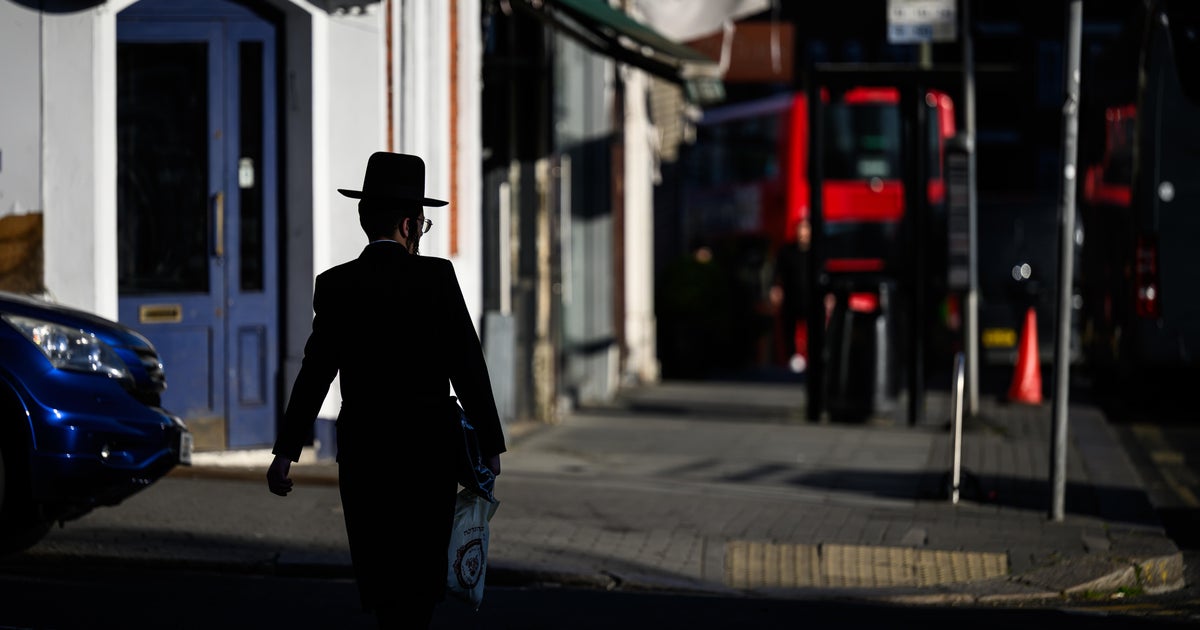
The streets of London, long celebrated as a beacon of multiculturalism and tolerance, have become the site of terrifying attacks that have shaken the British Jewish community to its core. In response to what government officials are now calling an antisemitism emergency, the British government has committed approximately $34 million in emergency funding to protect Jewish communities across the United Kingdom. This unprecedented move comes in the wake of a brutal attack in north London’s Golders Green neighborhood, where two Jewish men were stabbed in broad daylight on a Wednesday afternoon. Shloime Rand, just 34 years old, and Moshe Shine, 76, were going about their daily routines when they became the latest victims in what has become a disturbing pattern of violence targeting visibly Jewish individuals. Both men survived the attack and were reported to be in stable condition, though they remained hospitalized as of Thursday. The incident, which counterterrorism officers are now investigating, represents far more than an isolated act of violence—it symbolizes a frightening escalation in attacks against Jewish people in Britain, forcing an entire community to question whether they can safely walk the streets of their own neighborhoods while openly expressing their faith and identity.
Government Response and Fast-Tracked Legislation
State Security Minister Dan Jarvis made the funding announcement on Times Radio, emphasizing the urgency with which the government is treating this crisis. The substantial financial commitment will be directed toward increasing police patrols in areas with significant Jewish populations, enhancing security measures around synagogues, community centers, and Jewish schools, and implementing protective infrastructure that can help prevent future attacks. Home Secretary Minister Shabana Mahmood reinforced the seriousness of the situation in her statement to BBC News, declaring unequivocally: “I am treating this as an emergency.” The government has promised that legislation to enable these security measures will be “fast-tracked” through Parliament over the coming weeks, bypassing the usual lengthy legislative process to provide immediate protection to vulnerable communities. This rapid response reflects both the severity of the threat and the mounting pressure on government officials to demonstrate that they are taking concrete action. The funding represents one of the largest single commitments to combating antisemitism in British history, signaling that authorities recognize they are facing not just a series of criminal incidents but a coordinated campaign of terror aimed at making Jewish life untenable in parts of the United Kingdom.
The Suspect and Questions About Prevention
The man arrested in connection with Wednesday’s stabbing attack is a 45-year-old individual who came to the United Kingdom lawfully as a child from Somalia, according to Home Secretary Mahmood. Perhaps most troubling is the revelation that this suspect had previously been referred to “Prevent,” the government’s counterextremism program designed to identify and intervene with individuals at risk of radicalization. Metropolitan Police Commissioner Mark Rowley disclosed that the suspect had “a history of serious violence and mental health issues,” raising difficult questions about how someone with such a background, who had been flagged to authorities through the Prevent program, was able to carry out such an attack. As of Thursday, the suspect remained in police custody, with authorities able to hold him for up to 96 hours with judicial permission before formal charges must be filed or he must be released. The case highlights potential gaps in Britain’s counterterrorism infrastructure and the challenges of monitoring individuals who may present risks to specific communities. It also underscores the complex intersection of mental health issues, violent tendencies, and ideological extremism—a combination that makes prevention particularly challenging even when warning signs have been identified.
Voices from a Frightened Community
The human impact of these attacks resonates powerfully in the words of Shloime Rand’s mother, who spoke to BBC News while her son recovered in hospital. “I’m pretty horrified that these things could happen on the streets of London, in an innocent community where we try our best not to hurt anyone,” she said, her words capturing the bewilderment and fear that has gripped Britain’s Jewish population. She described how her son was simply “walking on the street minding his own business” when he was attacked, emphasizing the randomness and vulnerability that now characterizes daily life for visibly Jewish people in certain London neighborhoods. With a mother’s mixture of gratitude and desperate hope, she expressed thanks that her son remained conscious throughout the ordeal and voiced the wish that he might be home before Shabbat, the Jewish Sabbath that begins Friday evening—a small desire for normalcy in circumstances that are anything but normal. Golders Green, where the attack occurred, has for decades served as a vibrant hub of British Jewish life, home to a significant portion of the UK’s approximately 300,000 Jews. The neighborhood’s kosher shops, synagogues, and Jewish schools have long made it a center of cultural and religious life, but that very visibility has now made it a target, transforming familiar streets into sites of potential danger for those who simply want to live openly as Jews.
A Pattern of Escalating Violence
Wednesday’s stabbing was not an isolated incident but rather the latest in a disturbing series of attacks targeting Jewish communities in north London over the past month. The violence has included an arson attack in Golders Green that destroyed several ambulances belonging to Hatzola, a volunteer Jewish medical organization that provides emergency services to the community. Two synagogues in north London were also targeted with arson attacks, while suspicious items were discovered near the Israeli embassy in central London, suggesting a coordinated campaign aimed at Jewish institutions and infrastructure. Most alarmingly, many of these incidents have been claimed by a little-known extremist group called Harakat Ashab al-Yamin al-Islamia, or “The Islamic Movement of the Companions of the Righteous,” which emerged only a few years ago but has claimed responsibility for attacks against Jewish institutions across Europe. A representative of this group told CBS News in March that “We’ll keep threatening U.S. and Israeli interests worldwide until we’ve avenged every child in Gaza, Iran, Lebanon, and the resistance nations,” explicitly linking their campaign of terror to conflicts in the Middle East. This international dimension complicates efforts to combat the threat, as it suggests connections beyond Britain’s borders and ideological motivations rooted in geopolitical conflicts that can radicalize individuals far from the actual zones of conflict.
A National Security Emergency
The broader context of these attacks paints an even more concerning picture of antisemitism in contemporary Britain. Jonathan Hall, the government’s independent reviewer of terrorism and state threats legislation, described attacks on Jewish people in Britain as “the biggest national security emergency” since 2017, a statement that places the current crisis in the context of previous major terrorist threats the country has faced. Hall told BBC News that “There are Brits, in London in particular, Manchester, but probably all around the country, who are now thinking they cannot live a normal life. And it’s not one attack, it’s multiple attacks.” His assessment was reinforced by the October 2025 incident in Manchester, where a man drove a car into people outside a synagogue on Yom Kippur, the holiest day in the Jewish calendar, before stabbing someone to death. The Community Security Trust, an organization that monitors antisemitic incidents in the United Kingdom, recorded 3,700 such incidents in 2025 alone—the second-highest total ever reported to the organization. Chief Rabbi Sir Ephraim Mirvis, who represents Britain’s largest Jewish community, responded to Wednesday’s attack with words that encapsulated the fear now pervading Jewish life in Britain: it “proves that if you are visibly Jewish, you’re not safe—and far more needs to be done.” His statement reflects the grim reality that for many British Jews, expressions of their identity—whether through religious clothing, attending synagogue, or simply living in historically Jewish neighborhoods—have become acts that carry unacceptable risks, forcing impossible choices between safety and the fundamental right to live openly according to one’s faith and heritage in a supposedly tolerant democratic society.