
UN Chief Warns of Looming Global Economic Catastrophe as U.S.-Iran Standoff Paralyzes Critical Shipping Route
A Dire Warning from the United Nations
In a sobering address to journalists at the United Nations headquarters in New York this Thursday, Secretary-General Antonio Guterres painted a grim picture of the world’s economic future if the United States and Iran cannot find a way to end their dangerous standoff. Despite what he characterized as a “fragile ceasefire” between the two nations, Guterres emphasized that the situation continues to deteriorate with alarming speed, and the consequences are becoming more severe with every hour that passes. His central message was clear and urgent: if the current impasse over the Strait of Hormuz is not resolved quickly, the entire world faces the very real threat of a devastating global recession that would affect every nation and every person on the planet.
The UN chief’s warning comes at a critical moment when tensions between Washington and Tehran have transformed a regional conflict into a crisis with worldwide implications. What makes this situation particularly dangerous, according to Guterres, is that humanity as a whole is already paying a steep price for this confrontation between two nations. The economic pain being felt now is just the beginning, he warned, and the suffering will continue to reverberate through the global economy for years to come, long after any resolution is reached. His plea to both sides was simple yet profound: reopen the Strait of Hormuz and “let the global economy breathe again” before it’s too late to prevent catastrophic damage.
The Strait of Hormuz: The World’s Most Important Choke Point
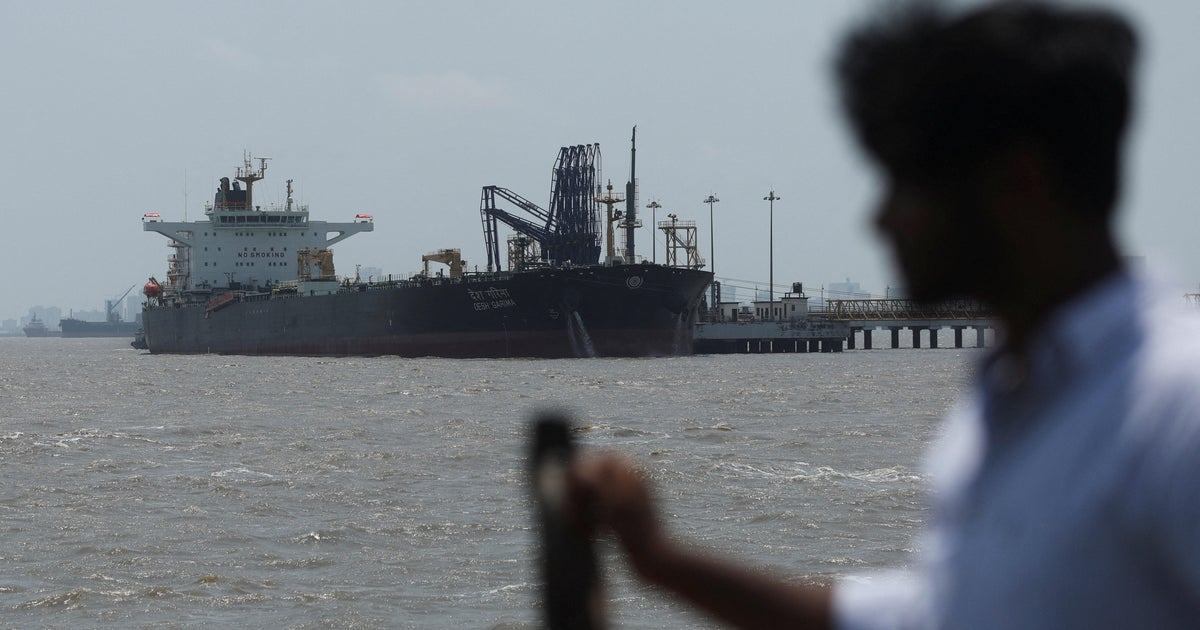
To understand why this particular waterway has become the flashpoint for such dire predictions, it’s important to recognize the Strait of Hormuz’s critical role in the global economy. This narrow passage of water, situated between Iran and the Arabian Peninsula, serves as the world’s most vital corridor for energy transportation. Roughly one-fifth of all petroleum products consumed worldwide must pass through this strait, making it an irreplaceable artery in the circulatory system of the global economy. When this passage becomes blocked or restricted, the effects ripple outward to touch virtually every aspect of modern life, from the price of gasoline at the pump to the cost of groceries at the supermarket.
Following the ceasefire agreement between the U.S. and Iran—which President Trump has since extended indefinitely to create space for diplomatic negotiations—the Strait of Hormuz has paradoxically become the primary theater where tensions between the two countries continue to play out. Rather than seeing the waterway return to normal operations, the world has witnessed an escalating game of brinkmanship that has effectively strangled one of the most important shipping lanes on Earth. Iran has taken steps to impede access to the strait from its side, while the United States has responded by blockading Iranian ports and vessels. Both nations have seized ships that they accuse of violating their respective restrictions, creating a maritime gridlock that has brought commerce through the region to a near standstill. The immediate result has been a dramatic spike in global energy prices, as markets react to the uncertainty of supply, which in turn has fueled rising inflation that is squeezing household budgets from Tokyo to Toronto.
Three Scenarios: From Bad to Catastrophic
In his address, Secretary-General Guterres outlined three distinct scenarios for how this crisis might unfold, each progressively more devastating than the last. His analysis provides a roadmap of potential futures, none of them particularly encouraging, but varying dramatically in their severity. What makes these projections particularly chilling is Guterres’s emphasis that the consequences are not simply cumulative—they don’t add up in a linear fashion—but rather they are exponential, meaning that small delays in resolving the crisis can lead to dramatically worse outcomes.
The first scenario, which Guterres described as the “best-case” option, assumes that the Strait of Hormuz would be reopened immediately and normal shipping operations would resume without further delay. Even in this most optimistic projection, however, the damage already done would still result in significant global economic consequences. The world would still experience a slowdown in economic growth, continued increases in inflation rates, and additional economic hardship for millions of people around the globe. The fact that even the best-case scenario involves considerable pain underscores just how serious the situation has already become and how much damage has been inflicted in the relatively short time that the strait has been compromised.
The second scenario considers what would happen if the current restrictions on shipping through the Strait of Hormuz were to “drag on through midyear”—meaning that the standoff would continue for several more months without resolution. Under this projection, the human cost becomes staggeringly clear and personal. Guterres warned that this scenario would push an additional 32 million people worldwide into poverty, meaning millions of families would lose their economic security and ability to meet basic needs. Even more distressing, he said that 45 million people would fall into extreme hunger, facing the very real possibility of starvation. These aren’t just abstract statistics—they represent real people, real families, and real children whose lives would be fundamentally altered by decisions being made thousands of miles away by governments locked in a geopolitical struggle.
The third and most nightmarish scenario envisions the war grinding on through 2026, with the Strait of Hormuz remaining closed or severely restricted for more than a year. In this case, Guterres warned, the world would face “immense suffering” on a scale that would dwarf even the severe consequences of the second scenario. Most significantly, the global economy would confront the specter of a full-scale recession—not a regional downturn or a sector-specific slump, but a worldwide economic contraction that would affect every country, every industry, and virtually every person on the planet. Such a recession would likely trigger unemployment, business failures, government budget crises, and social unrest on a massive scale, potentially destabilizing not just economies but entire societies.
The Humanitarian Cost of Geopolitical Conflict
What makes Secretary-General Guterres’s warning particularly poignant is his emphasis on the human dimension of this crisis. It would be easy to discuss the situation purely in terms of oil prices, shipping tonnage, and economic growth rates, but Guterres insisted on bringing the focus back to the people who will suffer the most from this standoff. “As with every conflict, the whole of humanity is paying the price,” he reminded his audience, highlighting the fundamental injustice of a situation where billions of people around the world must bear the consequences of a dispute between two governments.
The populations most vulnerable to the economic shockwaves from this crisis are, predictably, those who were already struggling before it began. When energy prices spike, it’s not the wealthy who suffer most—it’s working families who suddenly can’t afford to fill their gas tanks to get to work, or who must choose between heating their homes and buying adequate food. When inflation rises, it’s not the well-off who feel the pinch most acutely—it’s those living paycheck to paycheck who watch their purchasing power erode and their modest savings become insufficient for emergencies. And when economies slide into recession, it’s not the privileged who lose their livelihoods first—it’s those in precarious employment situations who find themselves without income and without safety nets. Guterres’s projections about millions falling into poverty and extreme hunger are not hypothetical abstractions but foreseeable consequences of policy choices being made right now.
A Plea for Immediate Action and Compromise
Against this backdrop of escalating danger, Secretary-General Guterres issued a direct and urgent appeal to both the United States and Iran to step back from the brink and take immediate action to resolve the crisis. His call was straightforward and practical: both sides must “let all ships pass” through the Strait of Hormuz without interference, immediately restoring the free flow of commerce that the global economy depends upon. This isn’t about declaring winners or losers, assigning blame, or determining who was right or wrong in the disputes that led to this point—it’s about recognizing that the cost of continuing down the current path is simply too high for the world to bear.
Guterres’s phrase “let the global economy breathe again” is more than just diplomatic rhetoric—it’s a vivid metaphor that captures the suffocating effect that the closure of the Strait of Hormuz is having on worldwide economic activity. Just as a person cannot survive without oxygen, the modern global economy cannot function properly without the free movement of energy resources and commercial goods through critical shipping channels. The current situation is effectively strangling the economic system that billions of people depend on for their livelihoods and wellbeing, and every day that passes without resolution tightens the grip a little more. The UN Secretary-General’s message is that both Washington and Tehran have it within their power to provide relief simply by allowing ships to resume their normal operations, and that doing so should be viewed not as a concession or a surrender but as a necessary step to prevent a humanitarian and economic catastrophe that would ultimately harm their own interests as well as those of the wider world. The time for action, he made clear, is now—before the situation moves from serious to irreversible, and before the exponential consequences he described become the reality that everyone must live with for years to come.