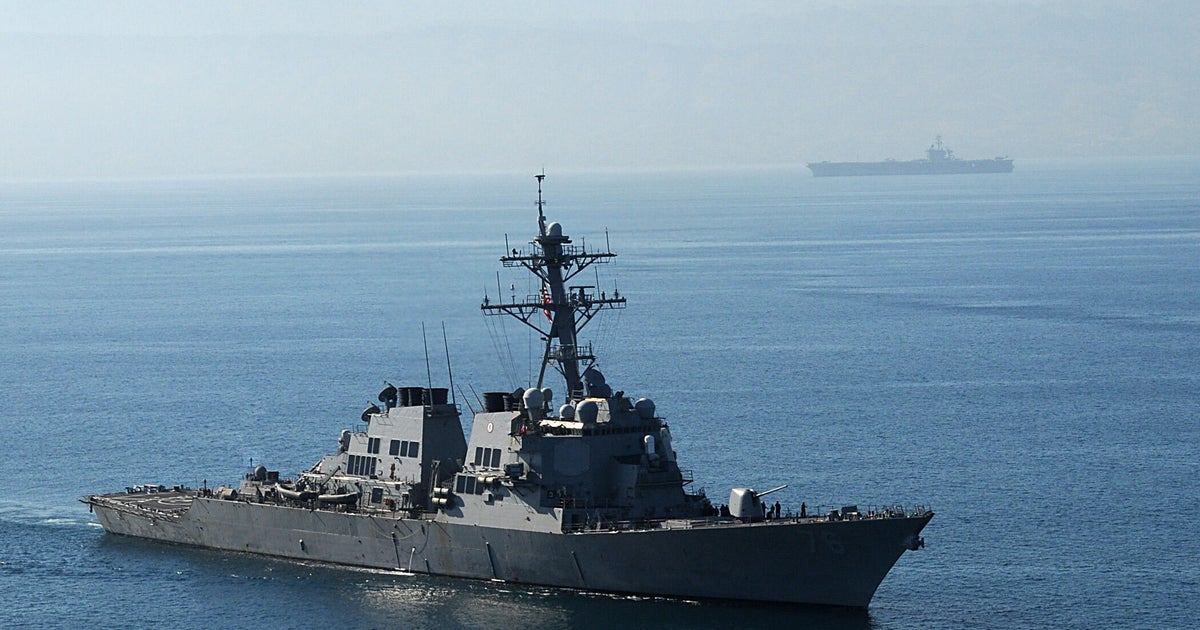

Major Fire Cripples USS Higgins: Navy Destroyer Loses Power in Asian Waters
Critical Systems Knocked Offline During Incident
A significant fire broke out this week aboard the USS Higgins, a guided-missile destroyer that serves as one of the U.S. Navy’s most important vessels stationed in Asia. According to U.S. officials who spoke to CBS News on condition of anonymity, the blaze was severe enough to completely disable the ship’s electrical systems and propulsion capabilities—essentially leaving the warship dead in the water. This represents a serious setback for American naval operations in a region of growing strategic importance, particularly given ongoing tensions with China and North Korea. The officials weren’t authorized to discuss the incident publicly, which explains the limited information available about the full scope of the damage. Fortunately, despite the severity of the fire and the damage it caused to critical ship systems, no injuries to U.S. service members have been reported as of Wednesday, which suggests that crew training and emergency response protocols worked as intended during this frightening incident.
Limited Information About Fire’s Origin and Ship’s Location
Details surrounding how the fire actually started remain unclear, and military officials have been tight-lipped about the destroyer’s exact location within the vast U.S. Indo-Pacific Command area of responsibility at the time of the incident. What is known is that the Higgins was last reported as being ported in Singapore as recently as February, according to AIS Marine vessel tracking data, though it’s uncertain whether the ship was still there when the fire occurred or had since departed on operational duties. The lack of publicly available information extends to other crucial aspects of the incident as well—military spokespeople have not released details about which specific sections of the ship sustained damage, how extensive that damage might be, or how long repair operations are expected to take. When Pentagon spokespeople were questioned about the damage assessment, they referred all inquiries to the Indo-Pacific Command, while the destroyer’s own public affairs office did not immediately provide comments or additional information about the incident. This informational vacuum is typical of military incidents that might involve sensitive operational details or ongoing investigations.
Recent Pattern of Naval Fires Raises Concerns
The fire aboard the USS Higgins represents the latest in a troubling series of fire incidents affecting U.S. Navy vessels in recent weeks, raising questions about ship safety protocols and maintenance standards across the fleet. Earlier this month, a small fire broke out on the aircraft carrier USS Dwight D. Eisenhower, resulting in injuries to eight U.S. Navy sailors, according to Navy Times reporting. In a separate incident, another fire erupted in the laundry spaces aboard the aircraft carrier USS Gerald R. Ford, which injured two additional sailors. While fires aboard naval vessels are not uncommon given the complex machinery, fuel systems, and equipment packed into these ships, the clustering of these incidents in such a short timeframe is noteworthy and will likely prompt thorough reviews of safety procedures and equipment maintenance practices. The Navy has historically taken fire safety extremely seriously, particularly after devastating fires like the one that destroyed the USS Bonhomme Richard while it was docked in San Diego in 2020, which resulted in the complete loss of the amphibious assault ship after a four-day inferno.
Strategic Importance of the USS Higgins
The USS Higgins holds a position of significant strategic importance within the U.S. military’s global posture. Homeported in Yokosuka, Japan, the destroyer is part of the Navy’s forward-deployed naval forces assigned to the 7th Fleet, which represents one of the most important components of the United States Indo-Pacific Command structure. This command oversees American military operations across more than half the globe, covering an area that stretches from the West Coast of the United States to the western border of India, and from Antarctica to the North Pole—encompassing 36 countries and approximately 50 percent of the world’s population. The 7th Fleet’s area of responsibility includes some of the world’s most strategically vital waterways and potential flashpoints, including the South China Sea, the Taiwan Strait, and the Korean Peninsula. Forward-deployed destroyers like the Higgins serve multiple crucial roles: they provide missile defense capabilities, can conduct anti-submarine warfare, support strike operations, and serve as visible symbols of American military presence and commitment to regional allies. Having one of these vessels suddenly knocked out of commission due to fire damage represents a real operational gap that adversaries might seek to exploit.
The Ship’s Namesake and Historical Significance
The USS Higgins carries a name that honors a genuine American hero and serves as a reminder of the dangers that service members face even during peacetime operations. The ship is named after Marine Colonel William Higgins, a decorated veteran of the Vietnam War who demonstrated extraordinary courage and commitment to peace even after his combat service ended. In February 1988, while serving as part of a United Nations peacekeeping mission in southern Lebanon—an assignment meant to help stabilize a region torn apart by civil war and international conflict—Higgins was kidnapped by militants linked to Hezbollah. What followed was a nightmare that lasted years: Higgins was subjected to torture and intense interrogation by his captors, who eventually murdered him. In recognition of his service and sacrifice, Higgins was promoted to his current rank of Colonel while still held in captivity, an unusual honor that reflected the Marine Corps’ commitment to one of its own. His ordeal finally came to a grim conclusion in December 1991, when his remains were discovered on a Beirut street, bringing closure to his family but highlighting the human cost of America’s engagement in some of the world’s most dangerous regions. Naming this powerful warship after Colonel Higgins serves to inspire current crew members and reminds them of the proud traditions of sacrifice and service they carry forward.
Looking Ahead: Repair Timeline and Operational Impact
As the Navy works to assess the full extent of the damage to the USS Higgins and develop a repair plan, questions remain about how long this important vessel will be out of commission and what impact that will have on U.S. naval operations in the Pacific. The loss of both electrical power and propulsion suggests significant damage to the ship’s engineering spaces, which could require extensive repairs potentially taking weeks or even months, depending on what components need to be replaced or rebuilt. The ship may need to be towed to a repair facility if it cannot restore enough power to move under its own propulsion. Meanwhile, the USS Gerald R. Ford and its accompanying strike group are expected to leave the Middle East in the coming days, a U.S. official confirmed to CBS News on Wednesday, which will reduce the American carrier presence in that region from three carriers to two. These movements and incidents collectively highlight the constant juggling act the Navy faces in trying to maintain adequate presence in multiple regions simultaneously while dealing with maintenance issues, crew rotations, and unexpected incidents like fires. The coming weeks will reveal more about the Higgins’ condition and when this vital warship might return to full operational status, resuming its important role in maintaining stability and projecting American power in the strategically critical Indo-Pacific region.