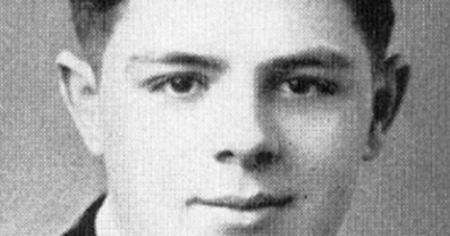


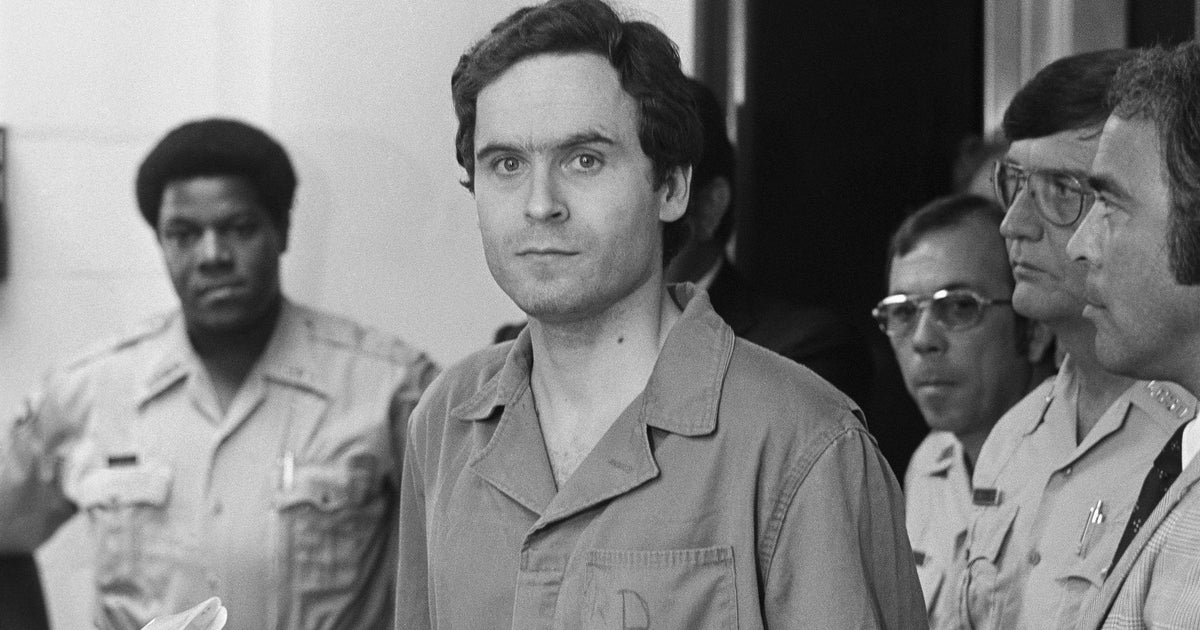

Justice After 51 Years: DNA Evidence Finally Confirms Ted Bundy Killed Utah Teen Laura Ann Aime
A Halloween Night That Ended in Tragedy
More than five decades after a teenage girl vanished on Halloween night, modern DNA technology has brought definitive answers to a grieving family and closed a chapter in one of America’s darkest criminal sagas. Laura Ann Aime was just seventeen years old when she left a party alone on October 31, 1974, intending to make a quick trip to a convenience store. She never made it home. What followed was a month of agonizing uncertainty for her loved ones, until hikers discovered her body on the side of a highway in American Fork Canyon, Utah. The scene was horrific—Laura had been bound, beaten, stripped of her clothing, and according to investigators, likely held captive and alive for several days before her death. While authorities had long suspected the involvement of Ted Bundy, one of America’s most notorious serial killers, they couldn’t definitively prove it until now. This week, the Utah County Sheriff’s Office announced that new DNA testing has conclusively linked Bundy to Laura’s murder, finally giving her family the certainty they’ve sought for half a century, even as the pain of their loss remains fresh.
The Science That Brought Closure
The breakthrough in Laura Aime’s case came through a combination of preserved evidence and technological advancement that didn’t exist when she was killed. In 2011, investigators made a crucial discovery in Florida: a vial of Ted Bundy’s blood that had been drawn in 1978 following his arrest in connection with the death of a twelve-year-old girl. This biological evidence became invaluable when forensic scientists developed a complete DNA profile from the sample and entered it into the FBI’s national database. This profile gave investigators across the country a powerful tool to revisit cold cases where Bundy had long been suspected but never definitively connected. For Laura’s case specifically, physical evidence collected from her body and the crime scene had been carefully preserved for decades, waiting for the day when science could speak with certainty. When that preserved evidence was finally compared against Bundy’s DNA profile, the match was unmistakable. At a news conference, Utah County Sheriff’s Sergeant Mike Reynolds spoke directly to the Aime family with evident emotion, describing Laura as “the quintessential daughter of Utah County” and acknowledging that while investigators could provide answers, true closure for such a devastating loss might never fully come.
Remembering Laura and Understanding the Monster
Those who knew Laura Aime remembered her as a vibrant young woman with an adventurous spirit who loved the outdoors and approached life with joy and enthusiasm. She represented the kind of innocent, trusting nature that predators like Bundy specifically targeted and exploited. Ted Bundy stands among the most prolific and disturbing serial killers in American history, with at least thirty murders of women and girls attributed to him across multiple states during the 1970s. What made Bundy particularly terrifying to the American public wasn’t just the brutality of his crimes or their frequency, but the fact that he defied the stereotype of what people expected a monster to look like. Described as charming and conventionally handsome, Bundy used his appearance and manipulative personality to gain the trust of his victims before revealing his true nature. His attacks occurred in places that should have been safe—sorority houses, public parks, and ordinary streets—shattering the sense of security that many Americans, particularly young women, had previously taken for granted. The case put the entire nation on edge during the mid-to-late 1970s, as reports of disappearances and murders seemed to follow Bundy’s movements across the country.
A Trail of Terror Across Multiple States
By 1974, the year Laura Aime was killed, Ted Bundy had already established a horrifying pattern of predatory behavior, though the full scope of his crimes was still unknown to authorities. Young women, many of them college students, had begun disappearing in Washington state with alarming frequency. When Bundy relocated to Salt Lake City in September 1974 to study law at the University of Utah, the disappearances followed him, expanding to include victims in Utah, Idaho, and Colorado. Laura was not his first victim in Utah. Sixteen-year-old cheerleader Nancy Wilcox disappeared in Salt Lake County on October 2, just weeks before Laura’s abduction. Later that same month, high school senior Melissa Smith vanished, and deer hunters later discovered her bludgeoned body. The pattern was becoming impossible to ignore—wherever Bundy went, young women died. The investigation into these connected cases eventually led to Bundy’s first arrest in August 1975, when a routine traffic stop revealed incriminating items in his vehicle, including rope, handcuffs, and a ski mask. The following year, he was convicted of kidnapping and assaulting Carol DaRonch, a teenage girl who had managed to escape after Bundy approached her while pretending to be an undercover police officer, claiming someone had broken into her car and offering her a ride.
Escapes, More Murders, and Final Capture
Ted Bundy’s criminal saga didn’t end with his conviction and fifteen-year prison sentence for the DaRonch kidnapping. While imprisoned, he was charged in connection with the earlier death of a nursing student and was transported to Aspen, Colorado, for a hearing in 1977. In a brazen move that shocked the nation, Bundy escaped custody by jumping out of a second-story courthouse window during a moment when he was left unattended. Though he was recaptured about a week later, he managed to escape again six months later, this time by breaking through the ceiling of the jail. This second escape proved far more consequential and deadly. Bundy fled across the country to Florida, and on January 15, 1978, he entered the Chi Omega sorority house at Florida State University in Tallahassee. In a horrifying rampage, he bludgeoned two young women to death with a large branch and left two others with severe injuries. He then went to another nearby house and attacked yet another woman. Less than a month after the Chi Omega murders, Bundy committed what is believed to be his final killing—the abduction, sexual assault, and murder of twelve-year-old Kimberly Leach in Lake City, Florida. His crime spree finally ended when police pulled him over in Pensacola for driving a stolen vehicle, leading to his arrest and eventual conviction.
Legacy of Pain and the Importance of Justice
Ted Bundy was executed in Florida in 1989, but not before verbally acknowledging his responsibility for Laura Aime’s death, according to police reports. However, without definitive physical evidence, her case remained officially open for decades, leaving her family in a painful limbo between knowing and proving. The confirmation through DNA evidence, while it cannot undo the tragedy or bring Laura back, represents an important form of justice and recognition. It validates the suffering her family has endured and ensures that Laura is remembered not just as one of Bundy’s many victims, but as a unique individual whose life mattered and whose death demanded accountability. The technology that finally linked Bundy to Laura’s murder also serves as a reminder of how far forensic science has advanced, offering hope to families of other cold case victims that answers may still be possible even after many years have passed. For the Aime family, the confirmation brings a bittersweet mixture of validation and renewed grief—they finally have the definitive answer they’ve sought for fifty-one years, but that answer only reinforces the cruelty of what was taken from them on that Halloween night in 1974. As Sergeant Reynolds acknowledged in addressing the family, investigators hoped to deliver some type of healing, though true closure from such a loss may never fully arrive. Laura Aime’s case stands as both a testament to the persistence of justice and a sobering reminder of the lives forever changed by one man’s evil.