

A Brave Teen’s Final Fight: Ofelia Torres’s Story of Love, Courage, and Hope
A Daughter’s Unwavering Love in the Face of Unimaginable Hardship
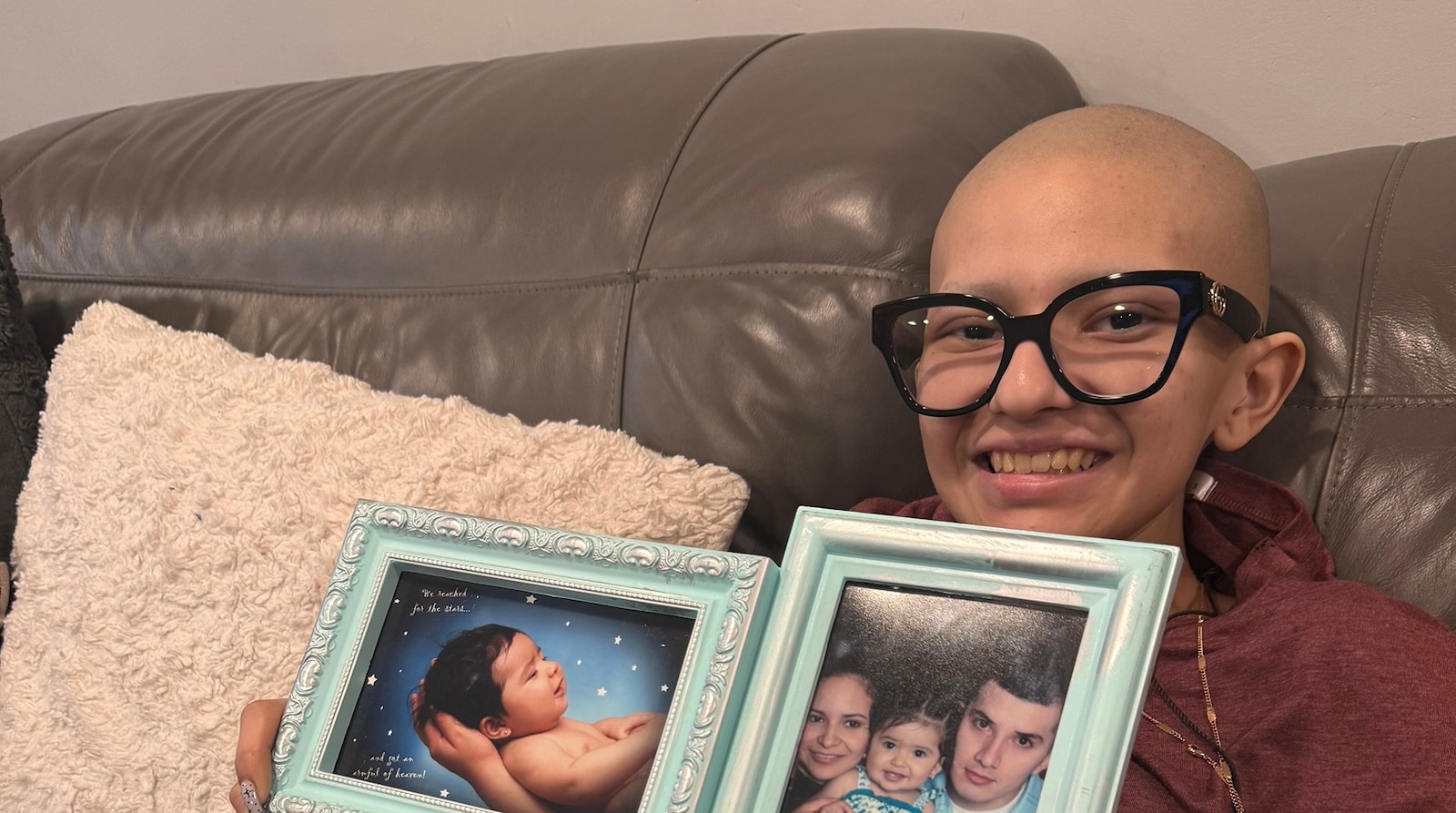
The story of Ofelia Torres is one that touches the deepest corners of the human heart—a tale of a young girl who, while fighting the battle of her life against an aggressive cancer, found the strength to fight another battle for the person she loved most: her father. Ofelia, just 16 years old, passed away on a Friday that left her family, community, and countless Americans who followed her story heartbroken. She succumbed to metastatic alveolar rhabdomyosarcoma, a particularly rare and aggressive form of cancer that attacks soft tissue. But even as her own body waged war against itself, Ofelia refused to remain silent when her father, Ruben Torres-Maldonado, was swept up in an immigration enforcement operation that would tear their family apart during what should have been their most precious time together.
Last fall, Ofelia’s world was already consumed by the challenge of stage 4 cancer—chemotherapy sessions, hospital visits, and the physical and emotional toll of a disease that shows no mercy, especially to the young. Yet when immigration agents detained her undocumented father during what the Trump administration called “Operation Midway Blitz,” this Chicago teenager found reserves of courage that would inspire a nation. Rather than retreating into the privacy of her illness, Ofelia made the brave decision to step into the public eye. She posted a heartfelt video on social media pleading for her father’s release, and she sat down for an interview with ABC News’ “Nightline,” where she opened her heart to millions of viewers. Her message was simple but powerful: she needed her father by her side during the most frightening journey of her young life.
The Arrest That Shocked a Community
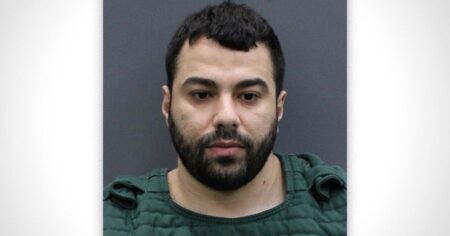
The events of October 18 would forever change the Torres family. Ruben Torres-Maldonado, a father who had built a life in the United States despite his undocumented status, was apprehended by Immigration and Customs Enforcement (ICE) agents at a Home Depot parking lot in Niles, Illinois, just outside Chicago. According to Kalman Resnick, the attorney who would come to represent Torres-Maldonado, the arrest was nothing short of dramatic and traumatic. Federal agents reportedly surrounded Ruben’s truck, smashed through a window, and forcibly removed him at gunpoint before placing him in custody. The image of such an aggressive detention—a man dragged from his vehicle while simply going about his day—sparked outrage among immigrant rights advocates and those who believe in more humane approaches to immigration enforcement.
The Department of Homeland Security presented a different narrative, with Assistant Secretary Tricia McLaughlin alleging that Torres-Maldonado had attempted to flee the scene, backing into a government vehicle in the process. Federal officials categorized him as a “criminal illegal alien,” pointing to a record that included traffic violations: driving without insurance, operating a vehicle without a valid license, and speeding infractions. These are violations that, while illegal, are often committed by undocumented immigrants who lack access to the proper documentation, creating a cycle that immigrant advocates argue criminalizes people for the circumstances created by their immigration status rather than any intent to cause harm. Regardless of the government’s characterization, to Ofelia and her family, Ruben was not a criminal—he was a loving father whose presence meant everything during the most critical time of his daughter’s life.
The detention lasted approximately two weeks before Torres-Maldonado was released on bond, but those weeks felt like an eternity for Ofelia. As protesters gathered near West 27th Street and South Sacramento Avenue in Chicago’s Little Village neighborhood, standing in solidarity with detained immigrants and their families, Ofelia’s personal plea was resonating across the country. Her willingness to make her private pain public touched Americans across the political spectrum, reminding everyone that behind the policy debates and political rhetoric about immigration are real families with real love and real suffering.
A Daughter’s Public Plea and Grace Under Pressure
In her “Nightline” interview, Ofelia displayed a maturity and grace that belied her teenage years. She acknowledged that she had initially wanted to keep her cancer diagnosis private—a completely understandable desire for any young person facing such a terrifying health crisis. Cancer at any age is devastating, but for a teenager who should be thinking about school dances, friendships, college plans, and the normal adventures of adolescence, a stage 4 cancer diagnosis is particularly cruel. Yet Ofelia made a conscious choice to sacrifice that privacy for a greater purpose. “I need the world to know my dad’s story and if that means letting the world know I have cancer, so be it. I don’t care,” she said with determination. “I need my dad.”
Those four simple words—”I need my dad”—captured the essence of the situation with heartbreaking clarity. This wasn’t about politics or immigration policy in the abstract; this was about a sick child needing her parent during the most frightening time of her life. What made Ofelia’s advocacy even more remarkable was the spirit in which she conducted it. Despite the trauma her family had endured, despite the way her father had been treated during his arrest, Ofelia chose compassion over bitterness. She told ABC News’ Stephanie Ramos that she harbored “nothing but love” for the federal agents who arrested her father. “To the ICE agents who smashed my dad’s window, to the ICE agent who pointed a gun at my dad, I’m not mad at you … I just want you to know that that was not the right thing to do,” she said. This extraordinary capacity for forgiveness and her focus on what was right rather than revenge showed a character strength that many adults never develop.
Ofelia’s advocacy worked. The public attention she brought to her father’s case, combined with legal efforts by his attorney, resulted in Torres-Maldonado’s release on bond. He was able to return home to his daughter’s side, where he belonged. For a brief time, the family was reunited, able to face Ofelia’s illness together. The photographs shared with the media, including baby pictures of Ofelia with her father, told the story of a lifetime of love between a father and daughter—a relationship that immigration detention had threatened to cut short during its most critical chapter.
A Bittersweet Victory Three Days Before the End
Even as Ofelia’s health declined, the legal battle for her father’s future in the United States continued. In a moment that would prove to be bittersweet beyond measure, just three days before Ofelia’s death, an immigration judge made a ruling that offered hope for the family’s future. The judge determined that Ruben Torres-Maldonado was conditionally entitled to receive cancellation of removal—a form of immigration relief that could potentially provide him with a pathway to obtaining a green card and legal permanent residence in the United States. Ofelia, though gravely ill, watched the hearing virtually from wherever she was receiving care. One can only imagine what that moment meant to her—knowing that her father would not be torn away from their family, that her public stand and sacrifice of privacy had contributed to this outcome, and that her younger siblings, if she had any, or other family members would not lose him to deportation.
Kalman Resnick, the attorney who represented Torres-Maldonado throughout this ordeal, released a statement following Ofelia’s death that honored her courage and character. “Ofelia was heroic and brave in the face of ICE’s detention and threatened deportation of her father,” Resnick said. “We mourn Ofelia’s passing, and we hope that she will serve as a model for us all for how to be courageous and to fight for what’s right to our last breaths.” These words perfectly captured what Ofelia’s story represents—not just a tragic tale of a young life cut short, but an inspiring example of how love can motivate extraordinary acts of courage, and how even in our darkest moments, we can choose grace over bitterness.
The fact that Ofelia lived to see this legal victory, even if only by three days, offers a small measure of comfort. She did not die wondering whether her father would be deported, whether her advocacy had been in vain, or whether the sacrifice of her privacy had mattered. She knew that her voice had been heard, that her love for her father had moved mountains, and that the system—however slowly and imperfectly—had ultimately recognized that this family deserved to stay together.
The Legacy of a Teenage Advocate
Ofelia Torres’s life, though far too short, will not be forgotten. Her story raises profound questions about immigration enforcement priorities, about how we balance security concerns with human compassion, and about what we owe to families facing medical crises. Should a father with traffic violations be aggressively detained when his teenage daughter is fighting stage 4 cancer? Are there ways to enforce immigration law that don’t involve smashing windows and drawing guns on people in parking lots? What should our priorities be when enforcement actions tear apart families during medical emergencies?
But beyond the policy questions, Ofelia’s legacy is fundamentally about the power of love and the courage of conviction. She showed us that even when facing our own mortality, we can find strength to fight for others. She demonstrated that grace and forgiveness are not signs of weakness but of profound strength. She proved that one voice, even that of a sick teenager, can cut through political noise and remind us of our shared humanity. In an era often characterized by harsh rhetoric about immigration, Ofelia personalized the issue in a way that no statistics or policy debates ever could. She reminded us that every case involves real people with real families who love each other just as deeply as any native-born American family.
As her family, community, and all those touched by her story mourn Ofelia’s passing, they can also celebrate what she accomplished in her sixteen years. She fought two enormous battles simultaneously—one against the cancer ravaging her body, and one against a system that threatened to deport her father during her greatest time of need. She faced both fights with remarkable courage, dignity, and grace. While she ultimately lost her battle with cancer, she won something perhaps even more important: she secured her father’s presence during her final days, she ensured his pathway to remaining in the country legally, and she left behind a powerful example of advocacy and love that will inspire others facing similar struggles. Ofelia Torres may be gone, but her voice will echo in the ongoing conversations about immigration, family separation, and how we treat the most vulnerable among us. That is a legacy any person, regardless of age, would be proud to leave behind.