
Tragic Discovery: Seven Lives Lost in Suspected Human Smuggling Operation
A Heartbreaking Find Near the Border
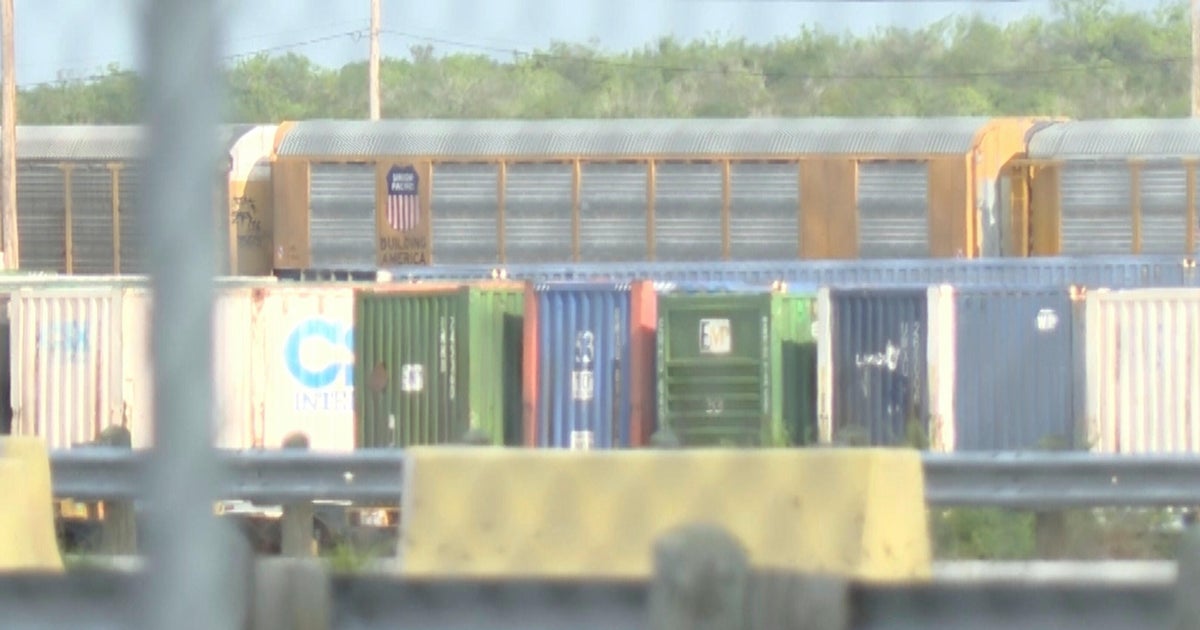
In a devastating incident that highlights the dangerous reality of human smuggling along the U.S.-Mexico border, authorities discovered seven people who are believed to have died from heat stroke while trapped inside shipping containers on a freight train. The tragedy unfolded over a weekend in May 2026, when six bodies were initially found inside a boxcar at a Union Pacific rail yard in Laredo, Texas, near the Mexican border. The discovery sent shockwaves through the community and prompted an immediate investigation by local law enforcement and U.S. Immigration and Customs Enforcement. What made this tragedy even more heartbreaking was the discovery of a seventh victim nearly 150 miles north of Laredo, found dead by railroad tracks in an area southwest of San Antonio. Bexar County Sheriff Javier Salazar confirmed that this seventh person was connected to the same tragic incident, painting a picture of desperate individuals who likely paid smugglers for what they hoped would be safe passage into the United States, only to meet with unimaginable suffering and death.
How the Seventh Victim Was Located
The discovery of the seventh victim came through a combination of technology and determined police work. Sheriff Salazar explained to reporters that modern freight containers are equipped with sensors that alert railway officials whenever a container is opened. When investigators were examining the timeline of events following the discovery of the six bodies in Laredo, they noticed that one of the containers had been opened at some point during the weekend near San Antonio. This crucial piece of information led authorities to focus their search efforts in that specific area. Law enforcement officers then methodically patrolled up and down the railroad tracks near where the container had been opened, eventually locating the body of a man carrying Mexican identification. The grim reality of these sensors, designed for security and logistics purposes, became instrumental in uncovering the full scope of this human tragedy. Sheriff Salazar also revealed a disturbing detail about these containers: they cannot be opened from the inside, meaning that once sealed, the people trapped inside were completely at the mercy of whoever had locked them in, with no way to escape the increasingly deadly conditions.
The Train’s Journey and Unanswered Questions
The investigation revealed that the train carrying these victims had originated in Del Rio, Texas, another border city. Near San Antonio, the train had been split into two sections, with one half continuing to Laredo and the other heading toward Houston. This detail raised troubling questions for investigators: Were there more people in the container initially? Did some manage to escape or survive? Sheriff Salazar candidly told reporters that at that point in the investigation, they couldn’t determine whether the container had been opened to allow people who had survived to escape, or whether it had simply been opened to dispose of the body of someone who had already died. The uncertainty surrounding these questions added another layer of tragedy to an already heartbreaking situation. The possibility that there might have been survivors who managed to get out, or conversely, that there might be additional victims yet to be discovered, weighed heavily on the minds of investigators and the community alike.
A Desperate Plea for Help That Came Too Late
Perhaps the most heart-wrenching aspect of this tragedy was the revelation that someone had tried to call for help while the nightmare was unfolding. Sheriff Salazar disclosed that on Saturday, San Antonio police had received a report from a relative of one of the victims. This relative, who lived in another state, had contacted police after receiving a message from someone trapped in the container. The message conveyed a desperate situation: it was getting extremely hot inside the container, and the people trapped inside were beginning to suffer serious physical distress due to the heat. Tragically, the person who sent that message is believed to be among the six individuals whose bodies were found in the Laredo rail yard. This detail transforms the statistics into a human story—these were real people with families, with loved ones who cared about them, who were trying to reach out for help in their final moments. The fact that a relative tried to get help through proper channels, but that help arrived too late, adds a particularly painful dimension to this tragedy.
The Brutal Reality of Heat Stroke
Dr. Corinne Stern, the Webb County Medical Examiner conducting the autopsies, provided crucial details about what these people endured in their final hours. She confirmed that the victims originated from Mexico and Honduras—countries where economic hardship and violence often drive people to risk everything for a chance at a better life in the United States. The autopsy of a 29-year-old woman from Mexico revealed that she died of hyperthermia, commonly known as heat stroke, and Dr. Stern ruled her death as accidental. The medical examiner stated her belief that the remaining individuals probably all died from heat stroke as well, though their examinations were not yet complete at the time of her statement. To understand the horror of what happened, consider the conditions: temperatures in Laredo reached 97 degrees Fahrenheit on that Sunday afternoon. Inside a metal shipping container with no ventilation, no water, and no way to escape, the temperature would have been even higher—likely exceeding 100 degrees, according to meteorologists from local CBS affiliate KENS-TV. In such conditions, the human body quickly becomes overwhelmed, unable to cool itself, leading to organ failure and death. These people essentially died trapped in what became a metal oven, fully aware of what was happening to them, unable to save themselves.
A System That Failed and the Ongoing Crisis
This tragedy is unfortunately not an isolated incident but rather a symptom of a larger, ongoing crisis at the U.S.-Mexico border. Human smuggling operations, often run by ruthless criminal organizations, prey on desperate people seeking better lives, charging them thousands of dollars for dangerous journeys that sometimes end in death. The smugglers who locked these seven people in containers clearly had no regard for their lives, viewing them merely as cargo that could be abandoned when convenient. Union Pacific, the railway company whose trains were involved in this incident, issued a statement saying they were “saddened by this incident” and were working closely with law enforcement to investigate. U.S. Immigration and Customs Enforcement confirmed they were investigating the deaths as a potential human smuggling incident, which could lead to federal charges against those responsible. However, for the families of the victims, no investigation or criminal prosecution can bring back their loved ones. These seven people—young enough to make the dangerous journey, desperate enough to risk their lives, hopeful enough to believe in a better future—died terrible deaths, and their families will forever live with that loss. This incident should serve as a stark reminder of the human cost of failed immigration policies and the criminal enterprises that exploit vulnerable people. It’s a call for comprehensive reform that addresses the root causes driving migration while cracking down on the smuggling operations that treat human lives as disposable commodities.