


President Trump Proposes Suspending Federal Gas Tax Amid Soaring Fuel Prices
A Bold Move to Address Rising Costs at the Pump
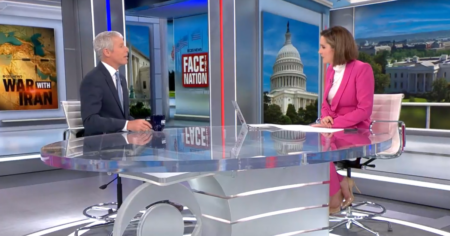
In a revealing phone conversation with CBS News on Monday morning, President Trump announced his intention to temporarily suspend the federal gas tax as Americans grapple with skyrocketing fuel prices. “I think it’s a great idea,” the president stated confidently during the interview. “Yup, we’re going to take off the gas tax for a period of time, and when gas goes down, we’ll let it phase back in.” This proposal comes at a critical moment when everyday Americans are feeling the pinch at the pump, with gas prices having surged more than 50% since the outbreak of conflict with Iran on February 28th. According to AAA data, prices peaked at over $4.52 per gallon on Sunday, and energy analysts predict these elevated prices aren’t going away anytime soon, particularly as Iran continues blocking access to the strategically vital Strait of Hormuz. The federal excise tax currently adds 18.4 cents to every gallon of gasoline and 24.4 cents to diesel fuel—amounts that might seem small individually but add up significantly for families and businesses filling up regularly.
The Political and Financial Challenges Ahead
While President Trump’s proposal sounds straightforward and appealing to struggling consumers, the reality of implementing such a suspension is considerably more complex. The president cannot simply wave a magic wand to eliminate the gas tax—it requires an act of Congress to become reality. This means navigating the often treacherous waters of Capitol Hill, where even seemingly common-sense measures can become bogged down in partisan politics and procedural obstacles. The financial implications are substantial as well: suspending the federal gas tax would cost the federal government approximately half a billion dollars each week. That’s money that would need to be accounted for elsewhere in the budget or simply added to the national deficit. Despite these challenges, the president’s announcement has already sparked bipartisan interest in Congress. Republican Senator Josh Hawley quickly announced Monday that he would introduce legislation to suspend the federal gas tax, while GOP Representative Anna Paulina Luna of Florida similarly pledged to introduce a companion bill in the House this week, specifically citing Trump’s recent remarks as motivation. Interestingly, several Democratic lawmakers had already been working on their own legislation to either pause or lower the gas tax, suggesting this might be one of those rare issues where common ground exists across party lines.
Understanding Where Gas Tax Money Goes
To fully appreciate the implications of suspending the federal gas tax, it’s important to understand where this revenue actually goes and what purposes it serves. The money collected from the federal gas tax isn’t simply absorbed into the general treasury—it’s earmarked for a specific purpose. Revenue raised by the federal gas tax flows directly into the Highway Trust Fund, which serves as the financial backbone for constructing and repairing America’s roadways. This fund doesn’t just keep our highways in good shape; it also pays for various other transit projects that Americans depend on daily, from bridge repairs to public transportation infrastructure improvements. This creates a genuine policy dilemma: while suspending the tax would provide immediate relief to consumers facing high prices at the pump, it would also create a significant funding gap for infrastructure projects that are already struggling to keep pace with America’s maintenance and modernization needs. The roads, bridges, and transit systems that millions of Americans use every day require consistent funding, and the gas tax has traditionally been the mechanism for ensuring users of these systems contribute to their upkeep. Policymakers will need to wrestle with how to balance short-term consumer relief against long-term infrastructure needs.
Airlines and the Ripple Effects of Rising Fuel Costs
The surging fuel prices aren’t just hitting drivers—they’re also creating enormous pressure throughout the transportation sector, particularly for airlines. During his CBS News interview, President Trump addressed the airline industry’s struggles, specifically rejecting the idea of a government bailout for U.S. air carriers as they contend with jet fuel costs that have more than doubled since the start of the conflict with Iran. “The airlines are doing not badly,” the president assessed, noting that a bailout proposal “hasn’t really been presented” to him. However, the situation on the ground tells a somewhat different story. Budget carrier Spirit Airlines shut down earlier this month, unable to withstand the financial pressure from rapidly rising jet fuel prices. Industry analysts are warning that ticket prices for all airlines will inevitably increase this summer as carriers pass along their increased fuel costs to consumers. This means American families planning summer vacations or business travelers coordinating trips will likely face significantly higher airfare in addition to the increased costs they’re already experiencing when driving. The rippling effects of elevated fuel prices touch nearly every aspect of the economy, from the cost of shipping goods to the price of food at grocery stores, since transportation costs factor into virtually everything consumers buy.
Escalating Tensions with Iran and Strategic Considerations
The underlying cause of these soaring fuel prices—the ongoing conflict with Iran and that nation’s blocking of the Strait of Hormuz—loomed large throughout President Trump’s interview. When discussing a recent “60 Minutes” interview with Israeli Prime Minister Benjamin Netanyahu, Trump took issue with Netanyahu’s claim that “nobody had perfect foresight” regarding Iran’s willingness to close off the strait, a narrow waterway through which roughly one-fifth of the world’s petroleum passes. “I did,” Trump asserted confidently to CBS News. “I knew they closed it. That’s the only weapon they have. It’s not much of a weapon anymore, but that’s the only weapon they have.” The president went on to suggest that the strait would already be open “except that I did the favors for certain countries that asked me not to do it,” referring to the previously discussed Operation Freedom, which was apparently designed to ensure vessels could safely pass through the strategic chokepoint. When pressed on whether he intends to restart that operation, Trump offered an ominous response: “I don’t know—either that, or (something) much more severe.” This suggests the administration is considering various options for addressing Iran’s blockade, ranging from renewed efforts to guarantee safe passage to potentially more aggressive military action.
Diplomatic Stalemate and the Path Forward
The prospects for a diplomatic resolution to the crisis appear dim in the near term. Over the weekend, President Trump publicly declared Iran’s latest peace proposal “totally unacceptable,” and when CBS News asked him to elaborate on what specifically he found objectionable, his response was blunt and unsparing. “It was just a bad proposal, a stupid proposal, actually…done by people that have no clue as to the danger they’re in,” Trump said. “Very stupid proposal. Badly written, badly delivered.” When asked whether Iran had made any concessions regarding their nuclear program—often a central concern in negotiations with Tehran—the president acknowledged “Yeah, for sure, but not nearly enough.” This suggests that while Iran may have offered some movement on the nuclear issue, it fell far short of what the administration considers acceptable terms. The diplomatic impasse means Americans should prepare for elevated fuel prices to persist for the foreseeable future, making the proposed suspension of the federal gas tax potentially more important as a relief measure. As Congress begins debating the merits of temporarily eliminating the gas tax, lawmakers will need to weigh the immediate financial relief it would provide to struggling families against the long-term funding needs for America’s transportation infrastructure, all while the broader geopolitical situation with Iran remains unresolved and continues driving energy prices higher.