



Team USA Goalie Connor Hellebuyck to Receive Presidential Medal of Freedom
A Historic Announcement During the State of the Union
In a moment that blended sports triumph with national celebration, President Trump announced during his State of the Union address that Olympic gold medal-winning goaltender Connor Hellebuyck would receive the Presidential Medal of Freedom, the nation’s highest civilian honor. The announcement came just days after Team USA’s men’s hockey squad captured gold at the Winter Olympics, defeating Canada in a thrilling finale that captivated the nation. During Tuesday night’s address, President Trump revealed that he had consulted with the team earlier that day during their Oval Office visit, asking them to vote on whether their star goalie deserved this prestigious recognition. “The members of this hockey squad will be very happy to hear that, based on their vote, and my vote, and in this case my vote was more important, that I will soon be presenting Connor with our highest civilian honor,” the President announced to thunderous applause. The decision to honor Hellebuyck represents a recognition not just of athletic excellence, but of a performance that united Americans across the political spectrum in a rare moment of collective pride and celebration.
A Standing Ovation That Transcended Politics
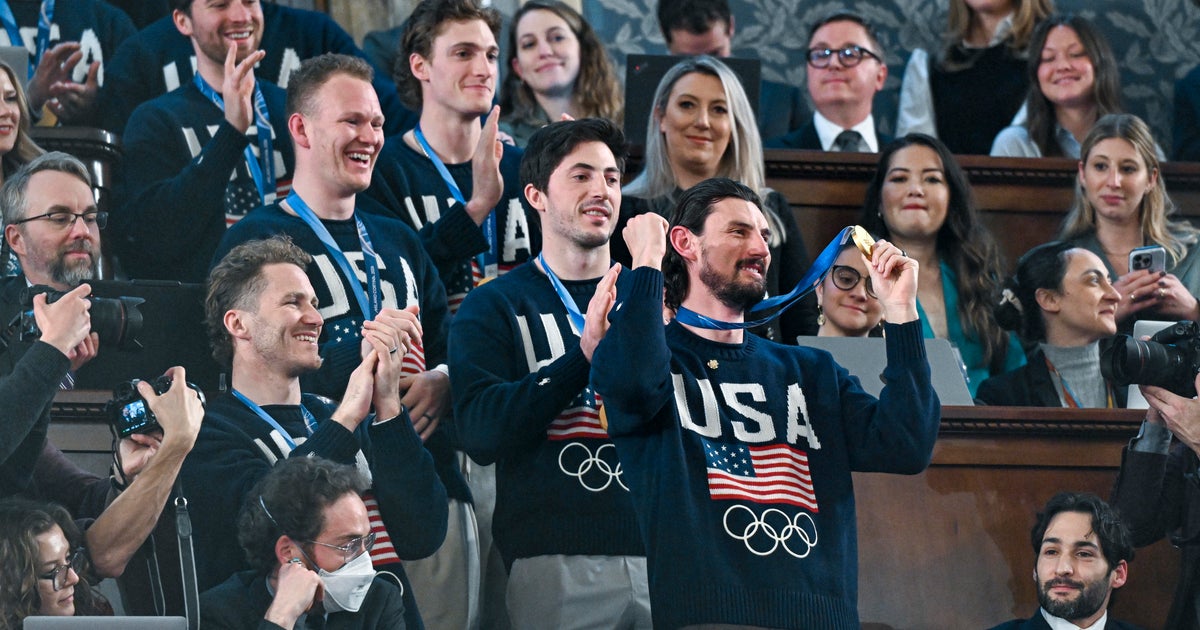
The State of the Union chamber erupted in bipartisan enthusiasm when President Trump invited the gold medal-winning Team USA hockey players into the House chamber. Members of Congress from both sides of the aisle rose to their feet, delivering an extended standing ovation while chanting “U-S-A!” in unison—a display of unity that has become increasingly rare in today’s polarized political environment. President Trump himself seemed taken aback by the moment, quipping, “That’s the first time I’ve ever seen them get up,” in reference to Democratic members of Congress joining their Republican colleagues in celebration. The team members stood proudly with their gold medals draped around their necks, absorbing the adulation of the nation’s lawmakers and the millions watching at home. When the President specifically praised Hellebuyck’s performance, saying “I’ve never seen a goalie play as well as Connor Hellebuyck,” the chamber erupted once again. In response, Hellebuyck kissed his gold medal and pumped his fist, a spontaneous gesture that captured both his personal emotion and the magnitude of the moment. It was a scene that reminded Americans of sport’s unique power to bring people together, if only temporarily, in shared joy and national pride.
The Performance of a Lifetime
Connor Hellebuyck’s gold medal-winning performance against Team Canada was nothing short of spectacular, the kind of athletic achievement that becomes part of sports folklore. During the championship game, he stopped an astounding 41 of Canada’s 42 shots, putting on a goaltending clinic that will be remembered for generations. The game remained tied 1-1 deep into the third period, with every save becoming more crucial than the last. Perhaps the most memorable moment came when Hellebuyck made what many are calling one of the greatest saves in Olympic history. Facing a point-blank shot from Canadian defenseman Devon Toews, Hellebuyck stretched his stick out behind him in a seemingly impossible maneuver, getting just enough of his stick blade on the puck to deflect it away from the goal. President Trump couldn’t resist asking about this jaw-dropping play during the team’s White House visit. “I asked him, ‘The one shot, the one where you put the stick in the back, and it hit the stick and bounced off, do you practice that or was that a little lucky?'” the President recounted during his address. “He refused to answer that question,” he added with a smile, drawing laughter from the assembled lawmakers. Hellebuyck’s heroics continued into sudden-death three-on-three overtime, where he made yet another crucial save to keep Team USA’s gold medal hopes alive. The Americans ultimately prevailed 2-1, securing their first Olympic gold in men’s hockey in 46 years, exactly marking the anniversary of the legendary “Miracle on Ice” victory over the Soviet Union at Lake Placid in 1980.
A Team Decision for Individual Recognition
What made the announcement of Hellebuyck’s Presidential Medal of Freedom particularly meaningful was the democratic process behind it. During the team’s Oval Office visit earlier on the day of the State of the Union, President Trump asked the players to vote on whether their goaltender should receive this extraordinary honor. According to the President, every member of the team “rapidly put up their hands” in support of recognizing Hellebuyck’s contribution to their collective success. This approach highlighted both the team’s unity and their recognition that, while hockey is the ultimate team sport, certain performances transcend even the collective achievement. Hellebuyck’s teammates understood that his performance had been the difference between gold and silver, and they wanted to see him recognized at the highest level. President Trump acknowledged the entire team’s contribution, telling them, “What a special job you did. What special champions you are. Thank you very much.” The moment served as a reminder that individual excellence and team success are not mutually exclusive, but rather complementary forces that drive achievement in sports and beyond. The Presidential Medal of Freedom, while awarded to Hellebuyck individually, ultimately honors the collective spirit and determination of the entire team.
The Women’s Team and Future Recognition
While the men’s hockey team basked in the spotlight of the State of the Union, the U.S. women’s hockey team, which also captured gold by defeating Canada, was notably absent. The women’s team had declined President Trump’s invitation to attend the address, citing scheduling conflicts. However, the President made a point of mentioning them during his remarks, stating that they would “soon be coming to the White House” for their own celebration. This situation highlighted the sometimes complicated relationship between sports, politics, and public recognition in modern America. Athletes increasingly face decisions about how and when to engage with political figures and events, balancing personal beliefs with professional obligations and team dynamics. Regardless of the timing, both teams’ achievements deserve celebration—they both defeated Canada to claim gold, providing Americans with thrilling victories that transcended the sports pages to become genuine cultural moments. The parallel victories by both the men’s and women’s teams represented a comprehensive American dominance in Olympic hockey that hadn’t been seen in decades, giving the nation two gold medals in the sport’s most competitive international tournament.
Hellebuyck Joins an Elite Athletic Fraternity
With this honor, Connor Hellebuyck joins an extremely select group of athletes who have received the Presidential Medal of Freedom, America’s highest civilian award. The list reads like a who’s who of American sports royalty, including basketball legends Michael Jordan, Magic Johnson, and Kareem Abdul-Jabbar; baseball icons Babe Ruth, Jackie Robinson, and Hank Aaron; tennis trailblazers Billie Jean King and Arthur Ashe; golf greats Tiger Woods, Arnold Palmer, and Jack Nicklaus; and multi-sport pioneer Jim Thorpe. Recent recipients include soccer stars Lionel Messi and Megan Rapinoe, gymnast Simone Biles, and swimmer Katie Ledecky, representing both the globalization of American sports and the increasing recognition of women’s athletic achievements. The medal has honored not just athletic excellence, but also those who used their platforms to advance civil rights, break down barriers, and inspire future generations. By joining this pantheon, Hellebuyck’s Olympic heroics are enshrined alongside the greatest achievements in American sports history. His performance becomes more than just a single game or tournament—it becomes part of the ongoing story of American excellence, determination, and the pursuit of greatness that these medal recipients collectively represent. For a goaltender from Michigan who dedicated his life to stopping pucks, standing alongside names like Muhammad Ali, Jesse Owens, and Roberto Clemente represents validation that goes beyond any championship trophy or individual award the sport of hockey itself could bestow.