



U.S. Revokes Green Cards and Detains Family of Iranian “Screaming Mary” Propagandist
High-Profile Deportation Signals Hardline Stance on Iranian Regime Connections
The Trump administration has taken decisive action against individuals with ties to the Iranian government, revoking the green cards and detaining the family members of a prominent Iranian regime propagandist. The State Department announced on Saturday that Seyed Eissa Hashemi, his wife Maryam Tahmasebi, and their son have been taken into custody by Immigration and Customs Enforcement (ICE) as they await deportation from the United States. The couple, who had been working as professors at The Chicago School in Los Angeles, now find themselves at the center of a broader crackdown on people connected to Iran’s political establishment. This development marks a significant escalation in the administration’s efforts to remove individuals deemed to have problematic associations with anti-American regimes, particularly those with direct family connections to Iran’s revolutionary government.
The “Screaming Mary” Connection and Historical Significance
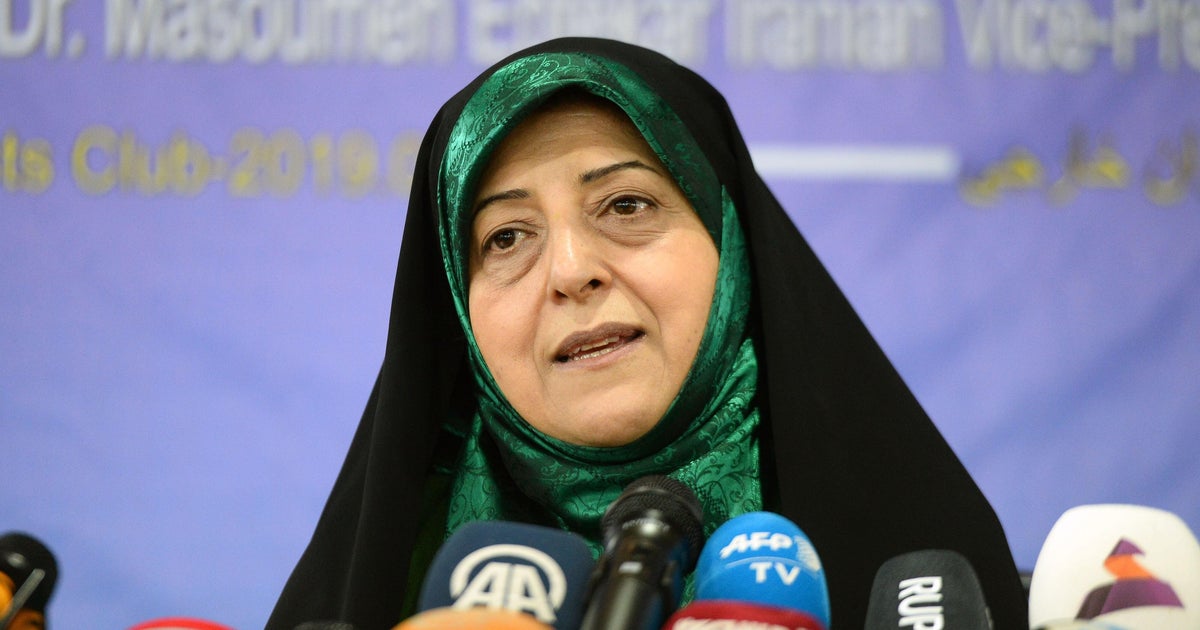
At the heart of this deportation case is Seyed Eissa Hashemi’s mother, Masoumeh Ebtekar, a figure who has become notorious in American history under the nickname “Screaming Mary.” Ebtekar first captured international attention in 1979 when she served as the spokeswoman for the group of Iranian students who stormed the U.S. Embassy in Tehran during the Iranian Revolution. This group held 52 Americans hostage for more than a year in what became known as the Iran hostage crisis, one of the most traumatic episodes in U.S.-Iran relations. Her prominent role during this crisis, speaking to Western media while American diplomats and citizens were held captive, earned her the “Screaming Mary” moniker among Americans who watched the crisis unfold on their television screens. Following the hostage crisis, Ebtekar didn’t fade into obscurity but instead climbed Iran’s political ladder, eventually serving as a vice president for women and family affairs from 2017 to 2021. She also led the country’s Department of Environment on two separate occasions, cementing her status as a significant figure within Iran’s theocratic government structure.
Strong Words from Secretary of State Marco Rubio
Secretary of State Marco Rubio didn’t mince words when explaining the administration’s position on the deportation. Taking to social media platform X, Rubio declared that Ebtekar’s family “should never have been allowed to benefit from the extraordinary privilege of living in our country.” His statement reflects a hardline approach to immigration enforcement, particularly regarding individuals with connections to governments or movements considered hostile to American interests. Rubio emphasized that “America can never become home for anti-American terrorists or their families — and under the Trump Administration, it never will.” This strong language signals a clear policy direction that extends consequences beyond individual actors to include their family members, even when those relatives haven’t been directly accused of any wrongdoing themselves. According to State Department records, Hashemi and his family originally came to the United States on a visa issued in 2014, during the Obama administration. Two years later, in 2016, they were granted lawful permanent resident status through the Diversity Immigrant Visa Program, commonly known as the visa lottery system, which randomly selects applicants from countries with low rates of immigration to the United States.
The End of the Diversity Visa Lottery Program
The deportation of Hashemi’s family occurs against the backdrop of the Trump administration’s successful termination of the Diversity Immigrant Visa Program, the very pathway that allowed them to obtain green cards. President Trump has long criticized this program, first calling for its elimination during his first term in office back in 2017. His opposition intensified following a terrorist attack carried out by Sayfullo Saipov, an Uzbekistan native who entered the United States after being approved through the diversity lottery system. Saipov drove a truck into pedestrians and cyclists on a bike path in Lower Manhattan on Halloween 2017, killing eight people and injuring many others. He was subsequently sentenced to life in prison for this horrific act of terrorism. The attack gave Trump concrete ammunition for his argument that the lottery system posed national security risks by allowing people to enter the country without the rigorous vetting applied to other immigration categories. Rather than waiting for Congress to act on his recommendation to end the program, Trump took executive action himself in April 2020, announcing the termination of the diversity lottery. However, his initial ban was struck down by a federal judge in September 2020, highlighting the ongoing legal battles over immigration policy. Undeterred, Trump reissued the ban on the diversity lottery in December 2025, finally achieving his long-sought goal of ending the program.
Part of a Broader Pattern of Deportations
The detention of Ebtekar’s family is not an isolated incident but rather part of a systematic effort by the Trump administration to identify and deport individuals with connections to Iran’s government or revolutionary establishment. Earlier this month, authorities arrested Hamideh Soleimani Afshar and her daughter, who are the niece and grand-niece respectively of the late Iranian Revolutionary Guard Major General Qasem Soleimani. The two women were living in Los Angeles when their lawful U.S. permanent resident status was abruptly terminated and they were taken into custody by ICE agents. According to the State Department, Soleimani Afshar had made herself a target through her public statements and social media activity. Officials stated that “as identified by both press reporting and her own social media commentary, Soleimani Afshar is an outspoken supporter of the totalitarian, terrorist regime in Iran.” As of the State Department’s Saturday announcement, both women remain in ICE custody awaiting deportation. The significance of their family connection cannot be overstated—Qasem Soleimani was one of Iran’s most powerful military figures and was killed in a controversial U.S. drone strike ordered during Trump’s first administration in January 2020. Additionally, the State Department has terminated the legal status of Fatemeh Ardeshir-Larijani, daughter of Ali Larijani, who previously served as Secretary of Iran’s Supreme National Security Council, along with her husband. Unlike the other cases, these two individuals are no longer in the United States, having apparently left before enforcement actions could be taken against them.
Geopolitical Context and Future Implications
These deportation actions are taking place during a particularly tense period in U.S.-Iran relations, with high-level diplomatic efforts underway to address ongoing conflicts in the region. Vice President JD Vance, accompanied by special envoy Steve Witkoff and Jared Kushner, the president’s son-in-law, arrived in Islamabad, Pakistan, early Saturday for crucial talks concerning the war in Iran. These discussions occur during a fragile two-week truce, with the primary agenda item being the reopening of the Strait of Hormuz, a critical waterway currently blocked by Iran. This strait is one of the world’s most strategically important chokepoints, with approximately one-fifth of global oil supplies passing through it under normal circumstances. Iran’s blockade has significant implications for international energy markets and global commerce. The timing of these deportations alongside such high-stakes diplomatic negotiations suggests a comprehensive strategy combining tough enforcement actions against regime-connected individuals on U.S. soil with diplomatic and potentially military pressure abroad. These actions raise important questions about the balance between national security concerns and the rights of lawful permanent residents, the extent to which family connections should influence immigration status, and how the U.S. government defines and addresses threats from individuals associated with hostile foreign governments. As the Trump administration continues its crackdown on people with Iranian government connections, more cases like these are likely to emerge, setting precedents that could affect immigration policy and enforcement for years to come.