


Trump’s Escalating Threats Against Cuba: Understanding the Brewing Crisis
A New Chapter in U.S.-Cuba Relations
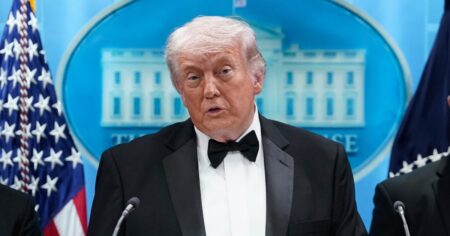
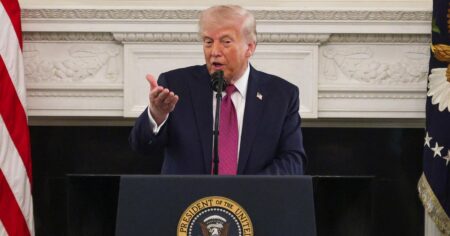
The relationship between the United States and Cuba has entered uncharted and potentially dangerous territory under President Trump’s current administration. Following successful military operations that captured Venezuelan President Nicolás Maduro in January and resulted in the assassination of Iranian Supreme Leader Ali Khamenei in February, President Trump has increasingly turned his attention toward Cuba. His language has become more aggressive and direct, telling reporters on Air Force One that “Cuba’s going to be next” and boasting about having “the honor of taking Cuba.” When pressed about what “taking” meant, Trump’s response was characteristically blunt and ambiguous: “Whether I free it, take it — I think I could do anything I want with it, if you want to know the truth.” This rhetoric represents a dramatic escalation in tensions between the two nations, which have maintained a complicated and often hostile relationship since the Cuban Revolution of 1959. Secretary of State Marco Rubio, whose personal history as the son of Cuban immigrants gives him particular passion about Cuba’s future, has been even more explicit about the administration’s goals, telling Congress that regime change would be of “great benefit” to the United States and that Cuba needs to “change dramatically.”
The Economic Stranglehold Strategy
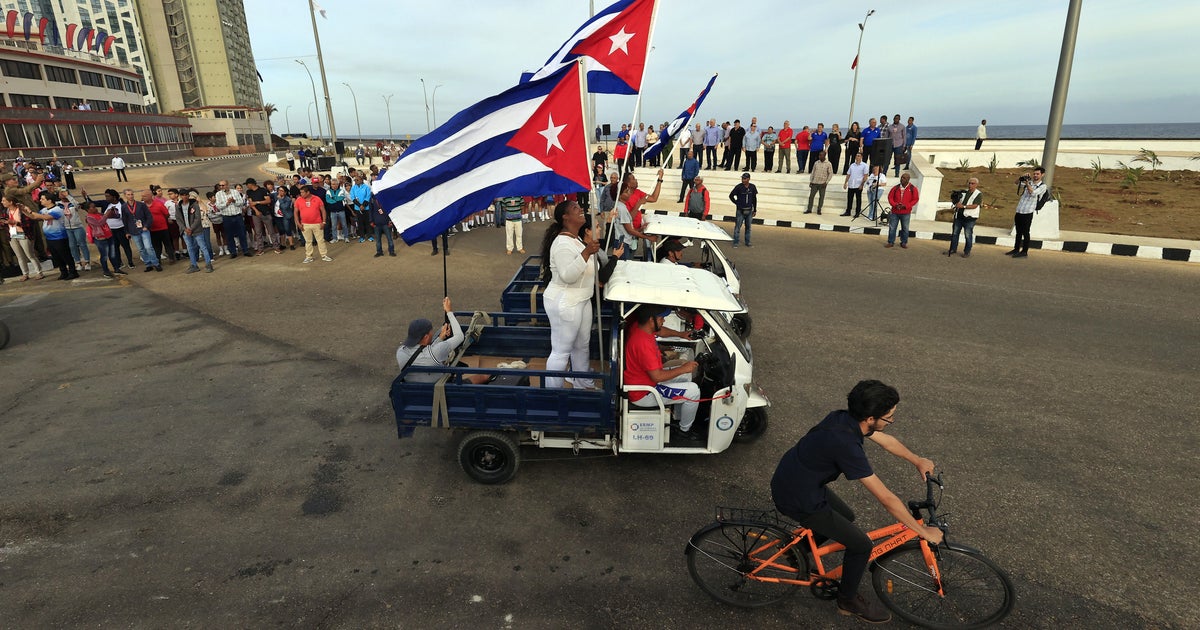
While military threats dominate headlines, the Trump administration’s most concrete actions against Cuba have been economic rather than military. The United States has implemented what amounts to an oil blockade against the Communist-ruled island, a strategy that experts say has pushed Cuba into its worst economic crisis since the collapse of the Soviet Union in the early 1990s. That earlier crisis, known in Cuba as the “Special Period,” was devastating for ordinary Cubans, causing widespread food shortages, power outages, and economic hardship. The current situation threatens to be equally dire or worse. Rubio has been clear about the administration’s thinking: Cuba has “an economy that doesn’t work and a political and governmental system that can’t fix it.” By strangling Cuba’s already struggling economy, the administration appears to be betting that economic desperation will force political change. The pressure campaign has shown some results, with the Cuban government announcing that it would allow Cuban nationals living abroad to invest in companies on the island—a significant policy shift for a country that had severely restricted private business until recent years. However, Cuban President Miguel Díaz-Canel has indicated that while talks with the United States are ongoing, the two sides remain “still far from an agreement.”
Military Action or Strategic Bluster?
Despite President Trump’s threatening rhetoric, experts on the region view the possibility of actual military action against Cuba with considerable skepticism. The situation in Cuba differs fundamentally from Venezuela in ways that would make military intervention far more complex and costly. Paul Hare, who served as British ambassador to Cuba from 2001 to 2004, suggests there are competing factions within the Trump administration itself—some who would be satisfied with economic reforms that open Cuba to American business interests and Cuban-American investment, and others who insist on complete regime change. Christopher Hernandez-Roy from the Center for Strategic and International Studies argues that “regime management” rather than complete regime change is “the only realistic option,” noting that Cuba’s power structure has been in place for nearly seventy years and has become “expert at repression and expert at sniffing out dissent.” Cuba’s deputy foreign minister, Carlos Fernández de Cossío, has said his country does not view U.S. military action as “probable” but maintains that Cuban forces are “prepared” for any American aggression. Most importantly, he stated that regime change is “absolutely off the table” from Cuba’s perspective. The administration’s willingness this week to allow a Russian oil tanker to reach Cuba—which Trump characterized as a “humanitarian gesture” saying “they have to survive”—suggests that the threats may indeed be more about leverage than actual military planning.
The Complex Question of Leadership Transition
One of the most challenging aspects of any potential political transition in Cuba is the question of who would actually lead the country if the current government were to change. Miguel Díaz-Canel became president in 2018 when Raúl Castro stepped down, marking the first time since 1959 that someone outside the Castro family formally led Cuba. However, Díaz-Canel is widely regarded as a figurehead, with the Castro family maintaining considerable behind-the-scenes influence. Hernandez-Roy notes that while Díaz-Canel “is not the person that actually wields the power in the country,” his removal “would be seen as a symbolic win by the United States.” Lawrence Gumbiner, a career diplomat who led the U.S. Embassy in Havana during Trump’s first term, suggests one scenario could involve a figure similar to Delcy Rodríguez—someone who would lead “very much in concert with and under the pressure of the United States.” Under this model, the U.S. would exert control through a combination of threatened military action (though Gumbiner considers this unlikely) and potential legal indictments, with federal prosecutors in Miami already exploring possible charges against Communist Party leadership including economic crimes, drug trafficking, and immigration violations. The message to any regime-aligned leader would be clear: implement economic reforms and follow American direction, “or else.” A more ambitious alternative would involve bringing in leadership from outside the current regime who would push for constitutional changes, though this would require substantially more American involvement and effort.
Trump’s Business Vision Versus Political Transformation
Understanding what the Trump administration actually wants from Cuba requires recognizing that different players have different priorities. According to Gumbiner, President Trump himself is less interested in democratic transformation than in economic opportunities for American businesses. Trump reportedly sees Cuba as “virgin territory” that has been “dormant for six decades” and where “the U.S. business community can come in and really dominate the scene.” Potential sectors include shipping, transportation, tourism, and construction—all industries that could generate substantial profits if Cuba were opened to American investment. Secretary of State Rubio, by contrast, likely desires more comprehensive political change given his family history and long-standing opposition to the Cuban government. However, as Gumbiner points out, “rebuilding Cuba would be a nation building exercise if you want to redo it in a democratic, pluralist model,” and Trump has consistently opposed nation-building projects. This fundamental tension between economic opportunism and political transformation may ultimately limit how far the administration is willing to go, as “making economic changes piecemeal is easier” than undertaking the tremendous effort required to fundamentally restructure Cuba’s political system. The challenge lies in whether economic pressure alone can produce the changes the administration seeks, and whether those changes would satisfy both the business-focused and ideologically-driven factions within Trump’s team.
The Uncertain Road Ahead
The situation between the United States and Cuba remains fluid and potentially volatile. While experts largely dismiss the likelihood of imminent military action, the economic pressure campaign is real and intensifying, causing genuine hardship for ordinary Cubans. The Cuban government faces an impossible choice: maintain its political system and ideology while the economy crumbles, or make concessions that could undermine its legitimacy and control. Deputy Foreign Minister Cossío’s firm statement that regime change is off the table suggests Cuba’s leadership remains committed to preserving the system, even under extreme pressure. Meanwhile, the Trump administration continues to send mixed signals—harsh rhetoric and economic strangulation combined with occasional humanitarian gestures like allowing oil shipments. Rubio’s promise that there will be “more news on that fairly soon” suggests the administration has additional measures planned, though whether these will be primarily economic, diplomatic, or something more aggressive remains unclear. What seems certain is that the nearly seventy-year standoff between the United States and Cuba is entering a new and potentially decisive phase, with outcomes that could range from gradual economic liberalization under continued Communist Party control to more dramatic political transformation—or possibly a dangerous miscalculation that leads to conflict neither side truly wants. The coming months will reveal whether Trump’s threats are primarily negotiating tactics or preludes to more aggressive action, and whether Cuba’s government can weather this storm or will be forced to make concessions that fundamentally alter the nature of the Cuban system.