



A Devastating Tragedy: Teen Sentenced to Life for Mass Shooting That Shook North Carolina
The Unthinkable Crime and Its Aftermath
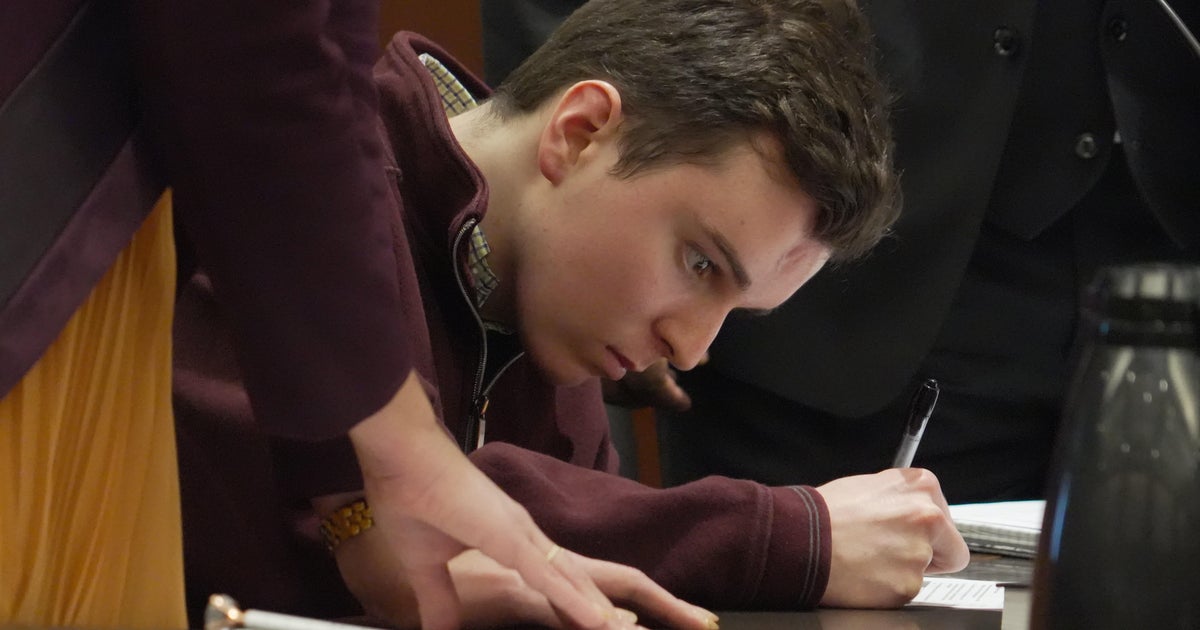
In a courtroom filled with grieving families and palpable tension, 18-year-old Austin David Thompson faced the consequences of a horrific crime that shattered multiple families and traumatized an entire community. On Friday, Superior Court Judge Paul Ridgeway sentenced Thompson to life in prison without the possibility of parole for a mass shooting rampage that claimed five innocent lives when he was just 15 years old. The October 2022 attack began in the most unimaginable way—in Thompson’s own home in Raleigh’s Hedingham subdivision, where he shot and repeatedly stabbed his 16-year-old brother, James. What followed was a calculated rampage through his neighborhood and along a nearby greenway, where Thompson, dressed in camouflage and armed with firearms, fatally shot four more people: Nicole Connors, 52; off-duty Raleigh police Officer Gabriel Torres, 29; Mary Marshall, 34; and Susan Karnatz, 49. Two others were wounded in the attack, including another police officer who was part of the search team looking for Thompson. The terror finally ended when authorities found Thompson in a shed, suffering from a self-inflicted gunshot wound to his head.
A Community Forever Changed
The impact of Thompson’s actions rippled far beyond the immediate victims, striking fear into the heart of a community that had previously felt safe. North Carolina Governor Roy Cooper captured the collective shock when he stated at the time of the attack that “terror has reached our doorstep.” His words resonated with residents who never imagined such violence could unfold in their neighborhood. “The nightmare of every community has come to Raleigh,” Cooper said, describing it as a “senseless, horrific and infuriating act of violence.” Last month, just under two weeks before his scheduled trial, Thompson pleaded guilty to five counts of first-degree murder and five additional counts. Throughout the court proceedings, he remained silent, never speaking publicly about his actions. As Judge Ridgeway handed down the sentence, family members of the victims wept, their grief still raw years after losing their loved ones. Thompson was led away in handcuffs while his defense attorneys immediately announced plans to appeal the sentence, though the weight of the evidence and the judge’s reasoning suggested an uphill battle ahead.
The Desperate Search for Answers
Perhaps the most haunting aspect of this tragedy is the persistent question of “why?” During the sentencing hearing, prosecutors revealed the contents of a previously confidential handwritten note found at Thompson’s family home, bearing his name and the date of the shooting. The note offered a chilling glimpse into his mindset: “The reason I did this is because I hate humans they are destroying the planet/earth.” Even more disturbing, Thompson wrote that he killed his brother James “because he would get in my way.” Yet according to his defense attorney, Deonte’ Thomas, Thompson himself couldn’t explain the note or his actions. “He cannot tell you why he wrote that note the way that he did,” Thomas told the court, emphasizing that Thompson had no history of ecologically based anger or environmental extremism. “And he cannot tell you why he ran down the streets of Hedingham terrorizing people that day.” Thompson’s parents echoed this bewilderment, testifying that they couldn’t explain their son’s violent turn. They described him as a normal, happy child who excelled in school and showed no warning signs of destructive behavior. The disconnect between the boy they knew and the person who committed these heinous acts left them searching for answers they may never find.
The Defense’s Medical Argument Falls Short
Thompson’s legal team attempted to provide a medical explanation for the rampage, arguing that he experienced a dissociative episode caused by medication he regularly took for acne treatment. To support this theory, they called a psychiatrist who had interviewed Thompson and a geneticist to testify on his behalf. Defense attorney Thomas argued that while Thompson’s actions were devastating, “he is not unredeemable, he is not incorrigible.” The defense requested that Judge Ridgeway consider a sentence of life in prison with the possibility of parole after 25 years, giving Thompson a chance someday to demonstrate to parole commissioners that he could “still be a productive person in society.” However, Judge Ridgeway firmly rejected the medication defense theory, stating that the facts of the case contradicted this explanation. The judge appeared particularly influenced by the prosecution’s evidence of Thompson’s extensive internet search history in the months leading up to the attack. These searches included information about school shootings, guns, assaults, and bomb-making materials—details that Ridgeway noted seemed to align closely with Thompson’s actual actions during the rampage. This evidence pointed not to a spontaneous break from reality, but to months of deliberate planning and preparation.
Justice for the Victims and Their Families
In delivering his sentence, Judge Ridgeway painted a picture of a rare and irredeemable juvenile offender whose crimes demanded the harshest available punishment. “It’s hard to conceive of a greater display of malice,” the judge said after chronicling the events of that October day. He noted that Thompson’s months of planning and fantasizing before the rampage confirmed he was one of those exceptional juvenile offenders “whose crimes reflect irreparable corruption” and thus warranted a life sentence without the possibility of parole. Because Thompson was 15 at the time of the crimes, he did not face the death penalty. Wake County assistant prosecutor Patrick Latour urged the judge to impose the maximum sentence, rejecting the defense’s medication theory entirely. “In the blink of an eye, everything changed for those people and for the people that they left behind,” Latour said during the hearing. “And the thing that made it change was not some acne medication. It was the defendant’s knowing, researched, well thought-out, planned, decisive actions.” The victims’ families had waited years for this moment of accountability, though no sentence could truly heal their wounds or restore what was taken from them.
The Lasting Pain and Unanswered Questions
The victim impact statements delivered during the sentencing hearing revealed the profound and permanent damage Thompson’s actions inflicted on those left behind. Jasmin Torres, the widow of Officer Gabriel Torres and mother to their 5-year-old daughter, asked Judge Ridgeway to impose life without parole, calling Thompson a “monster.” Her young daughter would grow up without her father, a void that no amount of justice could fill. Rob Steele, who was engaged to Mary Marshall at the time of her death, expressed the collective frustration of all the victims’ families after the hearing. While acknowledging that five consecutive sentences of life without parole were “what we were all hoping for,” he added that Thompson still “ended five lives for reasons that I still don’t really understand in this case.” That lack of understanding—the absence of a rational explanation for such senseless violence—may be the hardest burden for survivors to bear. In a moment of shared grief, Thompson’s mother, Elise Thompson, addressed the victims’ families during the hearing, acknowledging the impossible position her family occupied. “We both lost our children, one at the hand of the other. We never saw this coming and still cannot make sense of it,” she said, adding that she would “forever be sorry for the pain that this has caused you.” Thompson’s father had previously pleaded guilty in 2024 to improperly storing his handgun—the weapon authorities found when his son was arrested—and received a suspended sentence with probation. As Thompson begins his life sentence, the Hedingham community continues its difficult journey of healing, forever marked by a tragedy that reminds us how fragile safety can be and how devastating the consequences when violence shatters the peace of everyday life.