


Democratic States Challenge Trump’s Mail Voting Restrictions in Federal Court
A Coalition Files Suit Against Presidential Overreach
In a significant legal confrontation over voting rights and state sovereignty, officials representing 23 Democratic states along with the District of Columbia have taken legal action against President Trump’s recent executive order targeting mail-in voting procedures. Led by California, this coalition filed their lawsuit in the U.S. district court in Massachusetts on Friday, arguing that the president has overstepped his constitutional authority by attempting to impose sweeping changes to how states conduct their elections. The lawsuit represents a fundamental clash between federal executive power and states’ rights, with attorneys general from nearly half the nation joining forces to defend what they consider their constitutional prerogative to manage their own electoral systems. At the heart of their argument lies the assertion that neither the Constitution nor existing federal law grants the president authority to unilaterally mandate such comprehensive alterations to voting procedures that have traditionally fallen under state jurisdiction. The legal challenge characterizes Trump’s directive as an unconstitutional attempt to “amend and dictate election law by fiat based on the President’s whims,” representing what they view as a dangerous precedent that threatens the constitutional balance of power between federal and state governments.
Understanding the Contested Executive Order
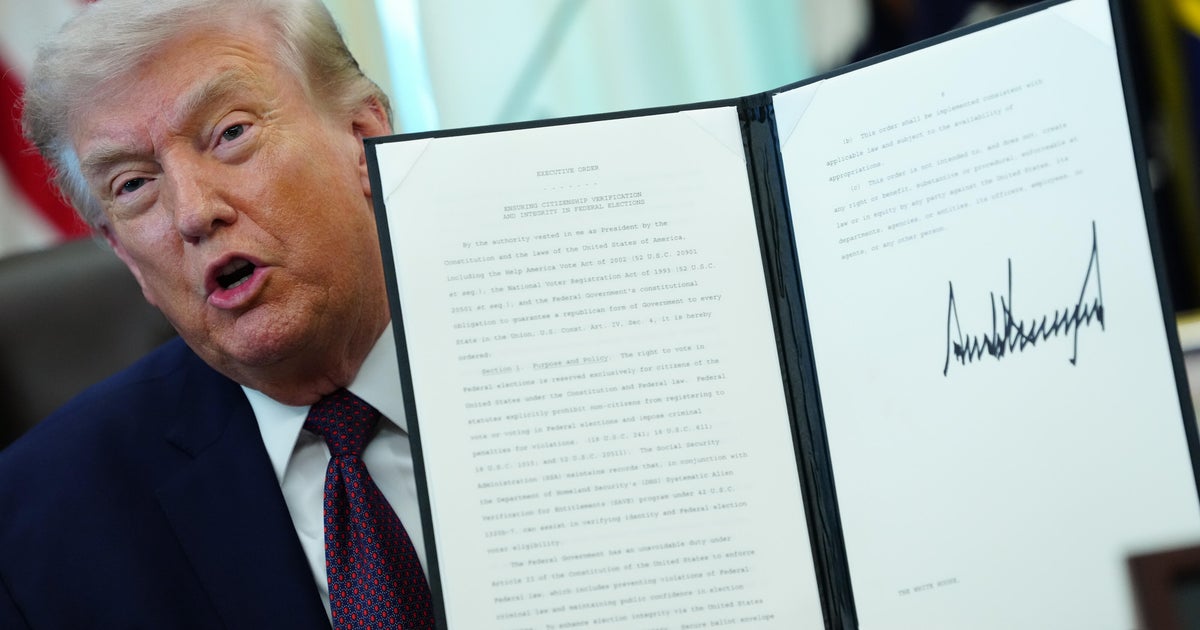
The executive order that sparked this multistate legal challenge was signed by President Trump on Tuesday, arriving on the political scene several months ahead of the November midterm elections and introducing several controversial requirements for mail-in voting processes. The directive contains provisions that would fundamentally reshape how Americans can access mail-in ballots, including a requirement for the Department of Homeland Security to create comprehensive “State Citizenship Lists” identifying U.S. citizens eligible to participate in federal elections. Perhaps most significantly, the order mandates that the U.S. Postal Service restrict the distribution of mail or absentee ballots exclusively to voters appearing on each state’s approved list. Beyond these database requirements, Trump’s measure also establishes specific technical standards for mail ballot envelopes, including a mandate that each envelope must display a unique barcode to enable tracking throughout the voting process. The executive order carries substantial teeth in the form of potential financial penalties, threatening states and localities with the loss of federal funding if they fail to comply with its requirements. This isn’t the first legal challenge the order has faced—a coalition of major Democratic organizations had already filed suit, accusing the president of attempting to rewrite fundamental election rules for partisan political advantage.
The Constitutional Arguments at Stake
The plaintiff states have grounded their legal challenge in what they describe as “bedrock principles of federalism and separation of powers,” arguing that Trump’s executive order represents a fundamental violation of the constitutional framework that governs American elections. In their filing, the states emphasized that each jurisdiction has “duly enacted laws governing voter rolls and mail voting” that comply with congressional requirements where applicable, and that the president’s order disregards their inherent sovereignty. The lawsuit directly invokes the Constitution’s Elections Clause, which explicitly grants states the power to determine the “times, places and manner” of federal elections, while also recognizing Congress’s authority to pass election regulations. This constitutional provision has long been understood as creating a delicate balance where states maintain primary control over election administration while Congress retains oversight authority—notably, the president is not mentioned in this framework. The states argue that Trump’s executive order attempts to “arrogate to the President” powers that rightfully belong to both state governments and Congress, essentially trying to claim authority that the Constitution never granted to the executive branch. Their legal argument warns that allowing this executive overreach would fundamentally undermine the constitutional structure that has governed American elections since the nation’s founding.
The Political Context and Trump’s Mail Voting Crusade
President Trump’s latest executive order must be understood within the broader context of his long-standing campaign against mail-in voting, which he has repeatedly characterized as “cheating” that compromises election integrity. Despite his persistent claims, available evidence paints a very different picture—instances of mail-voting fraud remain exceptionally rare, and experts across the political spectrum have found no evidence of the widespread voter fraud that Trump regularly alleges. Adding a layer of irony to the situation, the president himself has repeatedly utilized the very voting method he publicly condemns. Trump cast a mail ballot in a special election last month for a Florida state House seat, and records from the Palm Beach County Supervisor of Elections confirm that First Lady Melania Trump and his son Barron Trump have also voted by mail. While the president frequently accuses Democratic states of allowing noncitizens to cast ballots in federal elections, the reality is that such voting is already a federal crime, and documented instances of noncitizen voting are extremely rare. This disconnect between Trump’s rhetoric and both the factual record and his own behavior has fueled criticism that his push to restrict mail voting is motivated more by partisan political calculations than by genuine concerns about election security.
Broader Legislative and Executive Efforts to Reshape Voting
The executive order challenging mail-in voting represents just one component of a broader Trump administration strategy to fundamentally transform American voting procedures. The president has been actively pressuring the Senate to pass the SAVE America Act, legislation that would require Americans to present proof of citizenship in person when registering to vote in federal elections and implement photo ID requirements for casting ballots. The House of Representatives approved this measure in February, demonstrating significant Republican support for stricter voting requirements. However, the bill faces a challenging path in the Senate, even though Republicans control that chamber, because most legislation requires 60 votes to overcome procedural hurdles—a threshold that appears unlikely given Democratic opposition. This isn’t Trump’s first attempt to use executive authority to overhaul voting procedures; he signed another election-related executive order last year that sought to require documentary proof of citizenship for voter registration. However, that previous effort has already encountered significant legal obstacles, with key provisions blocked by courts that found them to exceed presidential authority. These repeated attempts to restrict voting access through both executive and legislative channels have created an ongoing legal and political battle over the fundamental question of who gets to vote and how they can exercise that right.
The Stakes for American Democracy and Federalism
This lawsuit represents far more than a simple legal dispute over administrative procedures—it strikes at fundamental questions about American democracy, federalism, and the separation of powers that define our constitutional system. The outcome will have significant implications not just for the upcoming midterm elections but for the broader balance of power between federal and state governments and among the three branches of the federal government itself. If courts allow Trump’s executive order to stand, it would establish a precedent that presidents can unilaterally impose sweeping changes to state election systems, potentially opening the door to future executive overreach regardless of which party controls the White House. Conversely, if the courts block the order as the plaintiff states request, it would reaffirm the traditional understanding that states retain primary authority over election administration, with federal involvement limited to congressional legislation rather than executive fiat. The timing of this legal battle, coming just months before consequential midterm elections, adds urgency and political weight to the proceedings. Beyond the immediate electoral implications, this case will likely influence ongoing debates about voting access, election security, and the proper balance between ensuring electoral integrity and preventing eligible citizens from being disenfranchised. As the case proceeds through the federal court system, Americans will be watching closely to see whether the judiciary upholds traditional principles of federalism or allows unprecedented expansion of presidential power over the most fundamental democratic process—the act of voting itself.