


Iranian Women’s Soccer Players Face Difficult Choice Between Safety and Home
A Complex Journey of Escape and Return
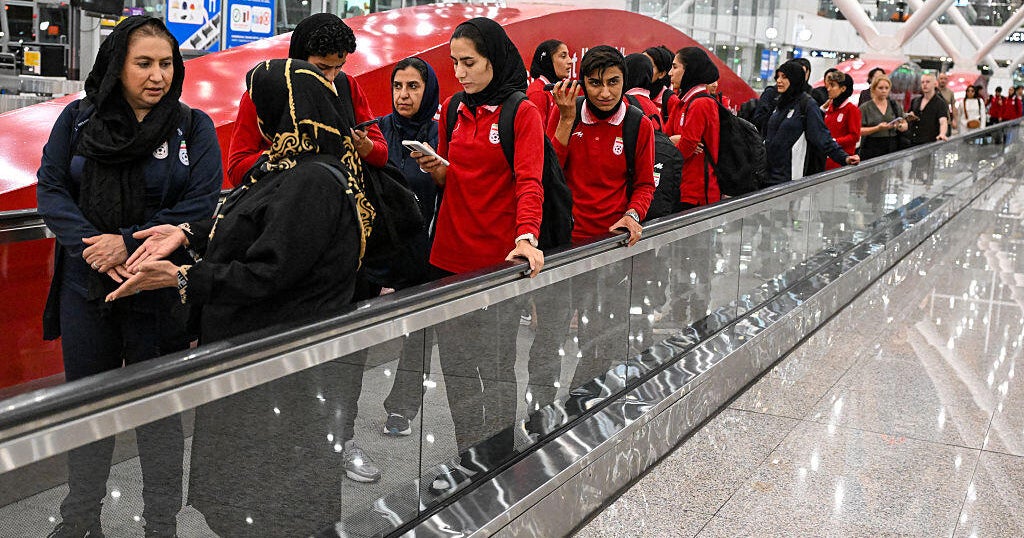
In a story that highlights the deeply personal struggles faced by athletes caught between political tensions and their love of homeland, three more members of Iran’s women’s soccer team have made the difficult decision to leave Australia and return to Iran. This brings the total number of players who initially sought refuge but later changed their minds to four, leaving only three of the original seven team members still in Australia. The saga began when Iran’s women’s national team traveled to Australia last month to compete in the Women’s Asian Cup, arriving before the outbreak of war in the Middle East on February 28th. What started as a sporting event quickly transformed into a humanitarian situation as the political landscape shifted dramatically, forcing these young women to make life-altering decisions about their futures.
Australian Home Affairs Minister Tony Burke confirmed the latest departures in a statement released on Sunday, explaining that the three team members made their decision voluntarily to rejoin their teammates who were waiting in Malaysia. “After telling Australian officials they had made this decision, the players were given repeated chances to talk about their options,” Burke emphasized, making it clear that the Australian government wanted to ensure the women fully understood the implications of their choice. The players left Sydney for Kuala Lumpur on Saturday night, where the remainder of their team has been staying since departing Australia on March 9th. According to Iran’s Tasnim News Agency, the latest group to leave included two players and one support staff member, and they were described as “returning to the warm embrace of their family and homeland” – language that reflects the emotional pull that home and family can exert even in difficult circumstances.
The Weight of Political Symbolism
The situation surrounding Iran’s women’s soccer team became particularly charged when concerns about the players’ safety intensified after they refused to sing the Iranian national anthem before their first match in Australia. This silent protest carried enormous symbolic weight, as it echoed the actions of other Iranian athletes who have used international platforms to express dissent against their government. In recent years, refusing to sing the national anthem has become a powerful form of protest among Iranian athletes, particularly following the death of Mahsa Amini in police custody and the subsequent crackdown on women’s rights protests in Iran. For these young women, the simple act of remaining silent during their national anthem was both deeply personal and dangerously political, potentially marking them as dissidents in the eyes of Iranian authorities and raising legitimate fears about what might happen if they returned home.
The response to their situation came from multiple directions. Iranian advocacy groups in Australia urged the government to provide assistance and protection to the women, while even President Trump weighed in on the matter, adding an additional layer of international attention to their plight. Iran’s state-run Tasnim News Agency, however, framed the women’s return in starkly political terms, describing it as the “disgraceful failure of the American-Australian project and another failure for Trump.” This characterization reveals how these individual women’s personal decisions have been swept up into larger geopolitical narratives, with various actors attempting to claim their choices as victories or defeats in an ongoing international power struggle. For the athletes themselves, caught in the middle of these competing narratives, the decision of whether to stay or return must have been extraordinarily difficult, weighing personal safety against family connections, career prospects, and cultural identity.
Understanding the Pull of Home
While the decision to return might seem puzzling to outside observers who see Australia as offering safety and opportunity, it’s important to understand the complex factors that draw people back to their homelands even in difficult circumstances. Family ties represent one of the most powerful forces in these decisions – parents, siblings, extended family, and close friends create bonds that don’t simply disappear when someone crosses a border. For many of these players, the thought of never seeing their loved ones again, or putting their families at risk through their defection, may have proven more frightening than the uncertain risks of returning. Additionally, the psychological and emotional challenge of starting over in a completely foreign country, with a different language, culture, and social system, cannot be underestimated. Even with humanitarian visas and government support, the prospect of building an entirely new life from scratch in Australia – far from everything familiar – represents a daunting challenge.
There’s also the question of what their lives would actually look like in Australia versus Iran. While safety is paramount, these are professional athletes whose identities are deeply tied to their sport and their team. Would they be able to continue their soccer careers in Australia at the same level? Would they find the same sense of purpose and community? The Iranian government’s messaging about welcoming them back to the “warm embrace” of their homeland, while clearly propagandistic, may also reflect genuine feelings of homesickness and longing that the players experienced. The decision to seek refuge is rarely simple or purely rational – it involves a complex calculation of risks, opportunities, losses, and gains that can shift as circumstances change and as the initial shock of a crisis gives way to more measured consideration of long-term implications.
Broader Implications for Iranian Athletics
This situation with the women’s team is unfolding against the backdrop of even larger questions about Iran’s participation in international sporting events. The Iranian men’s national soccer team’s participation in the upcoming World Cup in the United States has become another point of controversy and confusion, with mixed messages coming from various authorities. Initially, U.S. officials told CBS News that President Trump had informed FIFA representatives, including FIFA President Gianni Infantino, that Iran was welcome to play in the tournament. Infantino himself confirmed this on social media, stating that Trump “reiterated that the Iranian team is, of course, welcome to compete in the tournament in the United States.” However, the situation quickly became more complicated when Iran’s sports minister, Ahmad Donyamali, responded that the country could not participate in the World Cup given the ongoing war situation.
Then, in an apparent reversal, President Trump stated on Thursday that he believed it would not be “appropriate” for the Iranian team to participate, citing concerns “for their own life and safety.” This back-and-forth highlights the degree to which international sports have become entangled with geopolitical tensions, diplomatic posturing, and security concerns. For the athletes themselves – both men and women – these political machinations must be incredibly frustrating, as their opportunities to compete at the highest levels of their sport are determined by factors completely outside their control. The uncertainty also reflects the broader instability in international relations, where policies and positions can shift rapidly, making it difficult for individuals to make informed decisions about their futures.
The Human Cost of Geopolitical Tension
Ultimately, the story of these Iranian women soccer players serves as a poignant reminder of the very human costs of international conflicts and political tensions. These are not abstract figures in a geopolitical chess game, but real young women with dreams, families, fears, and aspirations. Whether they chose to stay in Australia or return to Iran, each decision came with profound consequences and required courage. Those who remain in Australia face the challenge of building new lives in a foreign land, likely cut off from family and everything familiar, with an uncertain future ahead. Those who returned to Iran face potential repercussions for their moment of hesitation, the scrutiny of state media and authorities, and the ongoing difficulties of life in a country experiencing significant turmoil.
The situation also raises important questions about how the international community can better support athletes and other individuals who find themselves caught between political tensions and personal safety. While offering humanitarian visas represents an important gesture, it’s clear that the decision to accept such offers is never simple or straightforward. Perhaps more could be done to provide ongoing support, counseling, and resources to help people navigate these incredibly difficult choices. Additionally, the way various governments and media outlets have framed these women’s decisions – as propaganda victories or political statements – demonstrates a need for greater sensitivity to the individual human experiences at the heart of these stories. As international tensions continue to affect sporting events and athletes’ lives, finding ways to protect the human dignity and agency of those caught in the middle remains an urgent challenge that deserves thoughtful consideration and compassionate responses from all parties involved.