




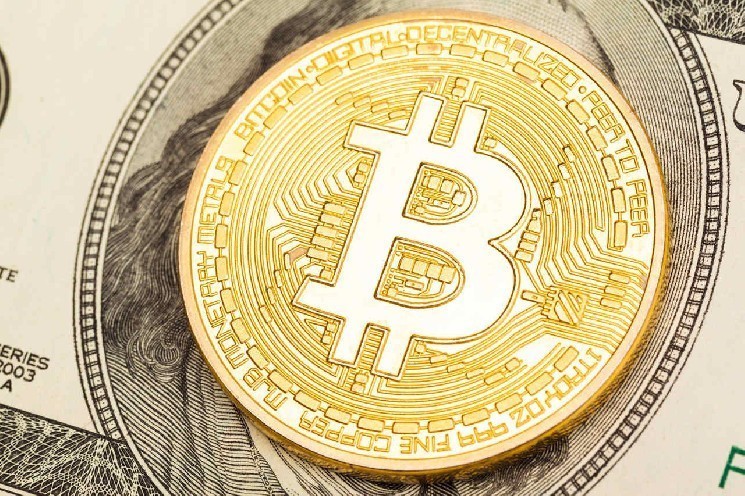

Why Bitcoin Will Never Drop to Zero: A Realistic Look at Its Future
Understanding Bitcoin’s Volatile But Resilient Journey
Since its mysterious creation in 2009 by the pseudonymous Satoshi Nakamoto, Bitcoin has been on quite the roller coaster ride. If you’ve been following cryptocurrency news over the years, you know that Bitcoin’s price chart looks more like a heart monitor than a steady investment graph. We’ve seen gut-wrenching drops of more than 80%, followed by incredible recoveries that have repeatedly pushed the digital currency to new all-time highs. This volatility isn’t a bug—it’s been a feature of Bitcoin’s journey from an obscure internet experiment to a globally recognized financial asset. For those who’ve held Bitcoin through multiple market cycles, the stomach-churning price swings have become almost expected. But despite this wild volatility, one question continues to pop up in investment forums, social media discussions, and even mainstream financial news: Could Bitcoin actually crash all the way to zero? It’s a fair question, especially for anyone who’s watched their investment portfolio swing wildly with Bitcoin’s price movements. While it’s absolutely true that short-term crashes and corrections are not only possible but practically guaranteed to continue, the chances of a complete and total collapse to absolute zero value are extraordinarily slim. In fact, when you examine the fundamental factors supporting Bitcoin today, the scenario becomes less of a realistic possibility and more of a theoretical exercise. Let’s explore three compelling reasons why Bitcoin, despite its volatility, is extremely unlikely to ever become worthless.
The Foundation of Widespread Acceptance and Major Financial Players
Remember when Bitcoin was just a curiosity discussed on obscure internet forums and used primarily by tech hobbyists and libertarian dreamers? Those days are long gone. Bitcoin has undergone a remarkable transformation from fringe technology to legitimate asset class, and this shift represents perhaps the strongest shield against a complete value collapse. Today’s Bitcoin landscape includes some of the biggest names in global finance—institutions that manage trillions of dollars and whose reputations depend on making sound investment decisions. Financial giants like BlackRock, the world’s largest asset manager, have not only acknowledged Bitcoin but actively created investment products around it. Fidelity, a company trusted by millions of retirement savers, offers Bitcoin services to its clients. Even the traditionally conservative Morgan Stanley has entered the space, allowing its wealth management clients to gain Bitcoin exposure.
The introduction of spot Bitcoin Exchange-Traded Funds (ETFs) marked a watershed moment that can’t be overstated. These investment vehicles have opened the floodgates for institutional capital that was previously sitting on the sidelines due to regulatory concerns or operational challenges. Pension funds, endowments, and financial advisors who couldn’t directly hold Bitcoin can now gain exposure through familiar, regulated investment structures. We’re talking about billions upon billions of dollars flowing into these products from investors who have done their homework and decided Bitcoin deserves a place in diversified portfolios. Beyond financial institutions, we’re now seeing governments and corporations adding Bitcoin to their balance sheets as a treasury reserve asset. When publicly traded companies and even some national governments hold Bitcoin as part of their financial strategy, it creates an entirely different level of legitimacy and demand.
This widespread adoption creates what economists call a “demand floor”—a baseline level of buying interest that supports prices even during difficult times. For Bitcoin to literally reach zero value, every single one of these institutional investors, corporate treasuries, government holdings, and individual believers worldwide would need to simultaneously decide to abandon it completely. They would all need to sell regardless of price, with absolutely no one willing to buy even at rock-bottom prices. When you really think about it, this scenario isn’t just unlikely—it’s practically impossible given the diverse motivations, geographic locations, and investment strategies of Bitcoin holders around the world.
An Unstoppable Network Built on Decentralization and Security
One of Bitcoin’s most powerful attributes—and one that’s often underappreciated by newcomers—is its fundamentally decentralized architecture. Unlike traditional financial systems that depend on central banks, government backing, or corporate management, Bitcoin operates on a peer-to-peer network maintained by thousands of independent participants spread across every continent. This isn’t just a technical detail; it’s the very foundation that makes Bitcoin resilient against the kinds of failures that have destroyed countless currencies and assets throughout history. The Bitcoin network is secured and maintained by nodes (computers that verify transactions and store the blockchain) and miners (specialized operations that process transactions and secure the network through computational power). These participants are geographically distributed, politically diverse, and economically independent from one another.
What makes this structure so robust is that there’s no single point of failure. No government can flip a switch to turn Bitcoin off. No company CEO can make a disastrous decision that brings down the entire system. No bank run can cause a collapse because there’s no central institution holding everyone’s funds. The network has maintained near-perfect uptime since its launch—an operational reliability record that would make even the most sophisticated tech companies envious. Through political upheavals, regulatory crackdowns in various countries, technical challenges, and coordinated attacks, the Bitcoin network has continued operating without interruption. Even when individual countries have attempted to ban Bitcoin, the global network has kept running because shutting it down would require coordinating a simultaneous worldwide effort to disconnect every single node and mining operation—a logistical impossibility.
The security of this network is protected by hash rate—essentially the total computational power dedicated to mining and securing Bitcoin. This has grown to become one of the most powerful computing networks on the planet, representing an enormous investment in specialized hardware and energy. This isn’t just impressive from a technical standpoint; it represents real-world economic commitment from participants who have invested heavily in supporting the network. For Bitcoin to go to zero, this entire security infrastructure would need to catastrophically fail or be compromised globally and permanently. Given that the network has actually grown stronger and more secure with each passing year, and considering the continuous technical improvements being developed by a global community of developers, the likelihood of such a comprehensive failure is vanishingly small. The decentralized nature of Bitcoin isn’t just a philosophical preference—it’s a practical safeguard that makes the kind of total collapse we’re discussing extraordinarily unlikely.
The Economic Fundamentals: Scarcity Meets Growing Demand
Beyond adoption and network security, Bitcoin has something that gives it fundamental value in economic terms: absolute scarcity. In a world where governments can print unlimited amounts of currency and even gold continues to be mined, Bitcoin stands alone with its hard cap of 21 million coins—a limit coded into its DNA that cannot be changed without consensus from the entire network. This isn’t marketing hype; it’s a mathematical certainty that makes Bitcoin uniquely scarce among both traditional and digital assets. Think about it this way: no matter how high the demand for Bitcoin grows, no matter how many new investors want to buy it, no matter what happens in the global economy, there will never be more than 21 million Bitcoin in existence. Actually, the effective supply is even lower because millions of coins have been permanently lost over the years due to forgotten passwords, discarded hard drives, and users passing away without sharing their access information with heirs.
The Bitcoin protocol includes an ingenious mechanism called “the halving” that occurs approximately every four years, reducing the rate at which new Bitcoin enters circulation. This scheduled reduction in new supply has historically preceded major price increases as demand meets increasingly constrained supply. We’re not talking about central bankers making decisions in closed-door meetings—this is transparent, predictable monetary policy executed by computer code that everyone can verify. As adoption continues to expand globally, with more individuals, companies, and institutions deciding they want Bitcoin exposure, they’re competing for a supply that’s not only fixed but actually shrinking in terms of available coins. This creates a fundamental economic dynamic that supports value over the long term.
Even during Bitcoin’s worst bear markets—those periods when prices have crashed by 70%, 80%, or even more—the price has never approached anything close to zero. Why? Because at lower price levels, buyers consistently emerge. Some see bargains and accumulate more. Others enter the market for the first time when prices seem more reasonable. Long-term believers add to their holdings. This pattern of buyers providing support at lower levels has repeated through every market cycle, creating a resilient price floor that, while it may move up and down, has consistently remained well above zero. The combination of absolute scarcity, reducing supply issuance, growing demand from expanding adoption, and the permanent loss of coins creates an economic model that fundamentally supports value. For Bitcoin to go to zero, this entire economic logic would need to be invalidated—people worldwide would need to simultaneously decide that absolute scarcity has no value, that decentralized money has no utility, and that digital property rights are worthless. Given human nature and economic history, this collective abandonment of value seems implausible.
The Reality Check: What Would It Actually Take?
Let’s ground this discussion in reality by considering what would actually need to happen for Bitcoin to become completely worthless. First, there would need to be total global abandonment—every investor, institution, company, and individual holder worldwide would need to simultaneously decide to sell their Bitcoin regardless of price, with absolutely no one willing to buy even at extraordinarily low prices. This would require a unprecedented coordination of sentiment across millions of people in different countries, economic situations, and philosophical perspectives. Even assets that have fundamentally failed typically retain some residual value; complete worthlessness is extraordinarily rare.
Second, the Bitcoin network itself would need to experience catastrophic failure. This would mean somehow destroying or permanently disabling thousands of independent nodes and mining operations spread across the globe, operated by different people with different motivations in different legal jurisdictions. The technical infrastructure would need to be so thoroughly compromised that it could never be restored, despite the economic incentives for participants to keep it running. Given Bitcoin’s track record of resilience and continuous improvement, this scenario seems more like science fiction than realistic possibility.
Third, there would need to be literally zero demand anywhere in the world. Not reduced demand, not declining demand, but absolute zero—not a single person willing to exchange anything of value for Bitcoin at any price. Given that Bitcoin serves various purposes for different people—a store of value, a speculation vehicle, a tool for international transfers, a hedge against currency devaluation, a symbol of financial sovereignty—the complete elimination of all utility for all people everywhere simultaneously is difficult to imagine. Even assets most people consider worthless typically have some collectors or niche users willing to attribute some value.
Looking Forward: Cycles, Maturity, and Perspective
Bitcoin’s future will almost certainly include continued volatility. If you’re considering Bitcoin as an investment or already hold some, you should absolutely expect and prepare for significant price swings. Drops of 50% or more during bear markets are not only possible but should be considered likely based on historical patterns. This volatility can be nerve-wracking, especially for newer investors who aren’t accustomed to such dramatic price movements. However, volatility is fundamentally different from collapse. An asset can be volatile while still maintaining long-term value and avoiding anything approaching zero.
What we’ve seen throughout Bitcoin’s history is a pattern of boom-and-bust cycles, with each cycle bringing the ecosystem to a more mature state. After each crash, the network emerges with stronger infrastructure, deeper liquidity, more sophisticated custody solutions, clearer regulatory frameworks, and broader adoption. The difference between the 2013 crash and the 2021-2022 bear market illustrates this maturation—the infrastructure supporting Bitcoin today is exponentially more robust, the investor base is dramatically more diverse, and the integration into the traditional financial system is incomparably deeper. Each cycle builds on the previous one, creating layers of resilience that make catastrophic failure increasingly unlikely.
For anyone holding Bitcoin or considering it as part of their investment strategy, the key is perspective. Understanding that zero is extraordinarily unlikely doesn’t mean the journey will be smooth. It doesn’t mean you can’t lose money by buying at the wrong time or panic selling at the bottom of a crash. But it does mean that the fundamental case for Bitcoin continuing to exist and retain value remains strong. The combination of massive global adoption, an unstoppable decentralized network, and sound economic fundamentals creates a resilient asset that, while it will certainly continue to experience volatility, is extremely unlikely to disappear completely. For those with a long-term perspective and appropriate risk management, Bitcoin’s volatility represents opportunity rather than existential threat.









