


A Love Story Written in the Cards: Tim and Emily Leary’s Journey Through Cancer and Devotion
When Fate Brings Two Hearts Together
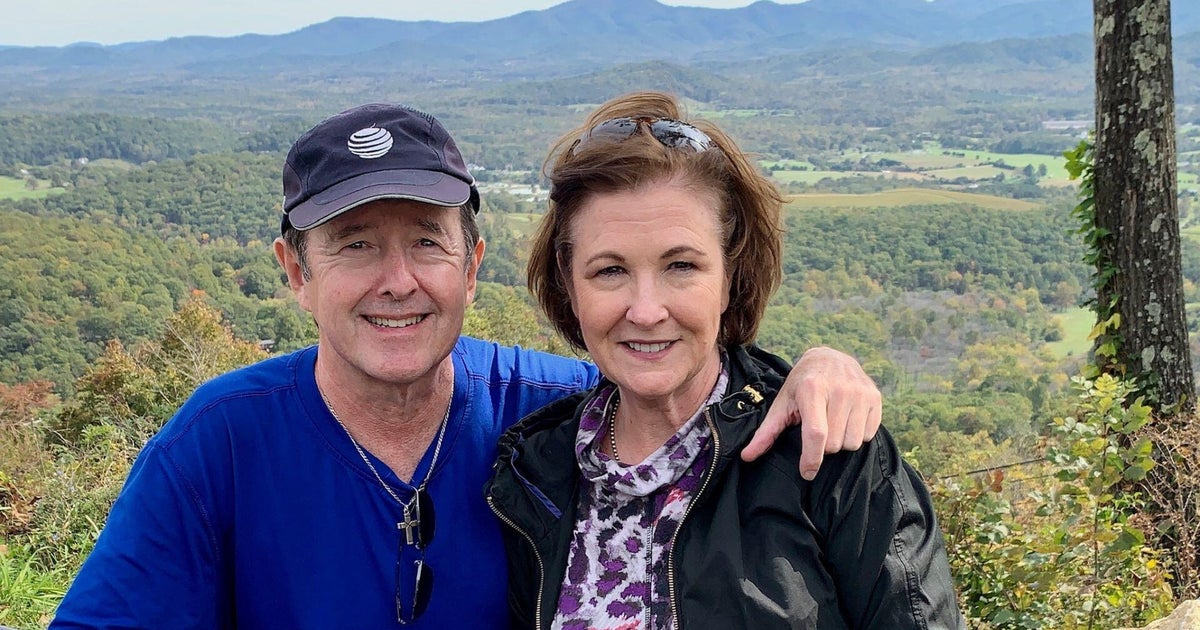
Some love stories begin in the most unexpected places, and for Tim and Emily Leary, theirs started in a bustling New York City bar in June 2001. Emily, visiting from Louisiana, had only hours before catching her flight home when a card reader offered her a glimpse into her future. The mysterious prediction spoke of two men who would enter her life—one light-haired, one dark-haired. Before she could ponder the meaning, Tim, a dark-haired stranger who had noticed her from across the room, approached with a knowing smile and asked what the cards had revealed. “Well, maybe I’m the dark-haired guy,” he told her confidently. What followed was an intense 30-minute conversation that would plant the seeds for a remarkable love story spanning nearly two decades, 1,400 miles, and three devastating cancer diagnoses.
After that fateful meeting, the pair exchanged emails briefly before life pulled them in different directions and they lost touch. But destiny wasn’t finished with them yet. When the tragic events of September 11, 2001 unfolded, Emily remembered that Tim worked near the World Trade Center in New Jersey. Concerned for his safety, she reached out, and their reconnection sparked something undeniable. “After reconnecting post 9/11, we both knew right away that we were soul mates,” Emily recalls. Despite living 1,400 miles apart—Tim in New Jersey and Emily in Louisiana—the distance seemed insignificant compared to the intensity of their connection. For the next several years, they maintained a long-distance relationship while their respective daughters from previous marriages grew up in their separate homes. Their commitment to each other only deepened with time, leading to an engagement during a romantic Paris trip in 2004 and marriage in 2006, when they finally began their life together as newlyweds in New Jersey.
The First Battle: When Cancer Came Knocking
The newlywed bliss didn’t last long before life delivered its first major challenge. In 2011, just five years into their marriage, Tim received shocking news: he had prostate cancer. With no family history of the disease, the diagnosis came as a complete surprise to the couple. Tim underwent a prostatectomy, and they proceeded with their planned move to Louisiana in 2012, hoping the worst was behind them. But fate had other plans. Just months after relocating to Emily’s home state, Tim learned that he had developed a tumor in his pancreas. This second cancer diagnosis was caught relatively early due to the tumor’s location near a bile duct. As the tumor grew, it obstructed the duct, causing jaundice that alerted doctors to the problem. What followed would test their marriage in ways they never imagined.
In 2012, Tim and Emily made the journey to the renowned MD Anderson Cancer Center in Houston, where Tim began an aggressive treatment regimen that included nine grueling months of chemotherapy followed by five weeks of radiation. After completing this initial treatment, doctors informed him that he would need a Whipple procedure—a complex and uncommonly performed surgery that involves removing part of the pancreas, gallbladder, bile duct, and small intestine. The procedure took place in 2013, but the complications didn’t end there. Tim would go on to be hospitalized for treatment of three separate liver abscesses—a known complication of Whipple surgery typically caused by infection or bacteria—in 2020, 2021, and 2022. He ultimately required a surgical repair procedure in October 2022. Throughout all of this, Emily stood by his side, drawing on reserves of strength she didn’t know she possessed.
Emily’s Turn: History Repeating Itself
For Emily, watching Tim battle cancer carried especially painful echoes from her past. She had lost her own mother to pancreatic cancer when she was just 32 years old, and now she was watching the man she loved fight the same terrible disease. “I had to go through life with blinders on, like a machine,” she explained, describing how she compartmentalized her fear and grief to be the strong caretaker Tim needed. She pushed her own emotions aside, focusing entirely on getting Tim through each day, each treatment, each setback. But in 2021, while Tim was still undergoing treatment for his liver complications, Emily began experiencing a persistent pain in her side that wouldn’t go away. After visiting her doctor and undergoing an ultrasound, she received news that would shake their world once again: she also had a tumor in her pancreas.
The diagnosis hit Emily hard. She allowed herself what she calls “a big pity party,” spending hours crying and screaming before her next test. The woman who had been so strong for everyone else now had to confront her own mortality and the terrifying reality that she was following in both her mother’s and her husband’s footsteps. Like Tim before her, Emily was diagnosed with pancreatic cancer—specifically a neuroendocrine tumor, which tends to grow more slowly than other types. And like Tim, she would need to undergo the same Whipple procedure she had watched him endure. The couple’s roles had suddenly reversed, and Tim found himself in the position of caretaker, a perspective that proved far more difficult than being the patient. “When Emily started going through it and I was sitting by the bed and I was sitting in the waiting room, then I started getting flashbacks,” Tim shared. “It was sort of like PTSD, because you’re almost going through it again, even though it’s not you, it’s the person that you love going through it.” Emily also developed a liver abscess following her Whipple procedure, requiring additional treatment just as Tim had experienced.
The Medical Perspective: An Extraordinary Case
Dr. Matthew Katz, who treated both Tim and Emily at MD Anderson Cancer Center, noted that while it’s not entirely unusual for both partners in a couple to be diagnosed with cancer, the Learys’ situation stands out as particularly unique. Both were diagnosed with relatively rare cancers, and both required the same uncommon surgical procedure—the Whipple—to treat them. Even more remarkable was how Emily’s firsthand knowledge of Tim’s journey influenced her own healing process. “Emily’s understanding of Tim’s journey—and seeing his strong long-term recovery after a diagnosis that is so often associated with a poor prognosis—helped support her optimism and her ability to heal and return to daily life,” Dr. Katz observed. This unique perspective gave Emily something many cancer patients lack: concrete, personal evidence that recovery was possible, even from a disease that had taken her mother’s life decades earlier.
The fact that Tim had not only survived his pancreatic cancer diagnosis but had gone on to live years beyond it gave Emily hope during her darkest moments. She could see living proof that the statistics and survival rates didn’t tell the whole story, that individuals could defy the odds. Tim’s recovery became a roadmap for Emily’s own journey, showing her what lay ahead and proving that the grueling treatment, the Whipple surgery, and even the complications that followed were obstacles that could be overcome. Their shared experience with such similar medical journeys created a level of understanding between them that few couples will ever know. They each knew exactly what the other was going through—the physical pain, the emotional toll, the fear, and the small victories along the way.
Life After Cancer: Cherishing Every Moment
Today, both Tim, now 69, and Emily, now 68, are in remission, though they continue to make regular trips back to MD Anderson Cancer Center for checkups and monitoring. The couple has learned to live with the uncertainty that comes with cancer survivorship, never taking a single day for granted. “We are well prepared for whatever life has in store for us,” Emily says with the wisdom of someone who has stared down mortality more than once. “Each day is a gift and we cherish every moment.” Their home in Louisiana, which they share with three cats—a female and two brothers—is filled with the joy of family visits from their four daughters and grandchildren. They’ve rediscovered the pleasure of traveling together, making memories they once feared they might never have the chance to create.
The Learys have become both patients and caregivers for each other, learning invaluable lessons about resilience, compassion, and the true meaning of “in sickness and in health.” They hope that other couples who hear their story will take away two essential messages: trust your instincts, especially when it comes to your health, and trust in love. Their journey proves that love isn’t just about the romantic moments in Parisian cafés or chance meetings orchestrated by fate in New York City bars. Real love shows up in hospital waiting rooms, during chemo sessions, and in the quiet moments of fear when the future feels uncertain. It’s about holding hands through the unimaginable and finding strength in each other when your own reserves run dry. Looking forward, Tim and Emily said they’re most excited about simply growing old together—a privilege they once worried might be taken from them. That prediction from the card reader all those years ago spoke of a dark-haired man entering Emily’s life, but the cards couldn’t have predicted just how deep their connection would run or how many battles they’d face side by side. Their story is a testament to the power of love to sustain us through life’s greatest challenges and a reminder that sometimes the most meaningful journeys are the ones we never saw coming.