



The Girl from Wahoo: A 56-Year Journey to Justice
A Teenage Life Cut Short
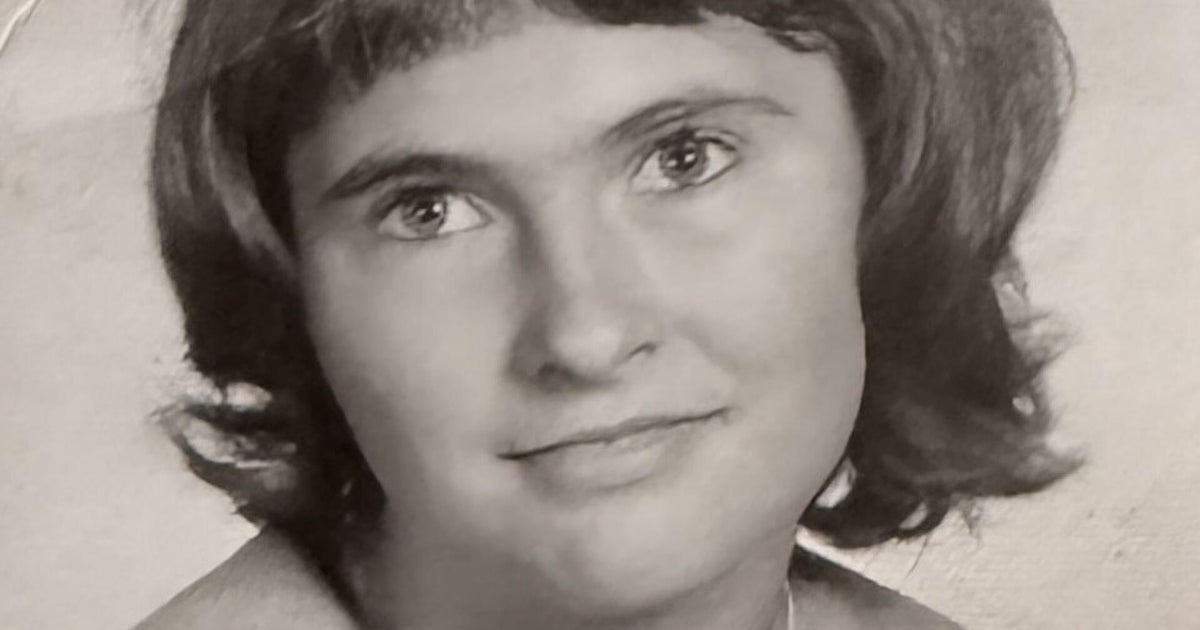
On what should have been an ordinary spring day in small-town Nebraska, seventeen-year-old Mary Kay Heese left for school and never came home. It was March 25, 1969, in Wahoo, a tight-knit community where everyone knew everyone, and tragedies like this simply didn’t happen. As the hours passed and Mary Kay failed to return home, worry turned to dread. That dread became heartbreaking reality when her body was discovered on the roadside just outside of town. She had been brutally beaten and stabbed to death. The investigation that followed seemed promising at first—a witness reported seeing Mary Kay get into a car with two men on a street corner near her home. But despite this crucial lead, investigators at the time hit a wall. They couldn’t identify who was in that car. Days turned into weeks, weeks into months, and eventually years, with no arrests. Mary Kay’s murder became one of those cold cases that haunt communities for generations, a wound that never quite heals. CBS’s “48 Hours” correspondent Natalie Morales brings this decades-old case back into the spotlight in “The Girl from Wahoo,” examining how persistent investigation and renewed commitment finally brought answers to a family that had waited more than half a century for justice.
Reopening Old Wounds and Old Case Files
The case lay dormant for decades until 2015, when the Saunders County Attorney’s Office made the decision to take another look at this unsolved murder. Ted Green, a criminal investigator with a reputation for tenacity, was assigned to breathe new life into the investigation. Green approached the case with a particular philosophy that would prove essential to cracking it: “Every criminal investigation is a puzzle,” he told “48 Hours.” But this wasn’t just about reviewing old police reports and re-interviewing witnesses who might still be alive. Green understood that to solve this puzzle, he needed to truly understand Mary Kay Heese—not just as a victim, but as a person. Who was this seventeen-year-old girl? What was her life like? What were her hopes and dreams? Green reached out to Mary Kay’s family, connecting with her younger cousins, Mark Miller and Kathy Tull, who still carried vivid memories of their cousin despite the passage of time. They painted a picture of a fundamentally happy young woman who had always been kind to them, always looking out for her younger relatives. But they also acknowledged that Mary Kay’s happiness was sometimes clouded by the typical struggles of adolescence—the desire to fit in, to be accepted, to find her place in the social hierarchy of high school.
A Girl Caught Between Two Worlds
As Green delved deeper into Mary Kay’s life, a poignant picture emerged of a teenager caught between two different worlds. At home, she lived under strict rules enforced by watchful parents who kept a close eye on their daughter. This wasn’t unusual for the late 1960s, particularly in conservative small-town Nebraska, but it created a tension in Mary Kay’s life. The girl who left home for school each morning wasn’t quite the same girl who navigated the hallways of her high school. Green discovered that Mary Kay had a group of friends at school who would help transform her appearance. “There was a group of girls that would get her together and put makeup on her at the beginning of the day and change her clothes out,” Green explained. This daily transformation speaks volumes about the pressure Mary Kay felt to conform to the expectations of her peers while still respecting her parents’ rules. “She wanted to fit in,” Miller told “48 Hours,” a simple statement that captures the universal teenage experience but one that would prove tragically significant in Mary Kay’s case. Part of that desire to fit in centered around the upcoming Sadie Hawkins dance, a popular social event of that era where traditional gender roles were reversed and girls asked boys to be their dates. For a shy girl like Mary Kay, this represented both an opportunity and a challenge. Kathy Tull shared a precious artifact with investigators—a letter written by Mary Kay just one week before her murder, asking her cousin Jerry to attend the dance with her. The letter is heartbreaking in its innocence: “If we come over to get you on Friday the 28th or Saturday the 29th, will you go to the Sadie Hawkins dance with me?” Mary Kay wrote, carefully explaining that he could wear sportswear instead of formal attire and reassuring him that he wouldn’t need to bring money because the girls paid for everything at a Sadie Hawkins dance. This letter became a crucial piece of evidence, not for what it said about the dance, but for what it revealed about Mary Kay’s character. It helped Green reach a critical conclusion: “She wouldn’t get into a car with somebody that she didn’t know.”
Focusing on Two Names
Armed with this understanding of Mary Kay’s personality and habits, Green began combing through the old case files with fresh eyes. Two names kept appearing in the reports from 1969: Joseph Ambroz and Wayne Greaser, both of whom had been interviewed in the days immediately following Mary Kay’s murder but never charged. Joseph Ambroz was twenty-two years old in 1969, living in Wahoo and working at a local slaughterhouse. He also had a criminal record—he was on parole at the time, having previously served time for forgery and escaping from custody. Wayne Greaser was younger and, according to Deputy Saunders County Attorney Richard Register, who worked on the reopened case, “was just that wannabe kid who was just following around Ambroz.” As Green and Register investigated further, they uncovered connections between Ambroz and Mary Kay. They both frequented the same local café and had mutual friends—Mary Kay would have recognized Ambroz, would have known who he was. This was the missing piece that made sense of the witness statement from 1969. Mary Kay got into that car willingly because she knew at least one of the men inside. Green and Register developed a theory about what happened that March day. They believe that Mary Kay, in her desire to fit in with what she perceived as the more popular crowd, saw Ambroz not as a threat but as an opportunity. Perhaps she thought associating with him would boost her social standing. Perhaps she was simply being friendly. The investigators believe Ambroz and Greaser took Mary Kay to a well-known party spot near town, and at some point during that drive, something went terribly wrong. Mary Kay tried to flee from the car, but Ambroz went after her. The brutal attack that followed ended with Mary Kay being stabbed to death and her body left on the roadside. “She just wanted to get a boy to go to the dance with her,” Register said with evident sadness. “And unfortunately, the dance she went to was her death.”
An Arrest More Than Five Decades Later
In a development that seemed almost impossible after so many years, Joseph Ambroz was arrested for Mary Kay Heese’s murder more than five decades after her body was found on that Nebraska roadside. By this time, Ambroz was seventy-seven years old, having lived an entire lifetime while Mary Kay remained frozen at seventeen in the memories of those who loved her. The arrest represented a massive breakthrough for the case, but the legal proceedings that followed would prove controversial and, for Mary Kay’s family, deeply disappointing. In July 2025, Ambroz took a plea deal rather than face trial. He pleaded no contest to conspiracy to commit first-degree murder—a charge that acknowledged his role in Mary Kay’s death without requiring him to admit guilt directly. The sentence handed down was two years in prison, a term that struck many as shockingly lenient for such a brutal crime. Wayne Greaser, who investigators believed was the other person involved in the conspiracy to kill Mary Kay, could not face earthly justice—he had died by suicide in 1977, taking whatever secrets he knew about that day to his grave. The plea deal meant that many questions about exactly what happened would never be fully answered in a courtroom. There would be no trial where evidence was presented in detail, no opportunity for Mary Kay’s family to hear a full accounting of what happened to their beloved cousin.
Justice Delayed and the Price of Time
For Mark Miller and Kathy Tull, who had waited their entire adult lives for answers about their cousin’s murder, the plea deal and the minimal sentence felt like a profound injustice. While they were grateful that someone was finally being held accountable, the punishment seemed wholly inadequate for the crime. Two years in prison for a life taken, for a family shattered, for more than five decades of unanswered questions and unresolved grief. “He got all these years to live, and Mary Kay never had the chance to live,” Miller told “48 Hours,” his words capturing the fundamental unfairness of the situation. While Ambroz went on to live his life—perhaps raising a family, pursuing a career, experiencing all the milestones and moments that make up a human life—Mary Kay remained seventeen forever, her potential unrealized, her future stolen. The case raises difficult questions about justice delayed and the challenges of prosecuting decades-old crimes. Would a trial have resulted in a harsher sentence, or was the plea deal the best outcome prosecutors could hope for given the passage of time, the death of one suspect, and the challenges of presenting fifty-six-year-old evidence to a jury? These are questions without easy answers. What remains clear is that Mary Kay Heese’s story is a tragedy on multiple levels—the tragedy of a young life violently cut short, the tragedy of a family forced to wait more than half a century for answers, and the tragedy of a justice system that, despite eventually identifying those responsible, could offer only limited accountability. Yet there is something to be said for persistence, for investigators like Ted Green who refused to let this case fade into complete obscurity, and for family members like Miller and Tull who kept Mary Kay’s memory alive and continued to demand justice even when it seemed impossible. Their efforts ensure that Mary Kay is remembered not just as a victim, but as a real person—a shy teenager who just wanted to fit in, who wrote sweet letters asking cousins to dances, who had her whole life ahead of her before it was brutally taken away on a spring day in 1969.