
Supreme Court Delivers Major Blow to Trump’s Tariff Strategy
A Predictable Yet Devastating Ruling
While the Supreme Court’s recent decision against President Trump’s tariff policies may not have come as a complete shock to those closely following the proceedings, it nonetheless represents a monumental setback for the administration. Observers who had been tracking the Supreme Court hearings could sense which way the wind was blowing, making this outcome the most probable conclusion from the US judiciary. However, the significance of this ruling extends far beyond mere legal technicalities—it strikes at the very heart of Trump’s economic agenda and raises fundamental questions about presidential power in America. To truly grasp the magnitude of this decision, we need to journey back through American history to the founding principles enshrined in the US Constitution, where the seeds of this contemporary conflict were first planted.
Constitutional Foundations and the Separation of Powers
The architects of the American Constitution had a clear vision when they drafted the nation’s foundational document: the president should never possess unchecked authority to impose taxes on the American people. In the early days of the republic, taxation primarily took the form of tariffs on imported goods, making this restriction particularly relevant to international trade. The framers deliberately placed the power to levy tariffs in the hands of Congress, creating what would become one of the most celebrated aspects of American democracy—the separation of powers. This wasn’t merely a footnote in constitutional law; it was a cornerstone principle designed to prevent any single branch of government from wielding excessive control over the nation’s purse strings. The reasoning was straightforward: if the people’s elected representatives in Congress controlled taxation, including tariffs, then citizens would have a direct voice in how they were governed and how commerce was regulated. This fundamental principle has echoed through American history and now lies at the center of the Supreme Court’s rebuke of Trump’s tariff policies.
The Evolution of Presidential Emergency Powers
Despite the Constitution’s clear language about congressional control over tariffs, the practical realities of governing a complex modern nation created challenges. The deliberative nature of Congress, while democratic and representative, can also be frustratingly slow and cumbersome, especially when quick action seems necessary. Recognizing this limitation, lawmakers over the decades carved out specific exceptions to the general rule, granting presidents limited authority to impose tariffs under certain extraordinary circumstances. These exceptions were narrowly tailored to address genuine emergencies: national security threats, balance of payments crises, or sector-specific problems that demanded immediate attention. What emerged was a catalogue of obscure legal provisions scattered throughout various pieces of legislation—essentially loopholes that allowed presidents to bypass Congress and impose tariffs unilaterally, but only under specific, restricted conditions. Understanding this historical evolution is crucial to comprehending the Supreme Court’s recent decision, because Trump’s tariff strategy has relied heavily on stretching these emergency provisions beyond their originally intended scope.
Trump’s Creative Use of Legal Loopholes
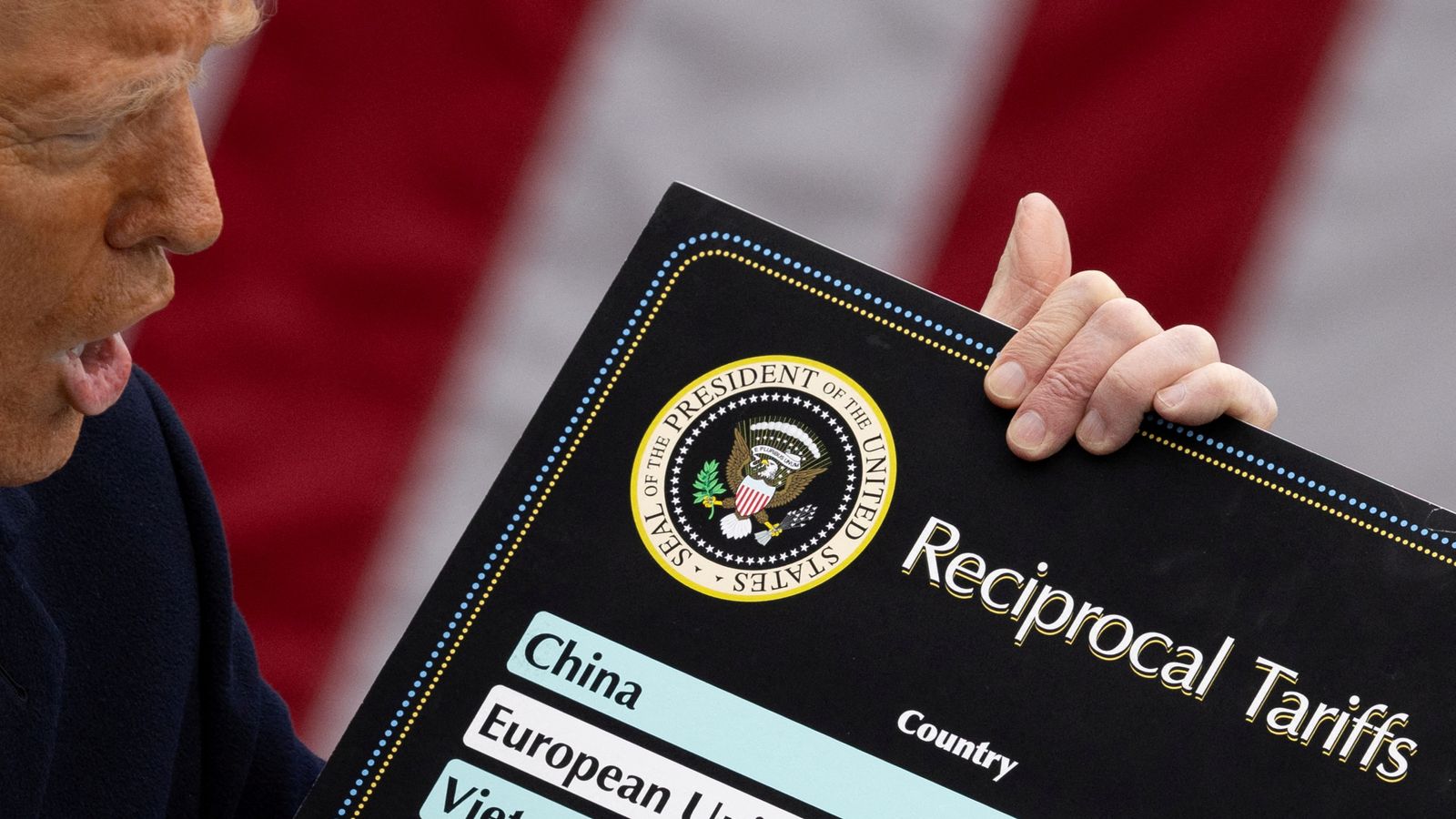
President Trump’s approach to imposing tariffs has been characterized by aggressive use of these historical exceptions, pushing their boundaries in ways that previous administrations had not attempted. For his steel and aluminum tariffs, the administration invoked Section 232 of the Trade Expansion Act of 1962, which permits tariffs on specific sectors when national security justifications can be established. The argument that steel and aluminum imports threatened American security was controversial, but it provided the legal foundation the administration needed. More significantly, Trump’s “Liberation Day” tariffs—those sweeping levies announced with great fanfare as a cornerstone of his economic nationalism—were implemented under the International Emergency Economic Powers Act (IEEPA) of 1977. This law was designed for genuine national emergencies, situations of extraordinary crisis requiring immediate presidential action. Trump’s justification rested on characterizing trade deficits and illegal drug flows as constituting such an emergency. The president has famously declared “tariff” to be his favorite word, and his enthusiasm for these trade barriers has been evident throughout his political career. However, the Supreme Court has now determined that his interpretation of emergency powers stretched the law beyond its breaking point.
The Immediate Consequences and Uncertain Future
The Supreme Court’s ruling carries immediate and far-reaching implications. All tariffs imposed under the IEEPA—representing approximately half of Trump’s total levies—are now legally void. This creates a complex situation regarding the substantial sums already collected under these now-invalidated tariffs, with serious questions arising about whether the administration might be required to refund some or potentially all of this money to the companies and individuals who paid these duties. In one sense, this decision doesn’t completely dismantle Trump’s tariff architecture, as the administration could theoretically pivot to utilizing other obscure legal provisions to maintain some level of protective trade barriers. The White House has already begun framing the situation as judicial obstruction of legitimate political goals, attempting to shift blame away from the administration’s legal overreach. However, the timing of this ruling is particularly damaging, coinciding as it does with slumping presidential approval ratings, driven in no small part by growing public dissatisfaction with tariffs and their economic consequences, including higher consumer prices and disrupted supply chains.
A Crossroads for Trade Policy and Political Strategy
This Supreme Court decision places the Trump administration at a critical crossroads. One path involves continuing to fight for tariffs through alternative legal mechanisms, potentially leading to further court challenges and ongoing economic uncertainty. The administration could double down on its trade war rhetoric, using the judiciary’s intervention as evidence of a “deep state” conspiracy against populist economic policies. Alternatively, this ruling could provide Trump with an unexpected exit ramp from what has become an increasingly unpopular policy. While unlikely to be framed as a concession, the president could use this judicial setback as justification for pivoting toward a different economic strategy, perhaps claiming that while tariffs were the right policy, legal obstacles have forced a tactical retreat. Regardless of which path the administration chooses, this episode adds yet another layer of chaos to the already turbulent on-again, off-again trade war that has characterized Trump’s approach to international commerce. The fundamental tension between presidential power and constitutional limitations remains unresolved, and given the personalities and political stakes involved, there will undoubtedly be numerous additional twists, turns, and confrontations as this saga continues to unfold in the months ahead.