
Tech Company vs. Government: The Battle Over AI Control and American Values
A Clash Over Principles and National Security
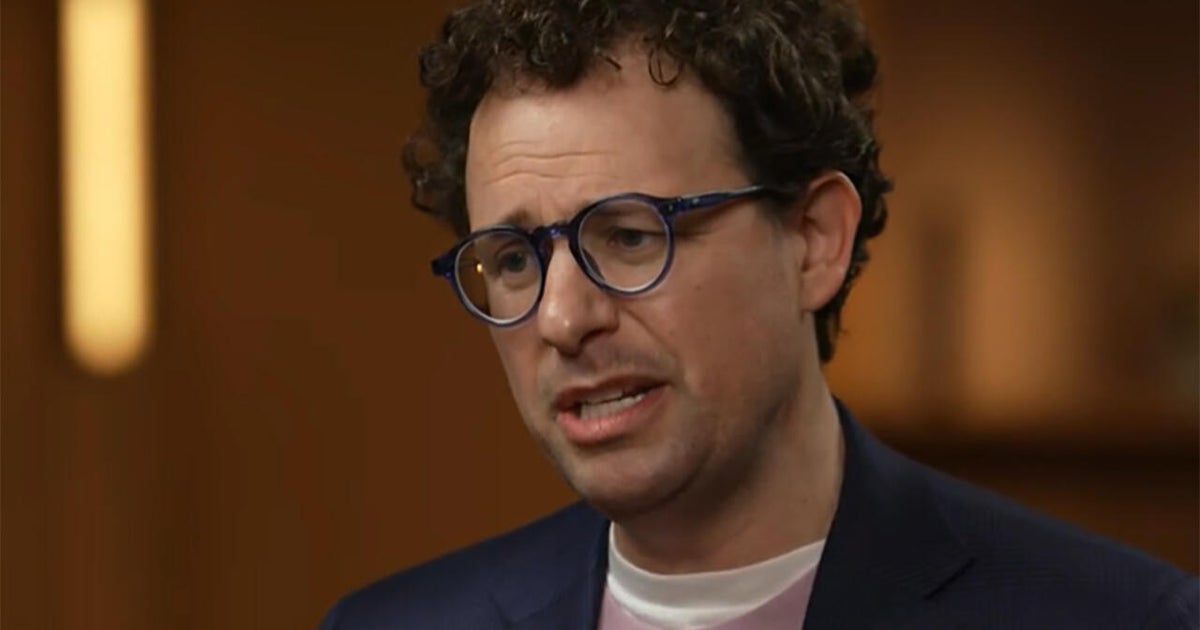
At the heart of a brewing controversy sits Dario Amodei, the CEO of Anthropic, an artificial intelligence company that has become unexpectedly entangled in a high-stakes confrontation with the federal government. For Amodei, this isn’t simply a business dispute—it’s fundamentally about standing up for core principles he believes are essential to American values. His company, Anthropic, created Claude, an AI chatbot that has become widely used in workplaces and educational institutions across the country. But it’s the government version of this technology that has sparked an unprecedented crisis. Since last summer, Anthropic’s AI has been deeply integrated into some of the nation’s most sensitive operations, including military intelligence and classified Pentagon activities. However, when the Defense Department recently demanded unrestricted access to Anthropic’s AI technology for any lawful military purpose—particularly in the lead-up to military action against Iran—the company drew a hard line in the sand and refused to comply.
The refusal centers on what Amodei describes as two non-negotiable “red lines” that Anthropic established from its very beginning: the company will not allow its AI to be used for mass surveillance of American citizens, and it will not permit its technology to power fully-autonomous weapons systems that operate without human oversight. These aren’t new positions hastily adopted in response to government pressure; according to Amodei, these principles have been fundamental to the company’s mission since day one, and Anthropic has no intention of abandoning them now. The CEO’s reasoning is both practical and ethical—he points out that current AI technology doesn’t demonstrate the nuanced judgment that human soldiers bring to complex situations. Without human involvement, there’s a real risk of friendly fire incidents, civilian casualties, or other catastrophic errors in judgment. Beyond not wanting to sell a product that isn’t reliable, Amodei emphasizes that the company refuses to provide technology that could result in the deaths of American service members or innocent people.
The Question of Control and Expertise
This standoff raises a profound question that extends far beyond one company or one technology: who should ultimately control the most advanced and potentially dangerous technology ever created by humanity—private tech companies or the federal government? It’s a question without easy answers, touching on issues of democracy, expertise, national security, and corporate responsibility. When pressed on whether he believes Anthropic knows better than the Pentagon about how its technology should be used, Amodei defended his company’s position by invoking principles of free enterprise and market diversity. He explained that in a free market system, different companies can and should offer different products based on different principles and capabilities. Anthropic’s AI model, he noted, has specific characteristics—a particular “personality,” certain reliable capabilities, and importantly, certain things it cannot reliably do. As the creators and developers of this technology, Amodei argues that his company is best positioned to understand what their models can accomplish safely and what applications would be unreliable or dangerous.
This perspective challenges traditional notions of government authority, especially in matters of national security, where deference to military and defense experts has historically been the norm. Yet Amodei’s position reflects a growing reality of our technological age: the people building cutting-edge AI systems often understand their capabilities and limitations better than anyone else, including government officials. The tension between technical expertise and governmental authority creates a genuine dilemma—should the creators of powerful technology have veto power over how it’s used, even when national security is at stake? Or does democratic governance require that elected officials and their appointees make these determinations, even if they lack the technical depth of understanding? There are compelling arguments on both sides, which is precisely why this confrontation has become so significant.
Unprecedented Government Retaliation
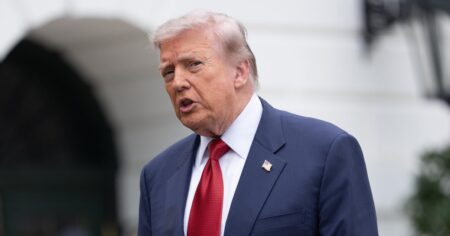
The Trump administration’s response to Anthropic’s refusal was swift and severe. President Trump directed the U.S. government to immediately halt all use of Anthropic’s AI technology, effectively cancelling more than $200 million worth of federal contracts with the company. Even more dramatically, Defense Secretary Pete Hegseth took the extraordinary step of labeling Anthropic “a supply chain risk to national security”—a designation that had never before been applied to an American company. This classification, typically reserved for foreign entities or companies with foreign ties that might compromise U.S. security, marks an unprecedented escalation in government-private sector relations. The administration also characterized Anthropic as “a left-wing woke company,” injecting partisan political language into what might otherwise be viewed as a straightforward disagreement about technology use and safety protocols.
Amodei pushed back firmly against the political characterization of his company, insisting that Anthropic has worked diligently to remain neutral and even-handed in its approach. He rejected the suggestion that the company has been partisan in any way, emphasizing their commitment to principled neutrality. When asked directly whether he considers the Trump administration’s actions an abuse of power—a characterization offered by critics of the government’s response—Amodei carefully pointed to the unprecedented nature of what has occurred. He noted that this kind of designation has never before been applied to an American company and highlighted language in official government statements that made clear the retaliatory and punitive nature of the actions. While stopping just short of directly calling it an abuse of power in so many words, Amodei’s description of the government’s response as “retaliatory and punitive” speaks volumes about how he views the situation.
Competitors Step Into the Void
The timing of the government’s crackdown on Anthropic became even more significant when considering what happened simultaneously with the company’s main competitor. On the very same Friday that President Trump banned Anthropic from government work, Sam Altman’s OpenAI—the company behind ChatGPT—announced it had reached its own agreement with the Pentagon. The juxtaposition couldn’t be more stark: one AI company standing firm on ethical red lines and finding itself banned from government work, while its primary competitor steps in to fill that void with apparently fewer restrictions. This development raises uncomfortable questions about whether taking principled stands on technology ethics might simply result in being replaced by less scrupulous competitors rather than actually preventing problematic applications of AI. It also creates a concerning precedent where companies that cooperate fully with government demands, regardless of ethical considerations, are rewarded while those that maintain boundaries are punished and excluded.
For observers of the AI industry, this dynamic is deeply troubling because it potentially incentivizes a race to the bottom in terms of ethical safeguards and responsible development practices. If companies that establish safety boundaries and ethical guidelines are simply shut out of lucrative government contracts in favor of more compliant competitors, what motivation do companies have to maintain those standards? The situation illustrates a fundamental tension in how we govern emerging technologies: we want companies to act responsibly and establish ethical guidelines, but we also expect them to comply with government directives even when those directives conflict with their stated principles.
Legal Battles and Continued Negotiations
Despite the severity of the government’s actions, Amodei indicates that Anthropic is far from surrendering. The company plans to pursue legal action challenging the government’s designation and contract cancellations. Amodei pointed out that, as of his interview, the company had only seen tweets from President Trump and Defense Secretary Hegseth—not formal legal documents or official orders. This detail is significant because it suggests the administration may have acted precipitously through social media announcements rather than following established governmental procedures. Such an approach could provide grounds for legal challenge and might indicate that the administration’s actions were more about sending a political message than following careful legal process. At the same time, Amodei emphasized that Anthropic remains willing to negotiate and continue conversations with the government. The company isn’t walking away from the table; rather, it’s hoping that continued dialogue might find a path forward that respects both national security needs and the ethical boundaries Anthropic has established.
This dual approach—pursuing legal remedies while remaining open to negotiation—reflects a sophisticated strategy that keeps multiple options available. It also demonstrates that Amodei and his company aren’t simply being obstinate or unpatriotic, as some critics might charge, but rather are seeking a solution that serves both the country’s defense needs and broader ethical principles. The willingness to continue talking suggests there might be middle ground to be found, perhaps through enhanced human oversight mechanisms, clearer use-case restrictions, or other compromises that could satisfy both parties’ core concerns.
Patriotism, Dissent, and American Values
When asked what he would say to President Trump if given the opportunity, Amodei’s response went straight to questions of patriotism and American identity. He firmly declared that he and his colleagues at Anthropic are “patriotic Americans” whose every action has been motivated by supporting the country and its national security. Their work, he emphasized, aims to help America defeat autocratic adversaries and defend the nation’s interests and values. But crucially, Amodei argued that the red lines Anthropic has drawn aren’t contrary to these patriotic goals—rather, they exist precisely because crossing those lines would violate fundamental American values. In his view, allowing mass surveillance of Americans or deploying fully-autonomous weapons without human judgment wouldn’t strengthen America; it would undermine the principles that make the country worth defending in the first place.
Perhaps most powerfully, Amodei invoked a deeply American tradition when he declared that “disagreeing with the government is the most American thing in the world.” This statement cuts to the heart of what distinguishes democratic societies from authoritarian ones—the ability and right to dissent, to question authority, and to stand firm on principles even when facing pressure from the most powerful institutions in society. Throughout American history, some of the country’s most important progress has come from individuals and organizations that refused to simply comply with government demands they viewed as wrong or dangerous. From civil rights activists to whistleblowers to conscientious objectors, American society has been shaped by people willing to face consequences for standing up for their beliefs. Amodei is positioning Anthropic in this tradition, arguing that their refusal isn’t unpatriotic opposition but rather the highest form of patriotism—defending American values even at significant cost.
This framing transforms the conflict from a simple business dispute or even a national security question into something more profound: a test of whether American society can maintain its fundamental values while adapting to revolutionary new technologies. As AI becomes increasingly powerful and integrated into military and governmental systems, these questions will only become more urgent. The outcome of Anthropic’s confrontation with the government may well establish precedents that shape how these issues are resolved for years to come, determining whether tech companies retain some ability to establish ethical boundaries or whether government authority in national security matters overrides all other considerations.