
Alabama Governor Spares Elderly Death Row Inmate Who Wasn’t the Shooter
A Landmark Clemency Decision Based on Fairness
In a significant and rare display of executive clemency, Alabama Governor Kay Ivey made headlines this week by commuting the death sentence of 75-year-old Charles “Sonny” Burton, who had been scheduled for execution by nitrogen gas on Thursday. This marks only the second time since Ivey took office in 2017 that the Republican governor has granted clemency to a death row inmate, despite having overseen 25 executions during her tenure. What makes this case particularly compelling is the fact that Burton wasn’t even present in the building when the victim was fatally shot during a 1991 robbery. Governor Ivey explained her decision by citing the fundamental principle of fairness in the justice system, stating that she could not “in good conscience” proceed with Burton’s execution when the person who actually pulled the trigger received a lesser sentence. Burton’s sentence has been reduced to life in prison without the possibility of parole, allowing him to avoid what many considered an unjust fate given the circumstances of his involvement in the crime.
The Crime That Led to a Death Sentence
The tragic events that sealed Burton’s fate occurred on August 16, 1991, at an AutoZone auto parts store in Talladega, Alabama. Burton and several accomplices had planned and initiated a robbery of the store, but the situation took a deadly turn when a customer named Doug Battle entered the premises. According to court testimony, Burton and the other robbers had already left the building when Battle arrived and got into an argument with Derrick DeBruce, one of Burton’s co-conspirators who had remained behind. In a violent escalation that Burton claims was never part of the plan, DeBruce shot Battle in the back, killing him. Both men were initially sentenced to death for their roles in the crime, but there was always a glaring inconsistency in how justice was ultimately served. DeBruce, the actual shooter who committed the murder, successfully appealed his death sentence and had it reduced to life in prison. Meanwhile, Burton, who had left before the shooting occurred, remained on death row for more than three decades, facing the ultimate punishment for a murder he didn’t commit and wasn’t present to witness.
Burton’s Remorse and the Weight of Unintended Consequences
Speaking to The Associated Press in February from Alabama’s Holman Correctional Facility, the now 75-year-old Burton, who sometimes requires a wheelchair, expressed deep remorse for his role in the events that led to Doug Battle’s death. He maintained that violence was never part of the robbery plan and that he only learned about the shooting after they had left the scene. “I didn’t know anything about nobody getting hurt until we were on the way back. No, nobody supposed to get hurt,” Burton explained during the telephone interview. His words reveal a man who has spent decades living with the consequences of a crime that spiraled beyond what he had intended or anticipated. Perhaps most poignantly, Burton expressed a heartfelt desire to apologize directly to Battle’s family for the pain and loss they’ve endured. “I’m so sorry. If I had the power to bring him back, I would. I’m so sorry,” he said, his words carrying the weight of more than 30 years of reflection and regret. While these words cannot undo the harm caused or bring back a life lost, they provide a window into the humanity of someone who has spent most of his adult life facing death for a murder he didn’t personally commit.
A Jury’s Change of Heart
One of the most powerful aspects of Burton’s clemency appeal came from an unexpected source: members of the very jury that had originally sentenced him to death in 1992. Multiple jurors, who had deliberated his fate more than three decades ago, came forward to urge Governor Ivey to spare his life, admitting they had been wrong in their original recommendation. Priscilla Townsend, one of the jurors, penned a compelling essay published on AL.com in January that detailed her evolving understanding of the case and why she now believes the death sentence was unjust. “Mr. Burton was not inside the AutoZone at the time of the murder. He was not the shooter, and yet the state sought and secured a death sentence against him anyway. At the time, I did not fully understand what that meant. I do now,” Townsend wrote with striking honesty. She explained that prosecutors had portrayed Burton as the “ring leader” of the robbery, a characterization that fundamentally “shaped everything” about how the trial proceeded, how evidence was interpreted, how responsibility was assigned, and ultimately how punishment was justified. The entire jury accepted this narrative at the time, viewing Burton as the mastermind whose actions set in motion the chain of events that led to Battle’s death. However, with the perspective that only time and reflection can provide, Townsend and others now question whether that characterization was accurate or fair, especially given that the actual shooter received a lesser punishment.
An Extraordinary Appeal from the Victim’s Family
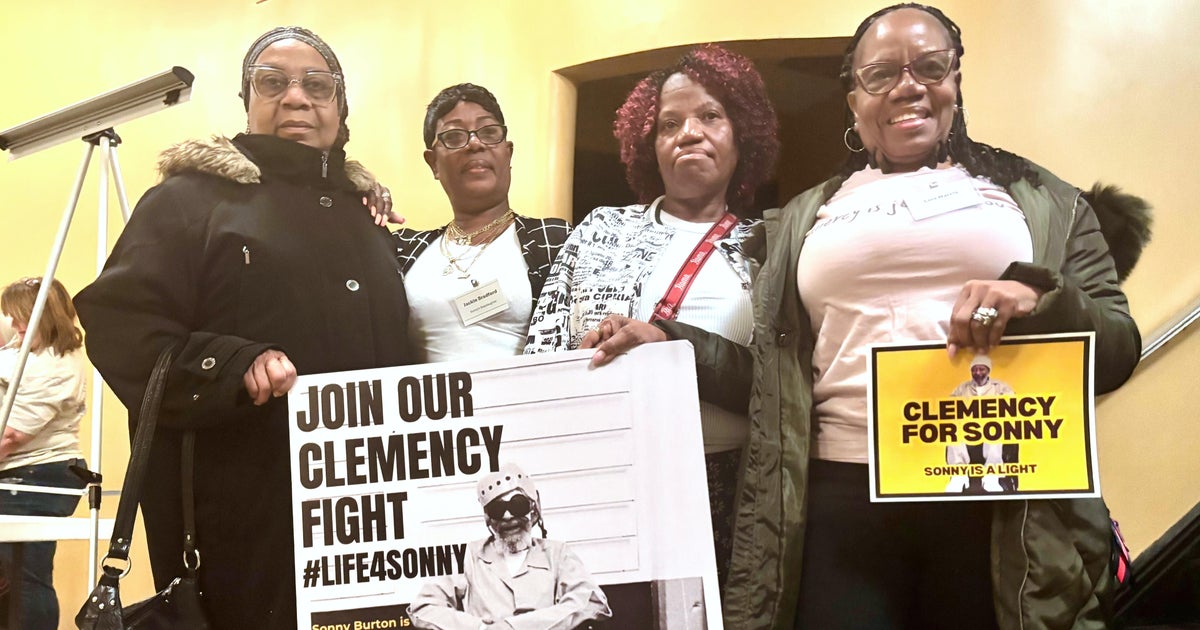
In what might be considered the most extraordinary element of this case, Doug Battle’s own daughter joined the chorus of voices urging Governor Ivey to grant clemency to the man convicted in her father’s killing. In a letter to the governor, she raised a question that cut to the heart of the legal and moral inconsistency in Burton’s case: “How does it legally make sense” to execute Burton when the person who actually shot and killed her father was serving a life sentence instead? This remarkable act of compassion and pursuit of justice from someone who had every reason to want maximum punishment demonstrates a profound understanding that true justice isn’t simply about vengeance, but about proportionality and fairness. Her willingness to speak up for Burton’s life, despite her own devastating loss, added significant moral weight to the clemency petition. Additionally, Burton’s own family members and supporters rallied outside government buildings in Montgomery, holding signs and advocating for his life to be spared. These family members, including Eddie Mae Ellison, Jackie Bradford, Mary Bradford, and Lois Harris, stood together in January 2025 to make their voices heard, hoping that their elderly relative, now frail and wheelchair-bound, might finally see justice tempered with mercy.
The Broader Context of Felony Murder Laws and Capital Punishment
Burton’s case highlights a controversial aspect of American criminal justice: felony murder laws that allow individuals to receive the death penalty for murders committed during felonies, even when they didn’t directly kill anyone themselves. According to the American Civil Liberties Union, twenty-seven states currently permit capital punishment in such cases, a practice that many legal experts and advocates argue is fundamentally unjust. The logic behind these laws is that anyone participating in a dangerous felony shares responsibility for any deaths that result, even if they didn’t personally pull the trigger. However, critics point out the moral and practical problems with executing someone who neither intended nor committed a murder, particularly when the actual killer receives a lesser sentence. Alabama, like many Southern states, has a long history with the death penalty—according to the Death Penalty Information Center, the state has carried out 83 executions since 1976. Governor Ivey has made clear that she remains a firm believer in capital punishment, stating that she views it as “just punishment for society’s most heinous offenders.” However, even a strong death penalty supporter like Ivey recognized that justice must be “administered fairly and proportionately,” and that executing Burton while sparing the actual shooter would violate these principles. When Burton’s legal team received the news of the commutation on Tuesday, they cheered, celebrating not just a life saved, but a decision that upholds the principle that our justice system should treat similar actors in similar ways, and that the ultimate punishment should be reserved for those who commit the ultimate crime.