


A Powerful Testament to Lost Lives: “All the Empty Rooms” Wins Oscar for Best Documentary Short
A Documentary Born from Tragedy and Hope
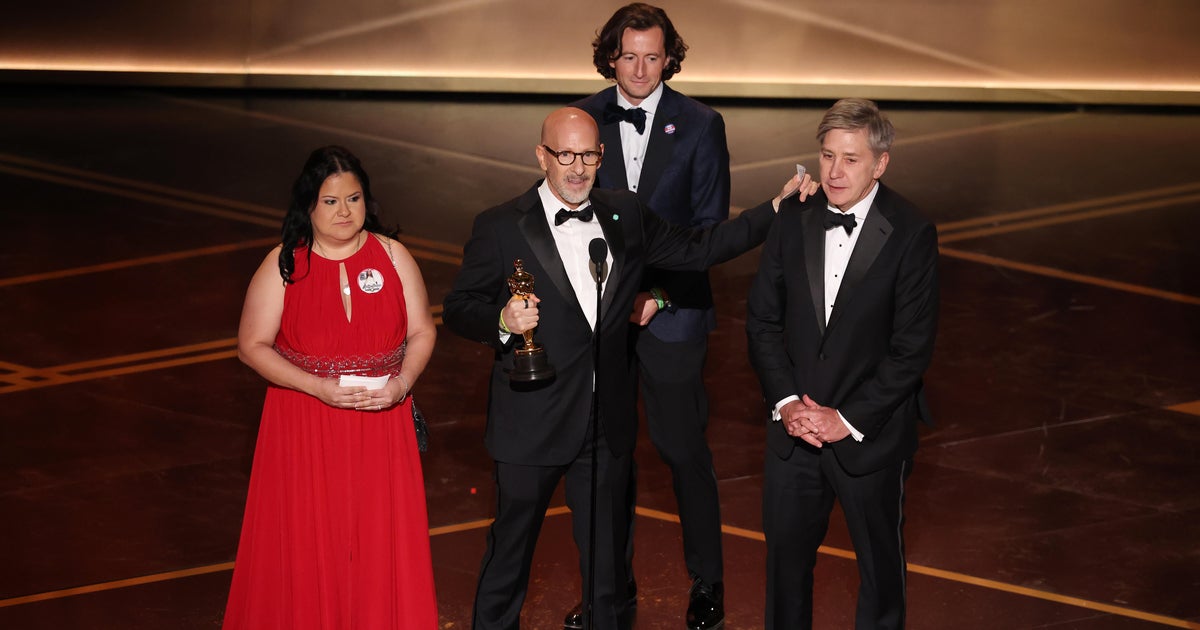
The 98th Academy Awards ceremony on Sunday night witnessed a profoundly moving moment when “All the Empty Rooms” received the Oscar for Best Documentary Short. This isn’t just another film about statistics or policy debates—it’s an intimate, heartbreaking journey into the bedrooms of children who never came home from school. The documentary represents seven years of painstaking work by CBS News correspondent Steve Hartman and photographer Lou Bopp, who took on the difficult task of documenting America’s ongoing school shooting epidemic through the most personal lens imaginable: the private spaces where young lives were lived and dreams were nurtured. Director Joshua Seftel accepted the prestigious award alongside Hartman, producer Conall Jones, and Gloria Cazares, whose 9-year-old daughter Jackie was among the 19 children killed in the devastating Uvalde school shooting in 2022. The presence of Cazares on that stage transformed what could have been a typical awards moment into something much more significant—a national reckoning with a crisis that continues to claim young lives with devastating regularity.
Four Empty Rooms, Four Lost Futures
Standing before the audience of Hollywood’s elite and millions watching worldwide, Director Joshua Seftel spoke with quiet gravity about the film’s focus: “The four empty rooms in our film belonged to four young children who were all killed in school shootings: Hallie, Gracie, Dominic and Jackie.” These weren’t just names to fill a tragic roster; they were individual children with distinct personalities, dreams, and the everyday chaos and joy that fills any child’s bedroom. Each room tells a story that was cut short, each space a monument to potential that will never be realized. The documentary doesn’t rely on graphic imagery or political rhetoric; instead, it allows these silent spaces to speak volumes about what has been lost. By focusing on just four rooms rather than attempting to encompass every tragedy, the filmmakers made a deliberate choice to remind viewers that behind every statistic is a real child who had a favorite color, a beloved stuffed animal, homework left undone, and plans for a future that would never arrive. This approach transforms abstract numbers into visceral, undeniable human loss.
A Mother’s Unbearable Testimony
When Gloria Cazares took the microphone, dressed in red and wearing a pin bearing her daughter’s image, the Dolby Theatre fell into respectful silence. Her words carried the weight of every parent’s worst nightmare made real: “Since that day, her bedroom has been frozen in time. Jackie is more than just a headline. She is our light and our life.” In those simple sentences, Cazares articulated what so many grieving families struggle to convey—that their children were not merely victims in a news story, but fully realized human beings whose absence leaves an unfillable void. She went on to deliver a stark reminder of the scale of this crisis: “Gun violence is now the number one cause of death in kids and teens.” This isn’t hyperbole or political spin; it’s a documented fact that should shake any society to its core. Cazares then shared her belief that visibility might be the key to change: “We believe that if the world could see their empty bedrooms, we’d be a different America.” Her participation in the documentary and her presence at the Academy Awards represents an act of extraordinary courage—opening her most private grief to public view in the hope that witnessing might finally catalyze action where previous tragedies have not.
Why Jackie’s Room Matters
When Steve Hartman traveled to Uvalde, Texas, in the aftermath of the shooting that took 19 children and two teachers at Robb Elementary School, Gloria Cazares made a conscious decision to invite him and photographer Lou Bopp into her home and into her daughter’s bedroom. She explained her reasoning with painful clarity: people constantly told her they “can’t imagine” what she’s going through, but she insists that we need to imagine—that imagination, empathy, and visceral understanding are essential to breaking through our collective numbness to these recurring tragedies. “It just makes everything more real for the public, for the world,” Cazares explained. “Her room completely just speaks of who she was.” And indeed, Jackie’s room is filled with the specific, touching details of a life in progress: chocolate she had saved for a special day that would never come, an “About Me” chalkboard where she had written her dream of becoming a veterinarian. These aren’t the belongings of an abstract victim; they’re the treasured possessions of a particular girl with specific hopes and a personality all her own. The room stands as both shrine and evidence, a space where time stopped on an ordinary school day that became anything but ordinary.
The Details That Haunt and Humanize
Photographer Lou Bopp, reflecting on the project in a 2024 essay, described the profound impact of documenting these frozen spaces: “Their personalities shone through in the smallest details of their untouched rooms — hair ties on a doorknob, a toothpaste tube left uncapped, a ripped ticket for a school event — allowing me to uncover glimpses as to who they were.” These observations reveal the documentary’s true power—its ability to transform these children from statistics into fully dimensional human beings through the intimate detritus of their daily lives. Many of the rooms, like Jackie’s, remained virtually untouched years after the shootings, preserved by parents who couldn’t bear to disturb the last arrangements their children made, the last evidence of their presence in the family home. There’s something profoundly affecting about a toothpaste tube left uncapped—it speaks to the rush of an ordinary morning, a child’s casual disregard for tidiness, the assumption that there would be time later to cap it, time tomorrow, time next week. That uncapped tube becomes an unintentional memorial to the interruption of normal life, to futures cancelled without warning. These small, everyday details accomplish what larger political debates often cannot: they break through our defenses and make us feel the specific, irreplaceable nature of what has been lost.
A Call for Imagination and Change
“All the Empty Rooms” arrives at a critical moment in American history when school shootings have become so frequent that there’s a real danger of desensitization, of each new tragedy fading into a blur of repeated news cycles and unchanged circumstances. The documentary—and its Oscar win—represents a different approach to advocacy, one that trusts in the power of witnessing, of sitting with discomfort, of allowing grief and loss to be felt rather than debated. By inviting viewers into these most private spaces, the filmmakers and the families who opened their homes are essentially saying: you cannot look away, you cannot abstract this, you cannot reduce these children to talking points. The film’s seven-year journey to completion speaks to both the persistence of the problem and the filmmakers’ commitment to honoring these young lives properly. Gloria Cazares’s appearance at the Academy Awards, her willingness to stand before that glittering audience and speak her daughter’s name, to insist on Jackie’s full humanity and the reality of her absence, represents an act of radical hope—hope that visibility might succeed where other approaches have failed, that if enough people truly see and feel what has been lost, the collective will for change might finally materialize. The Oscar win ensures that “All the Empty Rooms” will reach a wider audience, that more people will be invited into these sacred, sorrowful spaces, and that perhaps, finally, imagination will lead to action.