

Federal Agents Execute Major Fraud Investigation at Minneapolis Childcare Centers
Another Wave of Federal Action Hits the Twin Cities
In the early morning hours of a Tuesday in Minneapolis, residents witnessed a familiar yet unsettling scene: teams of federal agents fanning out across the city to execute approximately 20 search warrants at childcare centers suspected of fraud. Multiple officials confirmed to CBS News that this coordinated law enforcement action represented a renewed federal push to investigate what authorities describe as billion-dollar fraud schemes that emerged during the COVID-19 pandemic. Unlike the controversial immigration raids that had swept through the area just months earlier during Operation Metro Surge, this operation resulted in no arrests. Instead, agents focused on gathering evidence and documentation from the targeted facilities. A Justice Department spokesperson offered a brief but clear statement: “Today the FBI with federal, state and local law enforcement is involved in court-authorized law enforcement activity as part of an ongoing fraud investigation.” The raids signal that federal authorities remain committed to pursuing allegations of widespread fraud in Minnesota’s social service programs, an issue that has become politically explosive and deeply divisive in the state.
The Scope of Minnesota’s Fraud Problem
The fraud investigations in Minnesota have been ongoing since 2021, revealing what prosecutors describe as systematic exploitation of federal programs designed to help vulnerable communities. To date, 92 individuals have faced charges in connection with various fraud schemes, and 67 of those charged have been convicted. The cases span multiple programs, but particular attention has focused on the Feeding Our Future scandal, which involved the misuse of federal nutrition program funds. As recently as last month, five additional individuals pleaded guilty for their roles in this particular scheme. U.S. Attorney Daniel N. Rosen expressed pride in the investigative work on March 20, stating, “I am proud of our team of prosecutors, federal agents, and law enforcement partners who continue to expose the rampant fraud in Minnesota.” However, when approached for comment regarding Tuesday’s raids, Rosen declined to provide additional information. The investigation’s scope and the number of people involved have made it one of the most significant fraud cases in recent federal law enforcement history, with implications reaching far beyond Minnesota’s borders.
Inside the Tuesday Morning Raids
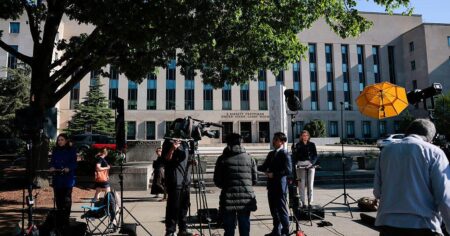
On the ground in South Minneapolis, CBS News Minnesota journalists documented the federal operation as it unfolded in real-time. At approximately 6 a.m. local time, about a dozen agents were observed conducting their investigation at the Mini Childcare Center. The agents worked methodically, with one photographing the premises while another carried a large portable file case into the building, presumably to collect and organize documents and evidence. The targeted facilities represented just a fraction of the ongoing investigation, with agents simultaneously executing warrants at roughly 20 locations across the city. The Mini Childcare Center holds particular significance in this story because it was specifically mentioned in a viral social media video that had brought national attention to allegations of fraud in Minnesota’s Somali community. The video, posted in December by YouTuber Nick Shirley, showed him visiting approximately a dozen Somali-owned daycares and health clinics, documenting what he suggested were signs of fraud. That video would soon become a flashpoint in a much larger and more contentious national debate.
How Social Media and Politics Amplified the Controversy
The transformation of Minnesota’s fraud investigation from a law enforcement matter into a national political controversy illustrates the power of social media and political amplification in today’s information environment. Nick Shirley’s December video might have remained a relatively obscure YouTube post, but it caught the attention of some of the most influential voices in American politics and media. Elon Musk shared the video with his massive social media following, lending it credibility and reach. Vice President J.D. Vance and then-Attorney General Pam Bondi also amplified the content, pushing the fraud allegations into the center of national conversation. President Trump and other Republican lawmakers seized on the story, but their focus increasingly centered on Minnesota’s large Somali community, given that most of the fraud defendants are of Somali descent. This targeting of a specific ethnic community drew sharp criticism from local officials who saw the rhetoric as inflammatory and discriminatory. Minnesota Governor Tim Walz, a Democrat, became one of the most vocal critics of this approach, denouncing what he called “vile, racist lies and slander towards our fellow Minnesotans.” The governor argued that while fraud investigations were legitimate and necessary, the politicization and ethnic targeting crossed important lines.
Political Fallout and the “Fraud Czar”
The political pressure surrounding the fraud allegations took a significant toll on Minnesota’s leadership. Governor Tim Walz found himself increasingly on the defensive as critics questioned how such extensive fraud could have occurred under his administration’s watch. The mounting pressure contributed to his stunning announcement on January 5 that he would end his reelection campaign. In the same announcement, Walz tried to demonstrate his commitment to addressing the problem by appointing what he called a “fraud czar” – a dedicated official tasked with protecting taxpayer-funded social programs from exploitation. The appointment was meant to signal that the state government was taking the issue seriously and implementing structural reforms to prevent future fraud. However, the political damage had been done, and Walz’s decision not to seek reelection represented a significant victory for his critics. The entire episode demonstrated how allegations of fraud, particularly when involving federal programs and significant sums of money, can become powerful political weapons that transcend the specific legal questions at hand.
Operation Metro Surge and Its Tragic Aftermath
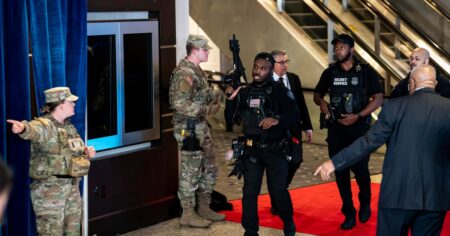
Just as the fraud investigation seemed poised to dominate Minnesota’s political landscape, the situation took a dramatic and tragic turn. In the weeks following Walz’s announcement, more than 2,000 federal agents from Customs and Border Protection (CBP) and Immigration and Customs Enforcement (ICE) descended on the Twin Cities area as part of what was called Operation Metro Surge. This massive immigration enforcement action fundamentally changed the dynamic and public perception of federal activities in Minnesota. The operation sparked fierce resistance, with protesters clashing with federal agents in scenes that shocked many observers. Most tragically, the operation resulted in the shooting deaths of two Americans: Renee Good and Alex Pretti. These deaths cast a shadow over the entire federal presence in the area and raised serious questions about the tactics and proportionality of the response. Perhaps most significantly, approximately 3,700 immigrants were arrested and detained during Operation Metro Surge, but most of those arrested were neither Somali nor connected to any alleged fraud. This disconnect between the stated focus on fraud in the Somali community and the actual targets of immigration enforcement fueled accusations that the operation had become unmoored from its original justification, instead becoming a broader immigration crackdown that used fraud allegations as political cover. The Tuesday morning raids at childcare centers thus took place in this complicated context – with law enforcement attempting to refocus attention on legitimate fraud investigations while the community remained traumatized and divided over the recent immigration enforcement activities that had resulted in deaths and mass detentions. The challenge moving forward will be conducting necessary fraud investigations while rebuilding trust in communities that feel targeted and under siege.