
A Family’s Warnings Go Unheeded: The Tragic Case of Two Murdered Graduate Students
A Brother’s Devastating Revelation
In the aftermath of a horrifying double murder case that has shaken the University of South Florida community, new details have emerged that paint a disturbing picture of missed warnings and family desperation. Ahmad Abugharbieh, the 22-year-old brother of murder suspect Hisham Abugharbieh, has come forward with a heartbreaking revelation: his family had repeatedly tried to warn authorities about his older brother’s increasingly erratic and dangerous behavior. Speaking to CBS News, Ahmad expressed deep remorse and frustration, explaining that his 26-year-old brother had a volatile temper and should never have been placed in a living situation with roommates. In a statement that now carries tragic weight, Ahmad said he didn’t even know his brother had a roommate, adding that Hisham “should’ve lived on his own or been homeless.” The suspect now faces two first-degree murder charges in connection with the deaths of Zamil Limon and Nahida Bristy, both 27-year-old doctoral students at the University of South Florida. Limon’s body was discovered on Friday near the Howard Frankland Bridge, which spans part of Tampa Bay, and additional human remains—believed to be Bristy’s, though not yet officially identified—were found in the same area on Sunday during the search efforts.
The Victims and Their Promising Futures Cut Short
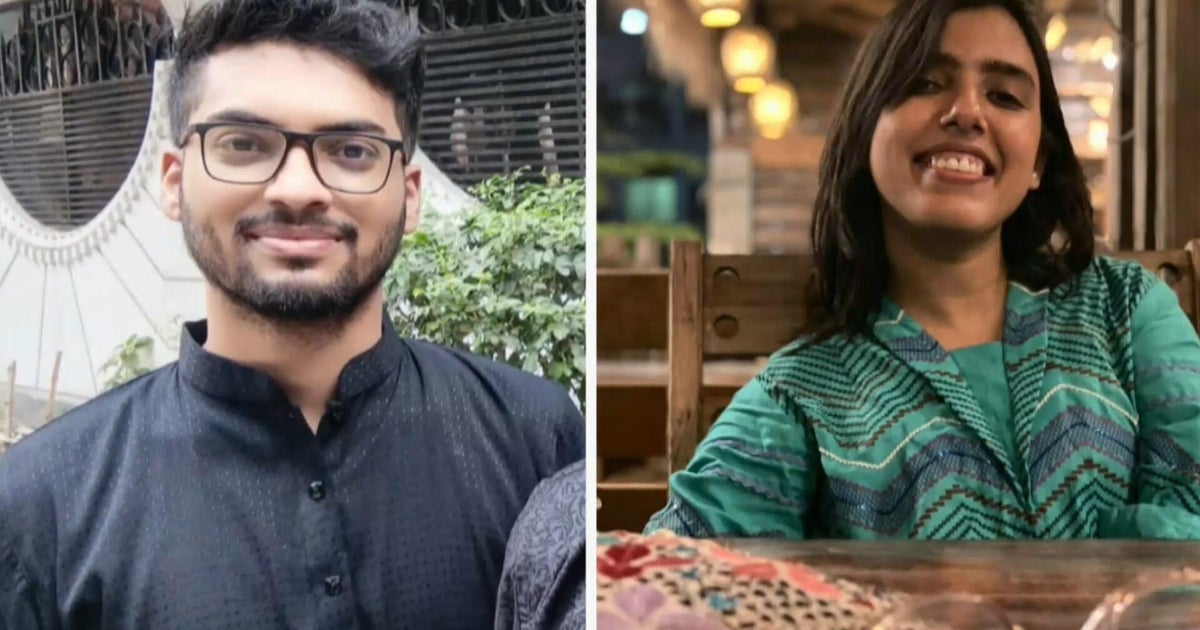
Zamil Limon and Nahida Bristy were more than just statistics in a crime report—they were young scholars with bright futures ahead of them, pursuing their doctoral degrees at the University of South Florida. Both were 27 years old and had their whole lives stretching before them when they were last seen in the Tampa area on April 16. The university police department, along with local authorities, launched an intensive search when the two students were reported missing. The discovery of their remains sent shockwaves through the academic community, where they were known as dedicated students working toward their advanced degrees. Friends, faculty, and fellow students have been left grappling with the senseless loss of two promising young people who had committed themselves to higher education and contributing to their fields of study. The tragedy has raised urgent questions about safety, roommate screening processes, and what warning signs might have been missed. As their families mourn an incomprehensible loss, the academic community has rallied around their memory, even as investigators work to piece together the final hours of their lives and understand what led to this devastating outcome.
A Pattern of Disturbing Behavior and Family Estrangement
The picture that emerges from family accounts and court records is one of a young man whose behavior had become increasingly alarming over time. Hisham Abugharbieh had been estranged from his family since 2023, a separation that came after a series of violent and bizarre incidents. According to Ahmad, his older brother would become angry without warning and exhibited behavior that frightened family members. The breaking point came when Hisham suddenly appeared at the family home on Friday morning, the same day authorities discovered Limon’s body. Ahmad recalled that his brother “was being very weird,” prompting him to call police to remove Hisham from the property. When officers arrived, they found Hisham in the living room playing video games while wearing only a towel—an odd scene that would soon turn more disturbing. According to the arrest report, when Hisham’s younger sister confronted him about his presence and state of undress, he approached her in a threatening manner and “was attempting to kiss the victim,” from whom she had to physically push herself away. The arrest itself was captured in dramatic fashion, with images showing Hisham emerging from the home with his hands raised, still wearing only a towel, as Hillsborough County Sheriff’s deputies took him into custody. He was immediately held without bond and is scheduled to appear in court on Tuesday.
Previous Attempts to Get Help and Legal Intervention
Perhaps the most tragic aspect of this case is the family’s documented attempts to intervene before violence escalated to murder. Court records reveal that the Abugharbieh family had filed two protective orders against Hisham—one in 2023 that was granted, and another in 2025 that was denied. These protective orders, which are civil matters handled by the Clerk of Courts in Hillsborough County, represent a family’s desperate attempts to create legal barriers between themselves and a dangerous relative. The 2025 request was denied because associated battery criminal charges were not pursued—a decision that Ahmad now deeply regrets. He explained to CBS News that he declined to move forward with potential battery charges against his brother in 2023 because of financial constraints, saying, “I dropped them because I thought it was going to cost me a lot of money. I regretted that choice immediately after.” The 2023 protective order, obtained by CBS News, contains chilling details of Hisham’s violence. Ahmad wrote that his brother “repeatedly punched me in the head, he ripped my shirt and made me bleed and gave me a few bruises on my face. I went outside to call the cops. He tried to escape by using the family minivan but came back after realizing it wouldn’t work.” In another incident described in the filing, Hisham allegedly “tore up the entire living room after a short argument with my mom.” Perhaps most disturbing, Ahmad alleged that his brother “would start screaming in the middle of the night about how he is God and we should all bow down to him”—statements that suggest possible mental health issues that apparently went unaddressed.
The Weight of Guilt and Unanswered Questions
In the days following the arrests and discoveries of the victims’ remains, Ahmad Abugharbieh has been left carrying an enormous burden of grief, guilt, and what-ifs. Speaking to the families of Zamil Limon and Nahida Bristy through CBS News, he offered a heartfelt and emotional apology: “I just can’t stop thinking about all of them. I’m just, I just feel so awful. I’m really sorry about everything. I feel so, my entire family feels so much shame and guilt.” His statement underscores a painful reality—that families of perpetrators also suffer, bearing the weight of their relative’s actions while struggling with their own sense of responsibility and helplessness. Ahmad’s repeated assertion that “we tried to warn police in the past” raises troubling questions about how such warnings are handled by authorities and whether more could have been done to prevent this tragedy. The case highlights gaps in the system where civil protective orders, criminal charges, and mental health interventions intersect. When financial concerns prevent victims from pursuing criminal charges, when protective orders are denied because criminal cases don’t move forward, and when families feel their warnings go unheeded, dangerous individuals can slip through the cracks with devastating consequences.
Legal Proceedings and Community Response
As the legal process moves forward, various officials and agencies have weighed in on the case, though many are limited in what they can say publicly. A spokesperson for the Hillsborough County Public Defender’s Office, which is representing Hisham Abugharbieh, issued a carefully worded statement emphasizing their ethical obligations: “While we understand the attention surrounding the case, our ethical obligations and our client’s right to a fair trial require that we refrain from public comment. We remain focused on representing our client through the legal process.” The Hillsborough County State Attorney’s Office, while declining to comment specifically on Ahmad Abugharbieh’s revelations about prior warnings, made clear their position on the danger posed by the suspect. In a Facebook post, they stated that Hisham Abugharbieh “remains a danger to our community and should be held without bond until trial.” State Attorney Suzy Lopez added, “Our hearts are with both students’ families during this incredibly difficult time, and we are keeping them in our thoughts as they await answers.” The Hillsborough County Sheriff’s Office did not respond to requests for comment from CBS News. As the community awaits official identification of the second set of remains and more details about what led to these deaths, the case serves as a sobering reminder of the importance of taking warning signs seriously, ensuring adequate mental health resources are available and accessible, and creating systems that protect potential victims before tragedy strikes. For two families, these lessons come too late, as they prepare to lay to rest young people whose futures held such promise.