


Jerome Powell’s Message to Young Americans: Stay Hopeful Despite Job Market Challenges
A Candid Conversation with Future Workers
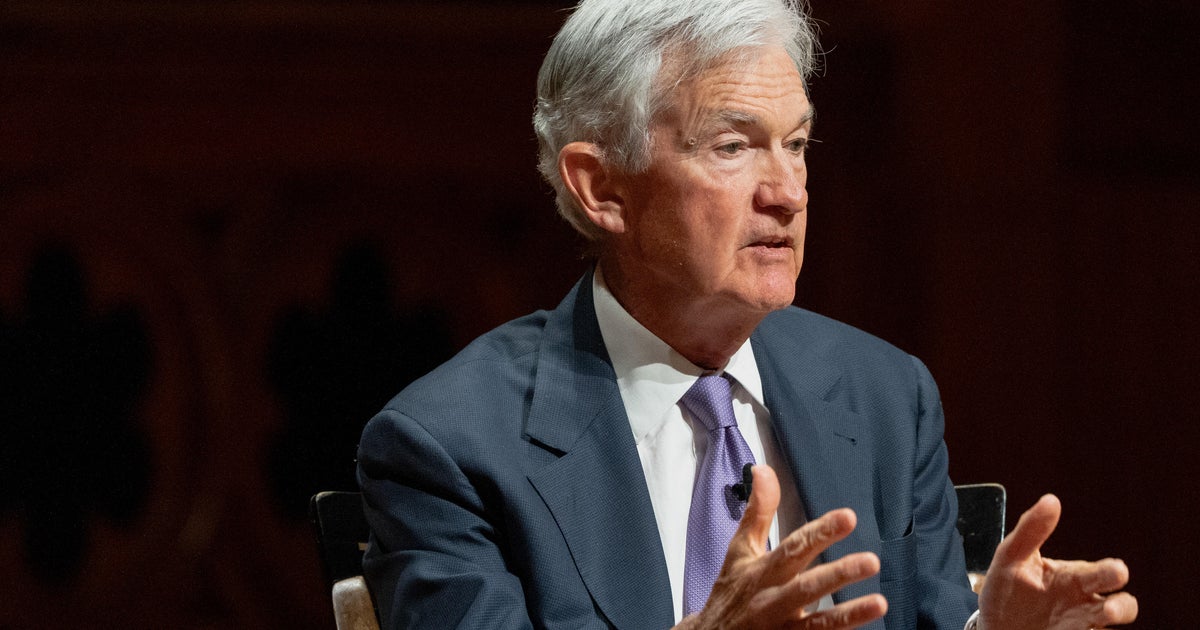
Federal Reserve Chair Jerome Powell recently sat down with undergraduate economics students at Harvard University for a candid, hour-long discussion that touched on everything from the current job market struggles to the looming presence of artificial intelligence in the workplace. Speaking on a Monday in late March, Powell delivered what might be considered a pep talk for young Americans who are facing one of the more challenging employment landscapes in recent memory. His core message? Don’t lose hope. Despite the obstacles that lie ahead—sluggish job creation, persistent inflation, and the uncertainty that AI brings to the table—Powell insisted that the American economy will ultimately create tremendous opportunities for those willing to be patient and adaptable. This message comes at a particularly poignant time, as Powell himself is preparing to step down from his position in May, making way for Kevin Warsh, a former Fed official nominated by President Trump. As he nears the end of his tenure, Powell seemed determined to leave young people with a sense of optimism about their economic futures, even as the data paints a somewhat grim picture of the present moment.
The Reality of Today’s Tough Job Market
The numbers tell a sobering story for young job seekers in America today. For those aged 20 to 24, the unemployment rate currently sits at 7.4%—a figure that actually represents an improvement from last fall when it peaked above 9%, but still significantly higher than the overall unemployment rate of 4.4% recorded in February. To make matters worse, hiring across the board has been disappointingly weak, with employers adding just 181,000 jobs throughout the entire previous year. These statistics paint a picture of an economy that’s treading water rather than surging forward, leaving young people in the difficult position of competing for limited opportunities in a stalled labor market. Powell didn’t shy away from acknowledging these harsh realities during his Harvard appearance. He openly admitted that “there’s no denying it’s a challenging time to enter the labor market,” showing an awareness of the frustration and anxiety that many young Americans are experiencing as they try to launch their careers. However, he was quick to pivot from acknowledgment to encouragement, urging students to take the long view. “It may take some patience and all that, but in the longer term, this economy is going to give you great opportunities,” he assured them, essentially asking them to see beyond the current difficulties to the broader trajectory of American economic dynamism.
America’s Economic Strengths Amid Global Comparison
Powell’s optimism isn’t based on blind faith but rather on his assessment of America’s fundamental economic characteristics when compared to other major economies around the world. During his talk, he emphasized that “the U.S. economy, compared to other major big, market-based economies around the world, is just incredibly dynamic and productive.” This comparative advantage, in Powell’s view, is what will ultimately generate opportunities for today’s young people, even if the immediate future requires some patience and perseverance. His message suggested that while the current moment might be difficult, the structural foundations of the American economy remain sound and continue to offer advantages that other nations lack. This long-term perspective is particularly important for young people who might be tempted to despair when faced with repeated rejections or limited options right out of college. Powell’s words serve as a reminder that economic conditions are cyclical, and that the skills and education young Americans are acquiring now will serve them well when conditions improve. It’s a message that acknowledges present pain while insisting that it’s temporary—that the fundamental engine of American innovation and productivity hasn’t stalled but is merely idling before its next surge forward.
Wrestling with Inflation and Energy Shocks
Beyond the job market concerns facing young Americans, Powell also addressed the ongoing challenge of inflation that continues to vex the Federal Reserve. The central bank remains focused on bringing inflation down to its target goal of 2% annually, a task made more complicated by the war in Iran and its impact on global oil prices. Powell explained that the Fed’s approach to energy-related price shocks is typically to “look through” them, meaning policymakers try not to overreact to temporary supply disruptions that will resolve themselves relatively quickly. However, he stressed the importance of vigilantly monitoring inflation expectations among the public, businesses, and households. “You have to carefully monitor inflation expectations because you could have a series of big supply shocks and that can lead the public generally, businesses, price setters, households to start expecting higher inflation over time,” Powell explained. This concern is particularly relevant given the dramatic spike in oil prices related to the Iran conflict. Brent crude, the international benchmark, briefly touched $115 per barrel before pulling back to around $108, while West Texas Intermediate, the U.S. benchmark, rose to about $102. These prices represent a significant jump from the roughly $70 per barrel that both were trading at before the conflict began. Economists worry that these elevated energy costs could ripple through the economy, driving up prices for transportation, fertilizer, and countless other goods and services that depend on fossil fuels, potentially reigniting the broader inflation that the Fed has been working so hard to tame.
Embracing Artificial Intelligence Rather Than Fearing It
Perhaps one of the most forward-looking aspects of Powell’s Harvard appearance was his discussion of artificial intelligence and its implications for the workforce. This topic carries particular weight for young people preparing to enter careers that might be fundamentally transformed—or even eliminated—by advancing technology. Some prominent voices in the tech industry have painted a fairly dire picture of AI’s employment impact; Dario Amodei, CEO of AI company Anthropic, has suggested that the technology could eliminate as many as half of all entry-level white-collar jobs. Powell acknowledged that companies are indeed seeking ways to automate positions as part of their cost-cutting strategies, a reality that can feel threatening to workers at all levels but especially to those just starting out. However, the Fed chair took a notably optimistic stance on the technology’s long-term effects. He drew parallels to previous technological revolutions, citing the example of the loom and how it transformed manufacturing. Rather than permanently destroying jobs, these innovations ultimately raised productivity and living standards, provided that society continued producing people with the skills and aptitudes to leverage the new technology. Powell argued that AI, particularly large language models, would make workers more efficient rather than simply replacing them wholesale. His advice to the Harvard students was clear and practical: invest time in mastering these new technologies, as doing so will position you favorably in the evolving job market. “I think you’re in a situation where you need to invest the time to really master the use of these new technologies, and that should stand you in good stead,” he counseled, suggesting that AI literacy will become as fundamental to career success as computer literacy became in previous generations.
Looking Ahead with Realistic Optimism
As Jerome Powell prepares to pass the Federal Reserve torch to his successor Kevin Warsh in May, his message to America’s young people serves as something of a parting gift—a dose of realistic optimism in challenging times. He’s not promising that the road ahead will be easy or that opportunities will come quickly or without effort. What he is offering is a broader perspective that places current difficulties within the context of America’s long-term economic trajectory and its historical capacity for innovation and growth. For young Americans facing a job market that feels stacked against them, with unemployment rates nearly double the national average and hiring that’s barely keeping pace with population growth, Powell’s words provide both validation and hope. He’s acknowledging that their struggles are real while insisting that those struggles don’t define their long-term prospects. His emphasis on patience, adaptability, and embracing new technologies like AI offers a roadmap for navigating uncertainty. Rather than viewing technological change as a threat, Powell encourages young people to see it as an opportunity to differentiate themselves by becoming early adopters and skilled practitioners. As the Federal Reserve continues its work to stabilize inflation and support sustainable economic growth, the challenges facing young Americans serve as a reminder that monetary policy impacts real lives in profound ways. The decisions made in Washington’s marble corridors about interest rates and inflation targets ultimately determine whether a recent graduate finds meaningful employment or faces months of fruitless job searching. Powell’s Harvard appearance humanized these abstract policy discussions, putting a face to the institution and acknowledging its responsibility to the next generation of American workers.