





A New Dawn for Crypto: Understanding America’s Shift in Digital Asset Regulation
The End of an Era in Cryptocurrency Oversight
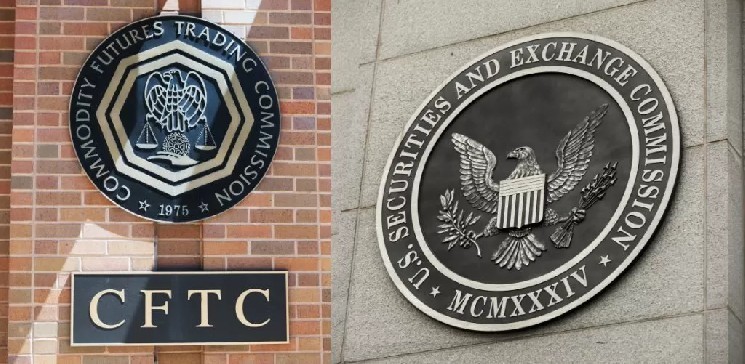
The cryptocurrency landscape in the United States is experiencing what many industry insiders are calling a watershed moment. Alex Thorn, who serves as Head of Research at Galaxy Research, recently highlighted what appears to be a fundamental transformation in how American regulators are approaching digital assets. For years, the crypto industry has operated under what many considered an ambiguous and often hostile regulatory environment, particularly during Gary Gensler’s tenure as chairman of the Securities and Exchange Commission. That era, characterized by enforcement actions and regulatory uncertainty, appears to be drawing to a close. The joint guidance recently published by both the SEC and the Commodity Futures Trading Commission (CFTC) represents not just a policy update, but a philosophical shift in how the government views and intends to regulate this rapidly evolving sector. This development comes at a crucial time when institutional investors have been hesitant to fully embrace cryptocurrency markets due to regulatory concerns, and when countless blockchain projects have been operating in a legal gray area, unsure of whether their activities might suddenly attract unwanted regulatory attention.
Breaking Down the Five Categories: A New Classification System
The heart of this new regulatory framework lies in its categorization system, which divides digital assets into five distinct groups, each with its own regulatory implications. First, we have digital commodities, which function similarly to traditional commodities like gold or oil but exist in digital form. Then there are digital collectibles, encompassing items like NFTs (non-fungible tokens) that represent unique digital art, memorabilia, or other one-of-a-kind items. The third category, digital utility assets, includes tokens that provide holders with access to specific services or functions within a blockchain ecosystem, much like how a token might grant you entry to an amusement park or access to a software service. Stablecoins form the fourth category—these are cryptocurrencies designed to maintain a stable value by being pegged to traditional currencies or other assets. Finally, there are digital securities, which function like traditional investment products and represent ownership stakes or investment interests in projects or companies. The genius of this classification system lies in its clarity: it explicitly states that only assets falling into that final category—digital securities—are subject to federal securities laws. This means that tokens classified as commodities, collectibles, utilities, or stablecoins operate under different regulatory frameworks, relieving them from the stringent requirements that have made many crypto projects reluctant to operate in the United States. This distinction addresses one of the industry’s biggest complaints—that regulators were painting all digital assets with the same broad brush, treating everything from Bitcoin to the most obscure altcoin as if they were all the same thing.
Moving Beyond the “Investment Contract” Framework
To understand why this guidance is so significant, we need to look at what it’s replacing. Under Gary Gensler’s leadership, the SEC primarily relied on an approach rooted in the concept of “investment contracts,” a legal framework that dates back to a 1946 Supreme Court case involving orange groves. This test, known as the Howey Test, determined whether something qualified as a security based on whether it involved an investment of money in a common enterprise with an expectation of profit derived from the efforts of others. The problem with applying this decades-old standard to modern blockchain technology was that it created enormous uncertainty. Companies launching tokens couldn’t be sure whether their projects would be deemed securities, and this uncertainty stifled innovation and drove many promising ventures overseas to more crypto-friendly jurisdictions. The new guidance, now published in the Federal Register as an official interpretive rule, explicitly supersedes this previous approach. By providing specific categories and clear criteria, it removes much of the guesswork that has plagued the industry. Rather than having to wonder whether a particular token might somehow be construed as an investment contract, projects can now assess which category their asset falls into and understand the corresponding regulatory requirements. This shift represents a move from principle-based regulation, which requires interpretation and can be applied differently in different circumstances, toward rules-based regulation, which provides clearer boundaries and more predictable outcomes.
The Evolutionary Nature of Token Status
One of the most innovative aspects of the new guidance is its recognition that tokens can change their regulatory status over time. This dynamic approach acknowledges the reality of how blockchain projects develop and mature. According to the guidelines, a token that might initially be considered a security could later transition out of that classification under certain conditions. Specifically, if the team or organization that launched a token completes its essential obligations to the project—perhaps finishing the development of a platform or implementing a fully decentralized governance system—the investment contract can be considered terminated. At that point, the token can trade on secondary markets without being classified as a security. Similarly, if a project is abandoned entirely or if the founding team goes silent for an extended period, the security designation also ends. This makes intuitive sense: if there’s no longer a central team whose efforts determine the success or failure of the project, then there’s no longer an “expectation of profit from the efforts of others,” which is a key component of what makes something a security. This framework provides a path forward for projects that aim to eventually become fully decentralized, which has long been a goal in the cryptocurrency space. It means that a project can legitimately start as a security, with a founding team raising funds and building a platform, and then evolve into something else as it matures and becomes self-sustaining. This recognition of the lifecycle of blockchain projects demonstrates a more sophisticated understanding of the technology than regulators have previously shown.
Clarifying Common Activities: Airdrops, Mining, and Staking
Beyond the classification system, the new guidance also provides crucial clarity on several activities that have been sources of confusion and concern. Airdrops—the practice of distributing free tokens to wallet addresses, often as a marketing strategy or reward for early supporters—will generally not be considered securities transactions. This is significant because many projects had been uncertain about whether giving away tokens might somehow trigger securities regulations. Mining, the process by which new cryptocurrency units are created through computational work, also gets explicit protection from being classified as securities transactions. The same goes for staking, where users lock up their cryptocurrency to help secure a blockchain network and earn rewards in return. These clarifications remove enormous uncertainty from some of the most fundamental activities in the crypto ecosystem. Additionally, the guidance addresses the question of whether changing an asset’s form affects its legal status. For instance, if someone takes a Bitcoin and “wraps” it to use on a different blockchain, or converts it into a token in a different format, that transformation doesn’t change the asset’s underlying classification. A commodity remains a commodity, regardless of how it’s packaged. This is particularly important for the rapidly growing decentralized finance (DeFi) sector, where assets are constantly being moved between platforms, swapped, provided as liquidity, and otherwise utilized in complex ways. Without this clarity, each transformation could potentially create legal uncertainty, making it risky to participate in many DeFi activities. By establishing that the substance of an asset matters more than its form, the guidance enables these innovative financial applications to continue developing without constant fear of regulatory violation.
Looking Forward: Promise and Limitations of the New Framework
Alex Thorn’s assessment of this guidance is cautiously optimistic, and his perspective reflects the broader sentiment within the cryptocurrency industry. On one hand, this represents exactly the kind of clear, thoughtful regulation that the sector has been requesting for years. The guidance could finally enable institutional investors—pension funds, endowments, insurance companies, and others who manage enormous pools of capital—to participate more confidently in crypto markets. These institutions have largely stayed on the sidelines not because they lack interest, but because regulatory uncertainty made it too risky to invest clients’ money in a space where the rules seemed to change unpredictably. With clearer boundaries, compliance officers and legal teams can assess risks more accurately and make informed decisions about participation. This could unleash significant capital flows into the cryptocurrency space and legitimize it in the eyes of traditional finance. However, Thorn also raises an important caveat that tempers enthusiasm: interpretive guidance doesn’t have the force of law in the way that legislation would. An interpretive rule can be changed relatively easily by a future administration with different priorities or perspectives. This means that while the current guidance is a positive development, it doesn’t provide the permanent certainty that would come from actual legislation passed by Congress. This is why many in the industry continue to advocate for bills like the CLARITY Act, which would codify these distinctions and protections in actual federal law. Such legislation would be much more difficult to overturn or modify, providing the long-term regulatory stability that would truly allow the industry to flourish. The cryptocurrency sector is at an inflection point—this guidance represents enormous progress, but the work of building a permanent, sensible regulatory framework continues. For now, though, the industry can breathe a sigh of relief that the approach characterized by enforcement through ambiguity appears to be giving way to something more constructive, more clear, and more conducive to innovation while still protecting investors and maintaining market integrity.









