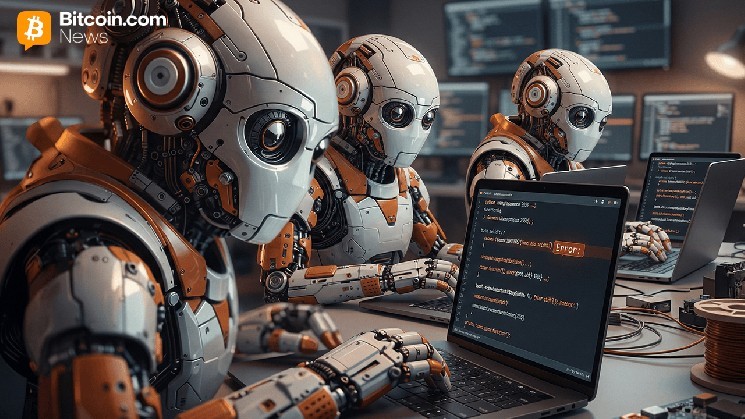

The Dawn of AI-Orchestrated Software Development: What Anthropic’s 2026 Report Reveals
Engineers Become Conductors as AI Agents Take Center Stage
If you’ve been paying attention to the tech landscape in early 2026, you’ve probably noticed something remarkable happening: AI agents are everywhere, working autonomously across the internet and fundamentally changing how we think about software development. What started with the launch of Openclaw has sparked a revolution that’s moved autonomous AI from science fiction to everyday reality. The digital landscape is being reshaped before our eyes, and according to Anthropic’s latest report on agentic coding trends, we’re witnessing just the beginning of a massive transformation in how software gets built.
This shift isn’t confined to experimental projects run by tech enthusiasts tinkering in their basements. Major companies are deploying agent-based systems at scale, making these capabilities accessible to regular users and businesses. Meta has introduced Manus, an agent framework that works with Telegram. Perplexity offers Computer, which provides agent protocols and tool-building capabilities similar to professional financial terminals. Even Moonshot AI from China has launched Kimi Claw, making it easy to deploy Openclaw instances through cloud infrastructure. What we’re seeing is a democratization of AI agent technology, with everyday users rushing to get involved and explore what these tools can do for them. The future that seemed distant just months ago has arrived, and it’s accessible to anyone with an internet connection.
Anthropic’s comprehensive report lays out eight key developments expected to fundamentally reshape software engineering, and the central message couldn’t be clearer: the traditional image of developers hunched over keyboards, manually writing every line of code, is becoming outdated. The real power in software development now comes from directing teams of AI agents that handle the heavy lifting of implementation while humans focus on strategy, oversight, and judgment. As Anthropic puts it in their foreword, we’re experiencing a shift “from an activity centered on writing code to an activity grounded in orchestrating agents that write code — while maintaining the human judgment, oversight, and collaboration that ensures quality outcomes.” This doesn’t mean human developers are becoming obsolete; instead, they’re moving up the value chain, focusing on what humans do best while delegating the routine work to AI.
The Complete Transformation of How Software Gets Built
The first major trend Anthropic identifies is a dramatic reconfiguration of the entire software development lifecycle. The tactical work of writing code, hunting down bugs, and maintaining existing systems is increasingly shifting to AI, while human engineers concentrate on higher-level responsibilities like architecture, system design, and making strategic decisions about what should actually be built. For developers who’ve spent countless late nights wrestling with syntax errors and debugging obscure issues, this represents a welcome change—less time fighting with code details, more time thinking about the big picture and solving meaningful problems.
However, Anthropic is careful to emphasize that this isn’t about making engineers redundant. Current data shows that developers are using AI in approximately 60% of their work, but they can only fully delegate between 0% and 20% of tasks. The relationship between human and AI is deeply collaborative rather than competitive. Engineers aren’t being replaced; they’re being promoted to the role of conductor, orchestrating AI capabilities to achieve results that neither human nor machine could accomplish alone. This partnership model represents a more nuanced and realistic vision of the future than the simple “AI replaces humans” narrative that often dominates headlines.
The second trend moves us from individual AI assistants to coordinated teams of agents. While 2025 was characterized by single AI helpers, 2026 is shaping up to be the year of multi-agent systems working in concert. Instead of one AI model grinding through tasks one at a time, an orchestrator now delegates specialized subtasks to multiple agents working simultaneously, then integrates their outputs into a cohesive whole. Think of it less like having a single chatbot helper and more like managing an entire AI team, each member bringing specialized skills to the table. The results speak for themselves: Fountain, for example, achieved 50% faster screening, 40% quicker onboarding, and doubled candidate conversions using Claude for hierarchical multi-agent orchestration. The key insight here is that coordination and intelligent task distribution, not just raw AI capability, is what multiplies effectiveness.
Agents That Work Around the Clock and Know Their Limits
The third trend Anthropic highlights is perhaps the most dramatic: task horizons are expanding from minutes to days or even weeks. AI agents are moving beyond quick fixes and beginning to build complete systems autonomously, pausing only for strategic checkpoints where human judgment is needed. In one striking example, Claude Code implemented a complex method within a massive 12.5 million-line open-source library in just seven hours, achieving 99.9% numerical accuracy. This kind of tireless stamina fundamentally changes the economics of software development. Project backlogs that previously seemed insurmountable suddenly become manageable. Tasks that would have taken human developers weeks of concentrated effort can now be completed overnight.
For entrepreneurs and startups, the implications are enormous. The timeline from initial concept to deployed, working application could compress from months to days. Founders who once needed to spend months learning to code or saving up to hire developers might soon be able to bring their ideas to life almost immediately. This democratization of software creation could unleash a wave of innovation from unexpected sources—subject matter experts who understand problems deeply but lack technical coding skills. Venture capitalists might want to prepare for a significant increase in fundable projects as the technical barriers to building software continue to fall.
However, autonomy doesn’t mean recklessness, which brings us to the fourth trend: agents are learning when to ask for help rather than plowing ahead blindly into every situation. This represents a crucial evolution in how AI systems operate. The most effective agents won’t be those that try to handle everything independently but those that recognize the boundaries of their capabilities and escalate appropriately. Human oversight is shifting from reviewing every single output to focusing on what truly matters—the strategic decisions, edge cases, and judgment calls where human expertise adds the most value. As one engineer quoted in the report noted, “I’m primarily using AI in cases where I know what the answer should be or should look like.” This selective delegation paired with strategic escalation may become the standard operating model for high-stakes software development, combining the speed and stamina of AI with the judgment and creativity of human experts.
Breaking Down Barriers and Facing New Challenges
The fifth trend predicts that coding capabilities will spread far beyond traditional engineering teams. Sales professionals, legal staff, and operations teams will increasingly build their own automations and tools without needing to file tickets and wait for overworked engineering departments to get around to their requests. The traditional divide between “people who code” and “people who don’t” is becoming porous and increasingly irrelevant. Domain experts armed with AI agents can prototype solutions directly, turning their deep understanding of business problems into working software without needing years of programming education.
This democratization shifts the bottleneck in software development from technical ability to clarity of thought. The critical skill becomes knowing what you want to build and why, rather than knowing the syntax of programming languages. When a marketing manager can build their own campaign automation tool or a lawyer can create a contract analysis system, organizations become dramatically more agile. People closest to problems can solve them directly rather than explaining requirements through layers of translation to technical teams. Of course, this raises questions about governance, quality control, and technical debt, but the productivity gains may be too significant to ignore.
The sixth trend addresses the elephant in the room: security. Anthropic acknowledges that agentic coding “improves security defenses — but also offensive uses.” This is perhaps the most sobering aspect of the report. The same AI capabilities that help security teams conduct comprehensive code reviews and identify vulnerabilities can help malicious actors scale sophisticated attacks. The playing field is being leveled in both directions, and the advantage will go to organizations that are prepared and proactive. Defensive systems will need to operate at machine speed to counter equally automated threats. Companies that embed security architecture early and treat it as a core priority rather than an afterthought will be better positioned to thrive in this new landscape.
Preparing for the Strategic Inflection Point of 2026
Across all eight trends identified in the report, Anthropic frames 2026 as a genuine strategic inflection point—one of those rare moments when the fundamental rules of an industry change. Organizations that recognize agentic coding as a core strategic priority and invest in mastering multi-agent coordination, scaling effective oversight, and building robust security from the ground up will find themselves operating on compressed timelines with dramatically expanded output. They’ll be able to do more, faster, and with smaller teams than ever before. The competitive advantages could be substantial and lasting.
Conversely, organizations that treat agentic coding as just another minor productivity enhancement—a nice-to-have tool that developers can optionally use—may find themselves caught flat-footed as competitors race ahead. When rivals can ship features in days that previously took months, when they can experiment rapidly and iterate based on real feedback, and when they can maintain quality while moving at unprecedented speed, the performance gap can become insurmountable quickly. The companies that thrive will be those that reimagine their entire development process around AI orchestration rather than simply bolting AI tools onto existing workflows.
In Anthropic’s vision, the future of software development isn’t about humans competing with machines or being replaced by them. Instead, it’s about humans directing machines with sharper focus, broader reach, and far fewer of the repetitive, soul-crushing tasks that have historically consumed so much of developers’ time and energy. Imagine a world where developers spend their days designing elegant systems, making strategic architectural decisions, and solving genuinely interesting problems—while AI agents handle the implementation details, write the boilerplate code, hunt down obscure bugs, and maintain documentation. This isn’t a dystopian replacement of human creativity; it’s a liberation of human potential, allowing talented people to focus on what they do best while delegating the rest. Whether this optimistic vision fully materializes remains to be seen, but the trends are unmistakable: AI agents are here, they’re capable, and they’re transforming software development in ways that seemed impossible just a few years ago. The question isn’t whether this change is coming—it’s already here. The question is how quickly organizations and individuals will adapt to this new reality.