



Historic Artemis II Mission Captures Unprecedented Views of the Moon’s Far Side
A New Perspective on Our Celestial Neighbor
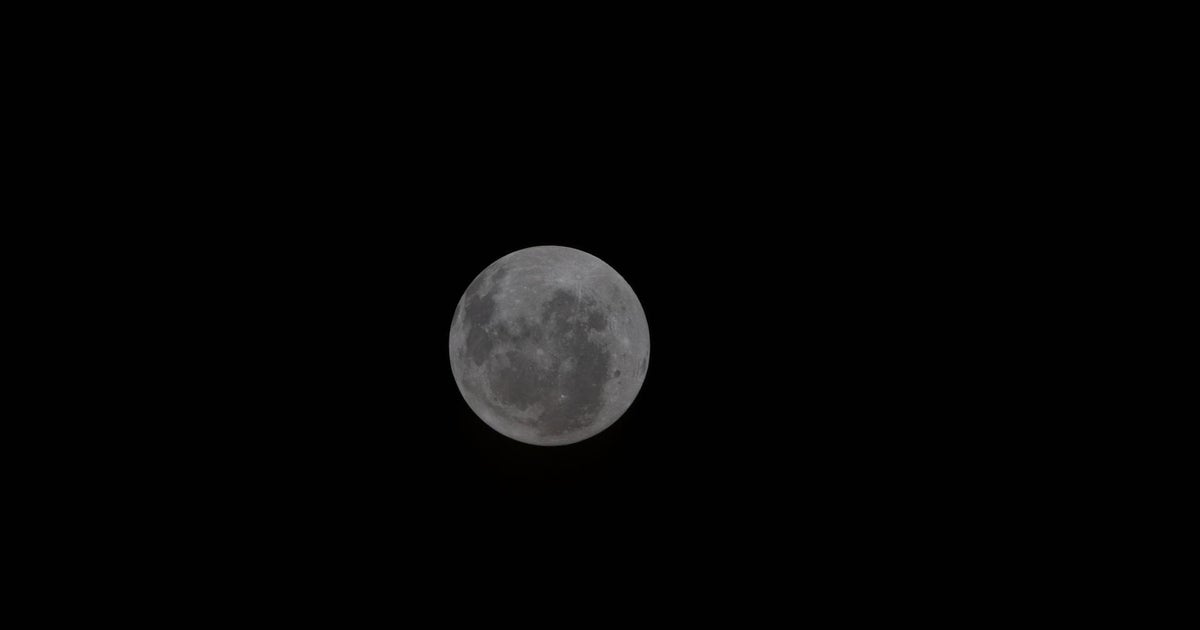
NASA’s Artemis II mission has achieved a remarkable milestone, capturing stunning new imagery of the moon’s mysterious far side during the fourth day of humanity’s return to lunar exploration. The photograph, released by NASA on Sunday, offers a unique perspective that turns our traditional view of the moon on its head—literally. In this extraordinary image, the lunar South Pole appears at the top of the frame, while portions of the far side that remain perpetually hidden from Earth-based observers come into clear view. This isn’t just another pretty picture from space; it represents a genuine first in human spaceflight history. The four brave astronauts aboard the Orion spacecraft—Commander Reid Wiseman, Pilot Victor Glover, and Mission Specialists Christina Koch and Jeremy Hansen—are witnessing vistas that no human eyes have ever seen before, marking a profound moment in our ongoing relationship with Earth’s only natural satellite.
The Orientale Basin: An Ancient Crater Revealed in Full Glory
Among the most significant features captured in this historic photograph is the Orientale basin, a colossal impact crater that has frustrated Earth-based astronomers for generations due to its position along the moon’s edge as seen from our planet. This massive geological feature, created billions of years ago when an asteroid or comet slammed into the lunar surface, has never been viewed in its entirety by human eyes until now. The Artemis II crew’s unique vantage point allows them to see the basin in complete detail, offering scientists an unprecedented opportunity to study one of the moon’s most impressive and scientifically valuable features. The crater sits prominently along the right edge of the moon in the newly released image, its circular structure testament to the violent cosmic collisions that shaped our solar system’s early history. NASA has emphasized that the Orientale basin will remain a primary focus of observation throughout the mission, with the crew instructed to photograph and study it from multiple angles as they approach the moon and execute their lunar flyby maneuvers.
Scientific Significance Beyond Beautiful Photography
The importance of observing the Orientale basin extends far beyond the inherent wonder of seeing something humans have never witnessed before. According to NASA scientists, this ancient impact structure serves as a crucial reference point for understanding similar features across our entire solar system. The basin can be “used as a baseline to compare other impact craters on rocky worlds from Mercury to Pluto,” the agency explained, highlighting how discoveries made during this mission could reshape our understanding of planetary geology throughout the cosmos. The crew will systematically document the basin from various perspectives, creating a comprehensive visual and scientific record that researchers will study for years to come. This data collection represents one of the mission’s primary objectives—gathering as much information as possible about lunar features while simultaneously testing the capabilities of the Orion spacecraft and its systems for future missions that will actually land astronauts on the lunar surface.
A Test Flight with Historic Implications
The Artemis II mission, which launched from Cape Canaveral, Florida, last week, represents humanity’s first piloted journey to the moon in more than half a century, since the conclusion of the Apollo program. However, this isn’t a landing mission. Instead, Artemis II serves as a crucial test flight designed to validate systems, procedures, and technologies that will enable future missions to safely return astronauts to the lunar surface. During a Sunday appearance on CBS’s “Face the Nation with Margaret Brennan,” NASA Administrator Jared Isaacman emphasized the mission’s testing priorities, stating that “learning as much as we can about Orion is critically important, because Artemis III is a year away.” The administrator stressed that while the crew conducts various science experiments and lunar observations, the primary goal remains gathering comprehensive data about how the Orion spacecraft performs in the deep space environment. This information will prove invaluable for planning Artemis III, the mission currently scheduled to put boots on the lunar surface for the first time since 1972, bringing humanity full circle in our ongoing exploration of our nearest celestial neighbor.
Daily Life Aboard Orion: Science Meets Human Spirit
As of Sunday, the Artemis II crew was approximately 64,000 miles from the moon, steadily approaching their closest encounter with the lunar surface. Life aboard the Orion spacecraft combines rigorous scientific work with the human touches that make extended spaceflight psychologically sustainable. NASA’s mission status updates reveal these personal moments alongside technical details—on the fifth day of their flight, the crew woke to the energizing sounds of “Working Class Heroes (Work)” by CeeLo Green, a wakeup call that inspired at least one flight controller in mission control to dance briefly in his chair. These musical morning routines, a tradition stretching back to the earliest days of human spaceflight, help maintain crew morale during the stresses of living and working in the hostile environment of deep space. Beyond these lighter moments, the astronauts face a packed schedule of activities, including testing their spacesuits, conducting flight tests, and preparing for a significant milestone—entering the lunar sphere of influence, the point where the moon’s gravitational pull becomes stronger than Earth’s, effectively transferring the spacecraft from one celestial body’s dominance to another’s.
Looking Forward: The Continuing Journey
The Artemis II mission continues to unfold as planned, with NASA providing regular updates to a public captivated by humanity’s return to lunar exploration. The space agency hosted a televised briefing Sunday evening from the Johnson Space Center, where mission controllers monitor every aspect of the crew’s journey and spacecraft performance. As the astronauts continue their circumlunar voyage, they’ll conduct additional observations, run more tests, and gather the crucial data that will inform not just Artemis III but potentially decades of future space exploration efforts. The images they’re capturing, like the historic photograph of the Orientale basin and the far side of the moon, remind us that exploration still has the power to show us things we’ve never seen before, even regarding a celestial body humans first visited over fifty years ago. These four astronauts aren’t just testing hardware and collecting data—they’re expanding the boundaries of human experience, seeing sights that billions of humans throughout history could only imagine. Their journey represents both a return to past glories and a bold step toward a future where human presence in space becomes not an occasional achievement but a sustained reality, with the moon serving as our gateway to Mars and beyond.