


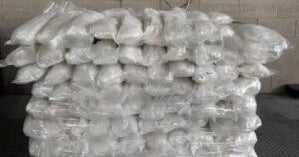

Major Drug Bust at Texas Border Yields $8.1 Million in Hidden Methamphetamine
Smugglers Attempt to Disguise Massive Drug Shipment as Innocent Tiles
In yet another significant victory in the ongoing battle against drug trafficking, U.S. Customs and Border Protection officials announced this week that they’ve intercepted a massive shipment of methamphetamine cleverly disguised to look like ordinary construction materials. The drugs, which authorities estimate would have been worth approximately $8.1 million on the streets, were discovered hidden inside what appeared to be pallets of tiles. This seizure represents not just a substantial quantity of dangerous narcotics kept off American streets, but also demonstrates the increasingly sophisticated methods drug smugglers are using to try to slip their illegal products past border security. The discovery serves as a stark reminder of the constant vigilance required by border patrol agents who work day in and day out to protect communities from the devastating impact of illegal drugs.
How the Discovery Unfolded at the Pharr International Bridge
The dramatic discovery took place on April 21st at the Pharr International Bridge, one of the key entry points connecting Reynosa, Mexico, with Texas. A commercial tractor trailer, which on the surface appeared to be carrying a routine shipment of construction materials, rolled up to the inspection point like countless other commercial vehicles do every single day. However, border patrol officers, trained to spot inconsistencies and suspicious indicators, decided this particular vehicle warranted a closer look. With the assistance of specially trained drug detection dogs—whose keen sense of smell can detect narcotics even when they’re carefully concealed—the inspection team began their examination of the cargo area. What they found would turn out to be far different from the manifest’s declared contents. Hidden among what was supposed to be pallets of ordinary tiles were actually carefully packaged bundles of white powder. As officers continued their meticulous search, they ultimately discovered and seized 200 individual packages that collectively weighed more than 900 pounds. The sheer volume of the seizure meant that not only were the drugs confiscated, but the trailer itself was seized as evidence in what would become a major criminal investigation.
Understanding the Threat: What is Methamphetamine?
The substance seized in this operation tested positive for methamphetamine, a powerful synthetic stimulant that has wreaked havoc on communities across America for decades. This drug is particularly dangerous because of its highly addictive nature—people can become dependent on it quickly, and the consequences to their health, relationships, and lives can be devastating. While there is technically an FDA-approved version of methamphetamine that can be prescribed in extremely rare cases for specific medical conditions, the reality is that the vast majority of methamphetamine in the United States exists illegally. According to the U.S. Drug Enforcement Association, illegal methamphetamine production and distribution represents a significant public health crisis. The drug is typically manufactured in clandestine laboratories, often in Mexico or in makeshift operations within the United States, using dangerous chemical processes that can explode or create toxic fumes. Users of methamphetamine face serious health risks including addiction, severe dental problems (often called “meth mouth”), extreme weight loss, skin sores, anxiety, confusion, insomnia, and violent behavior. Long-term use can lead to permanent damage to the brain and other organs. By intercepting this 900-pound shipment before it could be distributed, border patrol officers potentially prevented countless cases of addiction, overdose, and the ripple effects that methamphetamine abuse creates in families and communities.
A Coordinated Response and Ongoing Investigation
Following the seizure, the case was immediately turned over to Homeland Security Investigation agents, who have launched a comprehensive criminal probe into the incident. These investigations are complex and far-reaching, often involving months or even years of work to trace the drug shipment back through the supply chain. Investigators will likely be working to identify everyone involved in the smuggling operation—from the individuals who manufactured the drugs, to those who packaged and concealed them, to the people who arranged for transportation, and potentially even contacts waiting on the U.S. side to receive and distribute the shipment. Modern drug trafficking operations are typically sophisticated criminal enterprises with multiple layers of participants, making investigations challenging but crucial for dismantling these networks. Carlos Rodriguez, who serves as the director of the border complex in Texas’ Rio Grande Valley overseeing ports of entry at Hidalgo, Pharr, and Anzalduas, praised the work of his team in a statement released following the seizure. “As this significant seizure aptly illustrates, CBP officers work tirelessly to ensure that commerce flows and hard narcotics are stopped in their tracks,” Rodriguez said. His words underscore the delicate balance that border officials must maintain—they need to facilitate legitimate trade and commerce, which is vital to the economies of both the United States and Mexico, while simultaneously maintaining the vigilance necessary to intercept illegal shipments that threaten public safety.
Part of a Larger Pattern Along the Texas Border
This seizure, while significant on its own, is part of a larger pattern of major drug interdictions that have taken place at Texas border crossings in recent years. The border between Texas and Mexico has become a focal point in the national conversation about drug trafficking, immigration, and border security. In 2024, officers achieved what was then the largest single-enforcement drug seizure ever recorded at a U.S. port of entry. That massive operation took place at a different crossing in Eagle Pass, Texas, located several hundred miles from Pharr, when officers intercepted a tractor trailer carrying an astonishing 6.5 tons of methamphetamine. That single haul included more than 13,000 pounds of drugs with an estimated street value of $117 million—a staggering figure that illustrates the immense scale of the drug trafficking problem. These numbers aren’t just statistics; they represent very real threats to American communities. Each pound of methamphetamine that crosses the border has the potential to create multiple addicts, tear apart families, contribute to crime, and burden healthcare and criminal justice systems. The fact that traffickers continue attempting to move such enormous quantities despite increased security measures speaks to both the profitability of the illegal drug trade and the persistent demand for these substances in the United States.
The Ongoing Challenge and the Human Element
Behind these impressive seizure statistics are the dedicated men and women of U.S. Customs and Border Protection who show up to work every day knowing their jobs directly protect their fellow Americans. These officers undergo extensive training to recognize the signs of smuggling, work long hours in often difficult conditions, and must maintain focus and attention to detail through countless routine inspections, knowing that any one of them might conceal a major threat. They work alongside drug detection dogs, use advanced scanning technology, and rely on intelligence and experience to make split-second decisions about which vehicles warrant additional scrutiny. The work is demanding, sometimes dangerous, and absolutely essential. As drug trafficking organizations continue to evolve their tactics—using increasingly creative concealment methods, recruiting new smugglers, and adapting to enforcement strategies—border security must continually adapt as well. This latest seizure, with drugs disguised as tiles, shows the lengths to which traffickers will go to try to slip past detection. Tomorrow it might be a different disguise, a different concealment method, or a different border crossing. The challenge is ongoing, requiring sustained investment in personnel, technology, training, and inter-agency cooperation. While no border security system can achieve a 100% interdiction rate, seizures like this $8.1 million methamphetamine bust demonstrate that the system is working to intercept significant quantities of dangerous drugs, potentially saving countless lives in the process.