


Gas Prices Surge Past $4 as Middle East Crisis Disrupts Global Oil Markets
Record Highs Return to American Gas Pumps
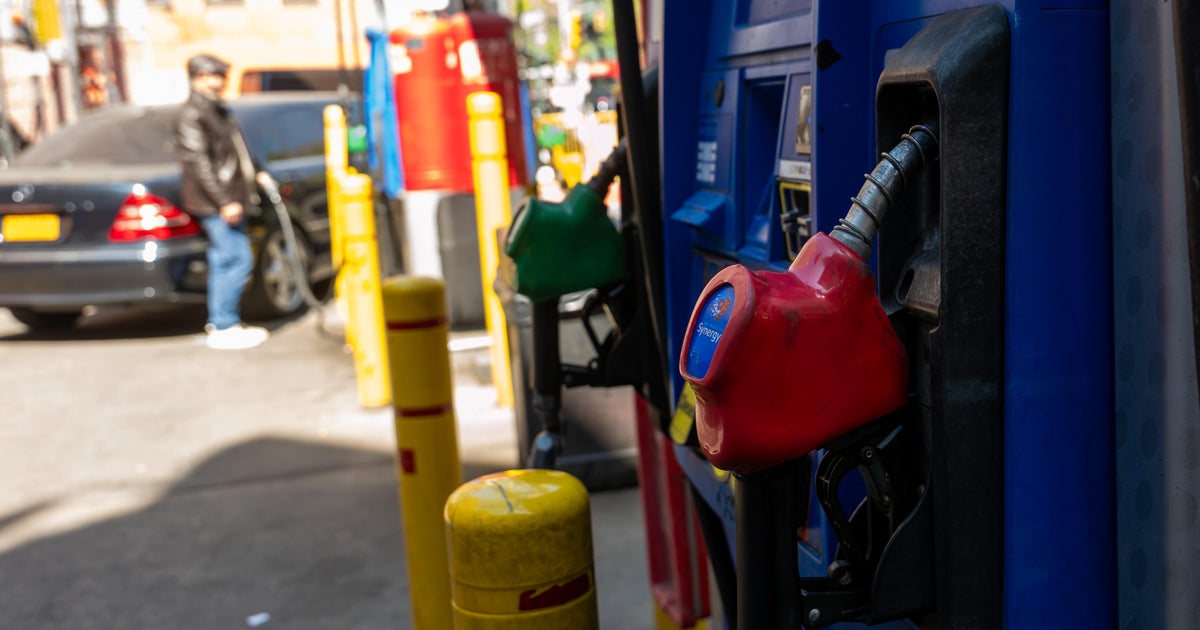
American drivers are feeling the financial squeeze once again as gasoline prices have soared to $4.18 per gallon this week, marking the highest level since the current Middle East conflict began. According to data from AAA, prices have climbed an astonishing $1.20 per gallon in just over two months since late February, with nearly 7 cents added overnight in the most recent spike. This dramatic increase comes after a brief moment of optimism when prices had eased slightly, reaching what seemed like a peak of $4.17 on April 9. At that time, diplomatic progress between the United States and Iran suggested a possible end to the regional conflict, and a two-week ceasefire agreed upon on April 8 offered hope for relief at the pump. President Trump even extended this ceasefire, leading many Americans to believe that lower prices might be on the horizon. Unfortunately, those hopes have been dashed in recent days as peace negotiations have stalled, momentum has been lost, and the prospect of a quick resolution to the war has faded. The result has been a renewed surge in oil prices, which directly translates to pain for everyday Americans every time they fill up their tanks.
Oil Market Turmoil Drives Pump Prices Skyward
The reason gasoline prices are so closely tied to international events in the Middle East is simple: oil accounts for 51% of the cost of every gallon of gas, making it by far the biggest factor in determining what you pay at the pump. As of Tuesday morning, the global oil markets were showing significant stress, with Brent crude—the international benchmark that reflects worldwide oil prices—hovering around $111 per barrel. Meanwhile, West Texas Intermediate, which serves as the U.S. benchmark for domestic oil pricing, was trading just below the psychologically important $100-per-barrel mark. Patrick De Haan, a petroleum analyst at GasBuddy, explained the connection between stalled peace talks and rising prices in straightforward terms: “The Strait [of Hormuz] is not reopened—there’s no cohesive plan for reopening it—and now negotiations have been basically stopped. So oil’s been slowly recapturing some of what it gave up after the ceasefire was announced.” The Strait of Hormuz, a narrow waterway between the Persian Gulf and the Gulf of Oman, is one of the world’s most critical oil transit chokepoints, with roughly one-fifth of global petroleum passing through it. White House press secretary Karoline Leavitt acknowledged the complexity of the situation during a Monday briefing, revealing that President Trump had met with his national security team to discuss a new proposal from Iran that would allow the strait to reopen but would delay nuclear negotiations. However, Leavitt was careful not to confirm whether the administration was seriously considering this Iranian offer, leaving the situation uncertain and markets nervous.
Regional Refinery Problems Compound National Price Increases
While the Middle East crisis is the primary driver of higher gas prices nationwide, some regions are experiencing even more severe pain at the pump due to local complications. Residents in Michigan, Wisconsin, Illinois, and Indiana are facing particularly steep increases because of refinery issues in their region. De Haan pointed to specific problems, including a power outage at a Northwest Indiana refinery facility that has disrupted normal production. Combined with another operational snag at an Illinois plant, these local issues have pushed wholesale gas prices in the region up by approximately 40 to 50 cents compared to their previous high on April 7. This means that drivers in these Midwest states are not only dealing with the national trend of rising prices but are also absorbing additional costs due to supply constraints closer to home. These refinery problems highlight how vulnerable the gasoline supply chain is to disruptions, whether they come from geopolitical conflicts thousands of miles away or technical failures at domestic facilities. For families already stretching their budgets, these regional price spikes add insult to injury, making everyday activities like commuting to work or taking children to school significantly more expensive than just a few weeks ago.
The Financial Toll on American Households
The rapid increase in gas prices represents perhaps the most visible and immediately felt financial burden that American consumers have faced since the Middle East war began. Unlike abstract economic indicators or distant policy changes, the price on the gas station sign affects virtually every household in the country. According to Neale Mahoney, an economics professor at Stanford University, the numbers tell a sobering story: over the past two months alone, Americans have collectively spent $150 more on gasoline than they would have if prices had remained below $3 per gallon. Looking ahead, Mahoney’s projections become even more concerning—by the end of the year, he estimates that the average American household will have spent roughly $800 more on gas than they would have if prices had followed their pre-war trajectory. To put this in perspective, this $800 increase is enough to completely wipe out the larger tax refunds Americans received this year as a result of the “One, Big, Beautiful Bill Act” passed by Congress last year. According to the latest IRS data, the average refund was up $333 compared to the previous year—a welcomed boost that has now been essentially erased by higher fuel costs. This means that many families who were counting on using their tax refunds for savings, debt reduction, or discretionary spending are instead watching that money disappear into their gas tanks, with nothing tangible to show for it.
Long-Term Price Pressures Expected Despite Potential Peace
Even if diplomats manage to broker an end to the Middle East conflict and shipping traffic resumes through the Strait of Hormuz, economists are warning consumers not to expect immediate or dramatic relief at the pump. This disappointing reality is due to a well-documented phenomenon in the petroleum industry known as the “rockets and feathers” principle—gas prices shoot up like rockets when crude oil spikes, but they float down slowly like feathers when oil prices drop. This asymmetry means that consumers feel pain quickly but experience relief gradually. Additionally, getting damaged energy infrastructure back online after a conflict isn’t as simple as flipping a switch. “You can’t just turn on the supply of oil and gasoline like a switch,” Mahoney explained, noting that repairs, inspections, and gradual ramp-ups of production all take time. Based on these factors, Mahoney’s forecast for the remainder of the year is sobering: he predicts that gas prices will remain above $4 per gallon throughout the summer months—traditionally the most expensive time for gasoline due to increased driving and special summer fuel blends. Only in the fall does he anticipate prices beginning to come down, and even then, the decline may be gradual. For now, Americans haven’t significantly changed their driving habits, mainly because they can’t, according to De Haan. “There’s not really much opportunity for people right now to cut back,” he observed. “People aren’t on vacation, kids are in school, people are doing their nine-to-five grind.” Daily commutes, school runs, and essential errands simply can’t be eliminated, which means consumers are absorbing these higher costs because they have no choice.
Broader Economic Consequences and Ripple Effects
The impact of higher gasoline prices extends far beyond what drivers pay at the pump, threatening to ripple through the entire economy in ways that could affect GDP growth and overall economic health. Consumer spending accounts for about 70 cents of every dollar of GDP, making it the engine that drives the American economy. As families are forced to dedicate more of their budgets to filling their gas tanks, they inevitably have less money available for other purchases, from dining out and entertainment to clothing and household goods. This reduction in discretionary spending could slow economic growth and potentially push the country toward recession if the situation persists. Furthermore, diesel fuel prices have climbed even more dramatically than regular gasoline, reaching $5.46 per gallon as of Tuesday—an increase of $1.70 since the war began. Because diesel powers the trucks that transport goods across the country, these higher costs are being passed along to consumers in the form of increased prices for food, clothing, and virtually every other consumer product. “The impact of higher energy costs is most immediately felt and seen at the pump, but they raise costs more broadly,” Mahoney warned. He noted that Americans searching for summer vacation flights are already seeing higher airfares due to increased jet fuel costs, and grocery prices are climbing as transportation expenses for food products increase. This creates a compounding effect where the same families already struggling with higher gas prices also face inflation in other areas of their budgets, squeezing household finances from multiple directions simultaneously and making the economic burden feel even more overwhelming for middle-class Americans trying to maintain their standard of living.