
Bitcoin Remains Steady Amid Global Uncertainty: Expert Advice on Navigating Turbulent Times
Understanding Bitcoin’s Resilience in the Face of Geopolitical Crisis
The cryptocurrency market, particularly Bitcoin, finds itself at a fascinating crossroads as global tensions between the United States and Iran continue to escalate. While traditional financial markets have shown significant vulnerability to these geopolitical developments, Bitcoin has demonstrated a remarkable level of resilience that has caught the attention of investors and analysts alike. Despite this relative strength, the world’s leading cryptocurrency isn’t immune to the ripple effects of international conflict and economic uncertainty. The situation has become particularly complex as oil prices surge in response to Middle Eastern tensions, creating a domino effect across global markets that even the decentralized world of digital currencies cannot entirely escape.
What makes this moment particularly interesting for cryptocurrency observers is the dual nature of Bitcoin’s response to current events. On one hand, the digital asset is holding up better than many expected when compared to traditional stock markets and other conventional investment vehicles. This resilience speaks to Bitcoin’s growing maturity as an asset class and its potential role as a hedge against certain types of economic disruption. On the other hand, the fundamental nature of geopolitical uncertainty creates an environment that no investment—regardless of how innovative or decentralized—can completely ignore. Cryptocurrencies, by their very nature, thrive in environments of stability and growing adoption, not in periods where the future feels unpredictable and where global conflict threatens to reshape economic landscapes overnight.
Arthur Hayes Weighs In: A Veteran’s Perspective on Market Uncertainty
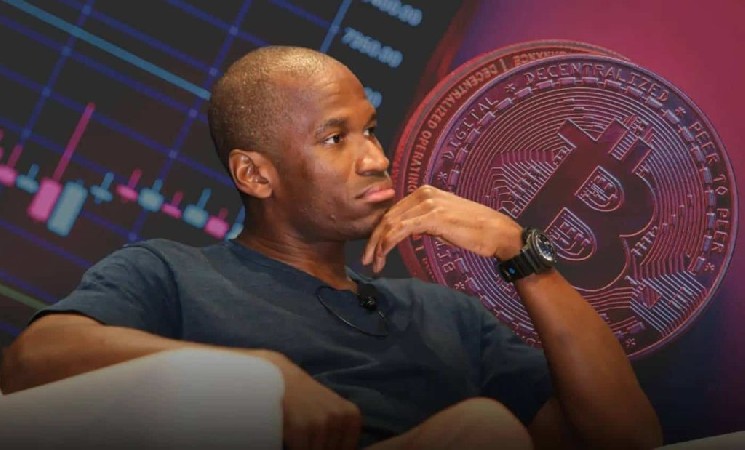
When it comes to understanding the cryptocurrency market’s current predicament, few voices carry as much weight as Arthur Hayes, the co-founder of BitMEX and a figure who has witnessed virtually every major crypto market cycle since the industry’s early days. Hayes has stepped forward to offer his assessment of how current global developments are likely to impact the digital asset space, and his analysis paints a picture that investors should take seriously. According to Hayes, the markets are currently engulfed in an unprecedented level of uncertainty, making it nearly impossible for even the most experienced traders to predict with any confidence what the next weeks or months might bring.
The core of Hayes’ concern centers on the unpredictable nature of the conflict between the United States and Iran. Unlike economic data releases or regulatory announcements—events that have defined dates and somewhat predictable outcomes—military conflicts follow their own chaotic timeline. There’s simply no way to know whether tensions will de-escalate quickly through diplomatic channels or whether we’re witnessing the opening chapter of a prolonged military engagement that could reshape the Middle East and, by extension, the global economy. Hayes suggests that market participants are already operating under the assumption that this won’t be a brief skirmish—that a longer, more drawn-out conflict is essentially priced into current asset valuations across the board. This assumption creates a challenging environment for investors because it means markets have already adjusted for bad news, leaving little room for positive surprises but plenty of space for situations to deteriorate further.
The “No-Trade Zone”: Why Patience is Currently the Best Strategy
In what might seem like counterintuitive advice in an industry that often celebrates bold moves and contrarian thinking, Arthur Hayes has characterized the current cryptocurrency market as what he calls a “no-trade zone.” This designation is significant coming from someone with Hayes’ background—a trader known for making calculated bets in volatile conditions. When such a figure advises stepping back from active trading, it’s worth paying attention. His message is clear: this is not the time for aggressive position-taking or attempting to catch falling knives or ride momentum to quick profits. Instead, Hayes recommends that investors adopt a posture of watchful waiting, observing how events unfold rather than trying to predict or profit from them in real-time.
This conservative approach stems from the recognition that current market conditions simply don’t provide the kind of reliable signals that inform smart investment decisions. When geopolitical tensions are high and outcomes are genuinely unpredictable, even sophisticated analysis can lead investors astray. The normal patterns and indicators that traders rely on become less reliable when external shocks—like military conflicts or energy supply disruptions—can instantly reshape the investment landscape. Hayes’ warning specifically highlights the danger of energy supply disruptions in the Middle East, a region that remains critical to global oil production despite decades of efforts to diversify energy sources. Should conflict disrupt the flow of oil from this region, the resulting spike in energy prices would almost certainly reignite the inflationary pressures that central banks around the world have spent the past several years trying to contain. Such a development would create cascading effects throughout the global economy, affecting everything from transportation costs to manufacturing expenses, and yes, even the appetite for risky assets like cryptocurrencies.
The Central Bank Factor: A Potential Silver Lining for Bitcoin
Despite the cautious tone of Hayes’ overall assessment, he does identify one scenario that could ultimately prove beneficial for Bitcoin and the broader cryptocurrency market. This potential bright spot centers on the possible actions of central banks around the world, particularly if the current geopolitical situation evolves into a prolonged conflict that threatens economic stability. Hayes suggests that should the war extend over a longer timeframe and begin to seriously impact global economic growth, central banks might be compelled to intervene with stimulus measures designed to support their economies. This intervention would likely take the form of increased liquidity provision—essentially pumping more money into the financial system to prevent economic contraction.
For Bitcoin advocates, such a scenario would represent familiar territory. The cryptocurrency saw massive appreciation during the COVID-19 pandemic when central banks worldwide unleashed unprecedented monetary stimulus to combat economic collapse. The logic is straightforward: when central banks increase the money supply, each unit of currency becomes slightly less valuable, creating inflation that makes hard assets like Bitcoin potentially more attractive as stores of value. Additionally, the flood of liquidity that central bank intervention creates often finds its way into risk assets as investors search for returns that outpace inflation. If a similar dynamic were to emerge from the current crisis—with central banks once again opening the monetary spigots to counter war-induced economic slowdown—Bitcoin could see renewed investor interest and price appreciation. However, Hayes emphasizes that this potential upside is contingent on specific developments and doesn’t justify aggressive positioning in the current uncertain environment.
Navigating the Current Investment Landscape: Practical Considerations
For everyday investors trying to make sense of how current events should influence their cryptocurrency holdings, Hayes’ analysis offers several practical takeaways. First and foremost is the recognition that sometimes the best action is inaction. In a culture that often equates activity with productivity, and where crypto Twitter and financial media constantly push narratives about opportunities and threats, the discipline to simply wait and observe can be remarkably difficult. Yet history has shown repeatedly that some of the costliest investment mistakes occur when people feel pressured to do something—to make a move, take a position, or react to news—when circumstances actually call for patience and preservation of capital.
This doesn’t mean investors should ignore their portfolios or stop paying attention to market developments. Rather, it means approaching current holdings with a longer-term perspective and resisting the temptation to make reactive trades based on daily headlines about geopolitical tensions. For those who believe in the long-term value proposition of Bitcoin and cryptocurrencies—their potential as alternative financial systems, stores of value, or inflation hedges—short-term geopolitical turbulence, while concerning, doesn’t necessarily invalidate those fundamental theses. However, it does create an environment where timing new investments or making significant portfolio adjustments becomes exceptionally challenging. The uncertainty that Hayes describes means that even well-researched positions could be quickly undermined by developments that no amount of analysis could have predicted, making this a period better suited for observation than aggressive trading.
Looking Ahead: Preparing for Multiple Scenarios
As the situation between the United States and Iran continues to evolve, cryptocurrency investors would be wise to prepare mentally and strategically for multiple possible outcomes. The best-case scenario involves a relatively quick de-escalation of tensions, perhaps through diplomatic channels or proxy negotiations, that allows oil prices to stabilize and removes the immediate threat of broader conflict. In such a scenario, we might expect to see risk assets, including cryptocurrencies, recover some stability as uncertainty diminishes. The more challenging scenario involves an extended conflict that disrupts energy supplies, triggers renewed inflation, and forces central banks into difficult decisions about whether to prioritize price stability or economic growth—potentially setting the stage for the liquidity injection that Hayes suggests could eventually benefit Bitcoin.
What’s clear from Hayes’ analysis is that the current moment calls for humility about our ability to predict outcomes and discipline in our investment approach. The cryptocurrency market, despite its technological innovation and promise of decentralization, remains connected to broader economic and geopolitical realities. When those realities become as uncertain as they are today, even Bitcoin’s relative resilience offers limited comfort for those trying to make active trading decisions. The wisest path forward may be the one that feels most uncomfortable to action-oriented traders: patience, observation, and a willingness to wait for clearer signals before making significant moves. As always, none of this should be construed as investment advice—each investor must assess their own risk tolerance, time horizon, and financial situation when making decisions about cryptocurrency holdings during these uncertain times.