
Arthur Hayes’ Bold $HYPE Prediction: A Deep Dive into the Controversial Forecast
The Man Behind the Prediction
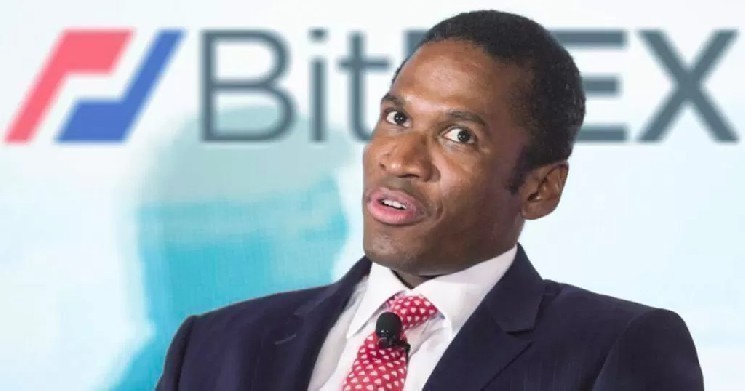
Arthur Hayes isn’t just another voice in the crowded cryptocurrency space—he’s a heavyweight whose opinions carry significant weight in digital asset markets. As the co-founder and former CEO of BitMEX, one of the world’s most influential cryptocurrency derivatives exchanges, Hayes has built a reputation as both a visionary trader and a controversial figure. His journey through the crypto landscape has been marked by bold predictions, regulatory challenges, and an unwavering belief in the transformative power of digital currencies. When Hayes speaks, the crypto community listens, even if they don’t always agree with what he has to say.
Recently, Hayes has turned his attention to Hyperliquid’s native token, $HYPE, making a prediction that has sent ripples through trading communities worldwide. His forecast of $150 per token represents an astronomical increase from current prices, and it’s this kind of ambitious prediction that has both excited supporters and raised eyebrows among skeptics. Understanding Hayes’ track record is essential to contextualizing this latest forecast. He’s made accurate calls in the past that have enriched those who followed his advice, but he’s also faced criticism for statements that seemed disconnected from market realities. This duality makes every Hayes prediction a topic of intense debate among traders, investors, and analysts trying to separate genuine market insight from promotional hype.
Breaking Down the $HYPE Prediction
At the heart of Hayes’ latest statement is his conviction that Hyperliquid’s $HYPE token is currently in a “price discovery phase”—a technical term that describes when an asset is finding its true market value without established historical pricing patterns to guide it. According to Hayes, this discovery is happening while traditional trading platforms remain closed, suggesting that the token’s price action is occurring primarily on decentralized platforms where different market dynamics apply. His target price of $150 represents a nearly 400% increase from the token’s current trading price of approximately $31, a projection that would require massive capital inflows and sustained buying pressure.
What makes this prediction particularly interesting is the context surrounding Hyperliquid itself. The platform has positioned itself as a decentralized alternative to centralized cryptocurrency exchanges, offering perpetual futures trading without the intermediaries that traditional platforms require. The $HYPE token serves multiple functions within this ecosystem, including governance rights and fee discounts, creating inherent utility that distinguishes it from purely speculative tokens. With a market capitalization hovering around $8 billion, $HYPE has already established itself as the 13th largest altcoin by market value—a remarkable achievement for a relatively new project. Hayes’ prediction suggests he believes this is just the beginning, and that the token’s fundamental value proposition will drive prices significantly higher as more traders discover and adopt the Hyperliquid platform.
The Disconnect Between Words and Actions
Here’s where Hayes’ prediction becomes complicated and controversial: while he’s publicly forecasting a $150 price target, on-chain data tells a different story about his personal trading behavior. Blockchain analytics, which provide transparent records of cryptocurrency transactions, reveal that Hayes has actually been selling portions of his $HYPE holdings even while making bullish public statements. Currently, his known cryptocurrency wallets contain approximately $6.9 million worth of $HYPE tokens—a substantial holding, but one that appears to have been reduced through strategic selling. This disconnect between public predictions and private actions has raised important questions about the nature of Hayes’ forecast and his true confidence level in the token’s prospects.
This pattern isn’t entirely new for Hayes. He’s previously made optimistic public statements about tokens like ENA (Ethena) and PENDLE, only to follow those predictions with sell-offs of his own positions. For some observers, this represents a concerning pattern of “talking up” assets while simultaneously exiting positions, a practice that could potentially influence prices to his benefit. For others, it’s simply smart portfolio management—Hayes might genuinely believe in long-term price appreciation while also recognizing the importance of taking profits and managing risk. Professional traders often reduce positions even in assets they believe will appreciate, either to lock in gains, rebalance portfolios, or manage overall exposure. The challenge for everyday investors is determining which interpretation is correct and whether Hayes’ public predictions should be weighed differently given his personal trading behavior.
Understanding the Hyperliquid Ecosystem
To properly evaluate Hayes’ prediction, it’s essential to understand what Hyperliquid actually is and why its native token might—or might not—reach the ambitious price targets being discussed. Hyperliquid represents a new generation of cryptocurrency exchanges built on decentralized principles, offering perpetual futures contracts without requiring users to trust a centralized intermediary with their funds. This architectural approach addresses one of the most significant concerns in cryptocurrency trading: the risk of exchange hacks, mismanagement, or fraud. By allowing users to maintain control of their assets while trading, Hyperliquid offers a compelling alternative to platforms like the BitMEX that Hayes himself once led.
The $HYPE token sits at the center of this ecosystem, serving functions that create genuine demand beyond pure speculation. Token holders can participate in governance decisions that shape the platform’s future, receive fee discounts on trading activities, and potentially access other benefits as the ecosystem evolves. This utility-driven model contrasts sharply with tokens that exist purely for speculative trading, providing a theoretical foundation for long-term value appreciation. The platform’s growth metrics, user adoption rates, trading volumes, and competitive positioning within the decentralized finance landscape all factor into any realistic price projection. Hayes’ $150 target presumably rests on assumptions about these fundamental drivers reaching levels that would justify such a valuation—assumptions that may or may not prove accurate as the market evolves and competing platforms emerge.
Market Dynamics and Realistic Price Prospects
Moving from Hayes’ optimistic forecast to a more grounded analysis requires examining the market dynamics that would need to align for $HYPE to reach $150. At current prices around $31, achieving this target would require the token’s market capitalization to increase proportionally, potentially pushing it into the top five cryptocurrencies by market value. Such a move would require not just continued enthusiasm from existing holders but massive new capital inflows from institutional investors, retail traders, and perhaps even integration into broader financial products. Historical precedent shows that while explosive growth is possible in cryptocurrency markets—particularly during bull cycles—sustaining such valuations requires continued innovation, user adoption, and competitive advantages that prevent rivals from capturing market share.
Several factors could support price appreciation, even if they don’t fully justify Hayes’ ambitious target. Growing dissatisfaction with centralized exchanges, increasing regulatory pressure on traditional platforms, and the broader trend toward decentralization could all drive users toward platforms like Hyperliquid. Additionally, if the platform successfully captures significant market share in the perpetual futures trading space—a multi-billion dollar segment of the cryptocurrency market—the increased utility and demand for $HYPE tokens could create upward price pressure. Conversely, significant headwinds exist: competition from established decentralized exchanges, potential regulatory challenges, technical vulnerabilities, and the simple reality that most bold price predictions in cryptocurrency markets fail to materialize. Investors evaluating Hayes’ forecast must weigh these competing factors while acknowledging the inherent uncertainty in predicting any asset’s future price.
The Bottom Line for Investors
Arthur Hayes’ prediction that $HYPE will reach $150 represents the kind of bold, attention-grabbing forecast that characterizes much of cryptocurrency market commentary. His stature as a former exchange CEO and successful trader lends weight to his opinions, but the disconnect between his bullish public statements and his personal selling behavior introduces important questions about conviction and motivation. For everyday investors trying to navigate these conflicting signals, several principles should guide decision-making: never invest based solely on celebrity endorsements or predictions, always conduct independent research into a project’s fundamentals, understand the difference between possible and probable outcomes, and never risk capital you can’t afford to lose.
The Hyperliquid platform and its $HYPE token may indeed represent a significant opportunity in the evolving decentralized finance landscape. The project’s technological approach, market positioning, and growth trajectory all deserve serious consideration from investors interested in this space. However, extrapolating current metrics to justify a $150 price target requires assumptions about adoption, competition, and market conditions that may or may not prove accurate. Hayes’ prediction should be viewed as one data point among many—interesting and worth considering, but not sufficient justification for investment decisions on its own. As the standard disclaimer wisely notes, this is not investment advice, and anyone considering $HYPE or any cryptocurrency should thoroughly research the risks, understand the technology, evaluate their personal risk tolerance, and ideally consult with qualified financial advisors before making investment decisions. In the volatile, unpredictable world of cryptocurrency trading, skepticism, due diligence, and risk management remain the most reliable guides for navigating predictions from even the most prominent market figures.